

Russia Sets 20.07M-Tonne Fertilizer Export Quota Through November 2026

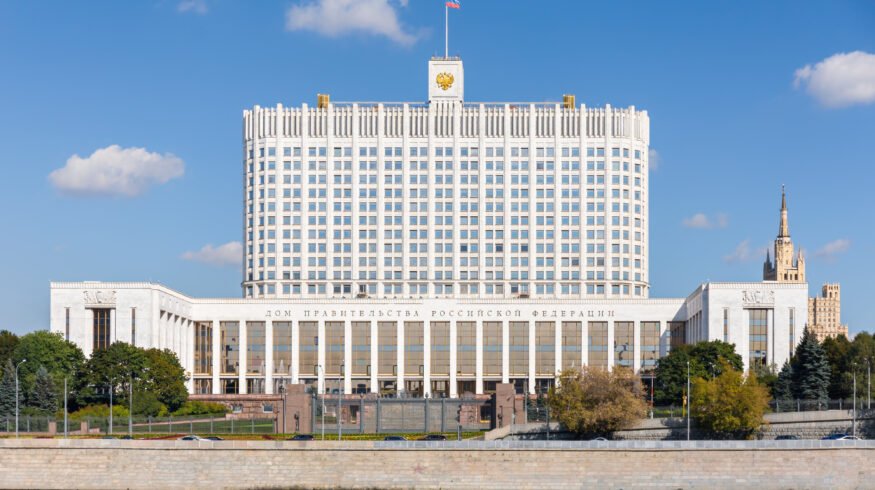

Russia has imposed a 20.07 million-tonne quota on exports of selected mineral fertilizers to countries outside the Eurasian Economic Union for the period from June 1 through November 30, 2026.
The measure extends a system of fertilizer export controls that Russia has used since late 2021 to protect domestic agricultural supply and limit pressure on local fertilizer and food prices.
The quota is not a single undifferentiated ceiling. The government allocated separate volumes to major nitrogen and compound fertilizer categories.
Russia’s fertilizer export quota totals 20.07 million tonnes
Government Resolution No. 431, dated April 17, 2026, established a total non-tariff export quota of 20,070,284 metric tons for the June-November period.
| Fertilizer category | Quota |
|---|---|
| Urea and certain nitrogen fertilizers | 8,750,831 tonnes |
| Ammonium nitrate | 4,255,316 tonnes |
| Compound fertilizers | 7,064,137 tonnes |
| Total | 20,070,284 tonnes |
The Ministry of Transport summarized the measure as more than 8.7 million tonnes for nitrogen fertilizers, more than 4.2 million tonnes for ammonium nitrate and more than 7 million tonnes for complex fertilizers.
What products are covered?
The regulation applies to specific customs codes under the Eurasian Economic Union’s commodity classification.
The main covered groups include:
- urea and other selected nitrogen fertilizers;
- ammonium nitrate;
- selected NPK and NP-type compound fertilizers;
- certain MAP- and DAP-related fertilizer categories.
The precise product scope is defined by customs codes rather than by broad market labels alone, so traders need to check the relevant HS/TN VED code before assuming a shipment is inside or outside the quota.
The quota applies only to exports outside the EAEU
The restriction applies to exports from Russia to countries that are not members of the Eurasian Economic Union.
Trade within the EAEU is therefore treated differently from exports to markets in Europe, Latin America, Asia, Africa and other regions.
This distinction is important because the 20.07 million-tonne ceiling should not be interpreted as a cap on all Russian fertilizer shipments to all destinations.
Several types of shipments are exempt
The government excluded several categories of exports from the quota.
These include:
- supplies to Abkhazia;
- supplies to South Ossetia;
- international transit shipments moving through Russia;
- fertilizer supplied as international humanitarian assistance.
These exemptions mean actual physical exports can differ from the headline quota depending on destination and shipment type.
The quota is higher than the previous six-month period
The preceding fertilizer export quota, covering December 1, 2025 through May 31, 2026, totaled just under 18.7 million tonnes.
The June-November quota of 20.07 million tonnes is therefore approximately 1.4 million tonnes higher.
| Period | Total quota |
|---|---|
| Dec. 1, 2025 – May 31, 2026 | About 18.7 million tonnes |
| June 1 – Nov. 30, 2026 | 20.07 million tonnes |
| Difference | About +1.4 million tonnes |
That increase indicates somewhat greater permitted export volume, but it should not be confused with a forecast that Russia will actually export the full quota.
Quota does not mean actual exports
A non-tariff quota defines the maximum amount that can be exported under the regulated system.
It does not mean:
- all 20.07 million tonnes will necessarily be shipped;
- all producers will fully use their allocations;
- every fertilizer product will reach its sub-limit;
- the quota represents new production;
- the quota represents guaranteed international supply.
Actual exports depend on production, logistics, demand, sanctions, financing, freight, seasonal purchasing and company allocation decisions.
Why Russia uses fertilizer export quotas
Russia introduced non-tariff quotas on nitrogen and compound fertilizer exports in December 2021.
The government has repeatedly extended them as part of a broader policy aimed at ensuring domestic fertilizer availability and containing agricultural input costs.
The April 2026 government announcement again stated that the objective was to support uninterrupted supply to agricultural producers, animal-feed manufacturers and other domestic users.
Ammonium nitrate is treated separately
Ammonium nitrate has its own quota of 4.255 million tonnes.
This is notable because Russia had temporarily suspended ammonium nitrate exports from March 21 through April 21, 2026.
Interfax reported that the June-November quota reintroduced export availability for the product after that temporary suspension.
Why ammonium nitrate receives special attention
Ammonium nitrate is both a major nitrogen fertilizer and a regulated chemical with security implications.
Governments often monitor its production, storage and trade more closely than products such as urea because ammonium nitrate can also be used in industrial explosives.
That makes export policy around ammonium nitrate more sensitive to domestic supply, security rules and industrial demand.
How the quotas are allocated
The Russian Ministry of Agriculture is responsible for distributing quota volumes among eligible exporters.
According to the implementing rules, eligible participants include fertilizer producers meeting Russian industrial-production criteria or authorized legal entities acting on their behalf.
Applicants were required to submit quota-allocation requests during the designated application period in spring 2026.
The system favors established domestic producers
The allocation framework is designed around recognized Russian fertilizer manufacturers and their authorized trading entities.
This means quota access is not an open system in which any trader can automatically export fertilizer up to the national ceiling.
Individual company access depends on regulatory eligibility and the allocation process administered by the Ministry of Agriculture.
Why Russia matters to global fertilizer supply
Russia is one of the world’s largest fertilizer producers and exporters across several nutrient categories.
Its export policy therefore has consequences well beyond the domestic market.
Russia is particularly important in:
- urea;
- ammonium nitrate;
- ammonia;
- NPK fertilizers;
- phosphate-containing compounds;
- potash through Russian producers outside the scope of this specific quota structure.
Changes in Russian export availability can affect supply and pricing in Latin America, Europe, Asia and Africa.
Russia’s quota does not apply equally to all fertilizer categories
The product-specific structure matters because global fertilizer markets are not interchangeable.
Urea, ammonium nitrate and compound fertilizers have different:
- feedstocks;
- production economics;
- transport requirements;
- end-use markets;
- regional demand patterns.
A large aggregate export quota therefore should not be interpreted as a single measure of availability for every fertilizer product.
Nitrogen fertilizers receive the largest allocation
The largest individual allocation is the 8.75 million tonnes assigned to urea and selected nitrogen fertilizer categories.
That reflects Russia’s strong position in nitrogen production, supported by access to relatively low-cost natural gas and large-scale ammonia and urea capacity.
The quota still limits how much of that production can be directed to non-EAEU markets during the six-month period.
Compound fertilizers account for more than 7 million tonnes
Selected compound fertilizers receive a separate quota of 7.064 million tonnes.
These products include formulations containing combinations of nitrogen and phosphorus and, depending on the customs classification, other nutrients.
Compound fertilizers can be especially important to markets that rely on imported NPK and NP products rather than blending nutrients domestically.
Why export quotas can influence world prices even when they are not binding
A quota does not need to be fully exhausted to affect the market.
Traders and buyers may react to the possibility of restricted availability before the ceiling is reached.
Quota policy can influence:
- forward purchasing;
- supplier negotiations;
- inventory building;
- regional price premiums;
- freight demand;
- alternative sourcing.
Its price impact therefore depends partly on expectations, not only on final customs volumes.
Sanctions complicate the effect of the quota
Russian fertilizer exports operate within a trade environment shaped by sanctions, banking restrictions and logistical constraints.
Fertilizer itself is not uniformly prohibited in many major markets, but financial, insurance, shipping and company-specific restrictions can complicate transactions.
This means that nominal quota availability and practical export availability are not always the same thing.
Logistics remain a major constraint
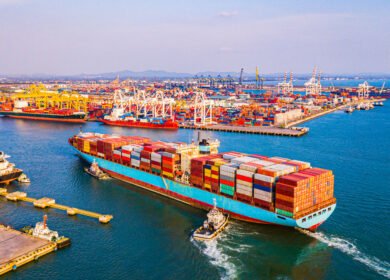
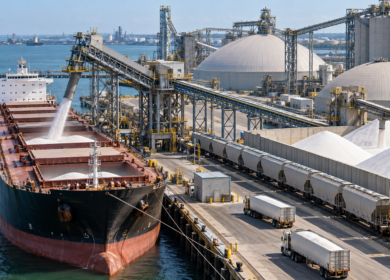
Russian fertilizer exports depend on rail, Baltic and Black Sea ports, Russian terminals and alternative shipping routes.
Port capacity, vessel availability and freight costs can affect actual export volumes independently of regulatory quotas.
These logistical considerations became increasingly important after 2022 as established trade routes changed.
What could happen after November 30?
The current quota expires on November 30, 2026.
Russia has repeatedly extended or adjusted fertilizer export controls since 2021, so the most likely next policy milestone is a new decision covering the period beginning December 2026.
That future quota could be:
- extended at a similar level;
- increased;
- reduced;
- restructured by fertilizer category;
- partially liberalized.
Until the government publishes a new resolution, none of those scenarios should be treated as confirmed.
What buyers should watch
For international fertilizer buyers, the most important variables are:
- quota utilization by product;
- Russian domestic fertilizer demand;
- ammonium nitrate policy;
- new sanctions or compliance restrictions;
- Black Sea and Baltic logistics;
- company-specific export allocations;
- the post-November quota decision.
Frequently asked questions
The total quota is 20,070,284 metric tons for selected mineral fertilizers exported to countries outside the Eurasian Economic Union.
About 8.75 million tonnes are allocated to urea and selected nitrogen fertilizer categories.
The June-November 2026 ammonium nitrate quota is 4.255 million tonnes.
The allocation for selected compound fertilizers is approximately 7.064 million tonnes.
No. The quantitative restriction applies to exports to countries outside the Eurasian Economic Union.
No. It is a regulatory ceiling. Actual shipments depend on production, demand, logistics, sanctions and company allocation decisions.
The current measure remains in force through November 30, 2026.
Sources: Russian Ministry of Transport, Government Resolution No. 431, ConsultantPlus, Interfax

Enjoyed this story?
Every Monday, our subscribers get their hands on a digest of the most trending agriculture news. You can join them too!





Discussion0 comments