

Global potash output grow by 5% in 2025 as Canada and Laos expand capacity

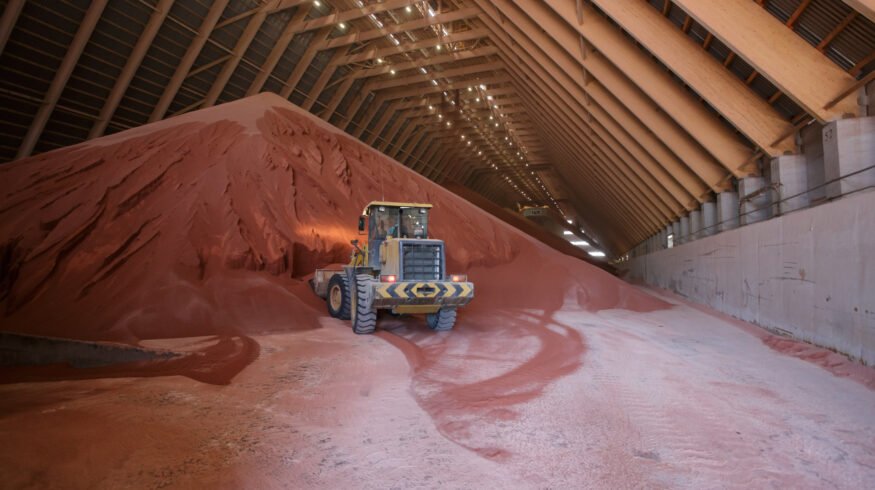

Global potash production increased 5% year-on-year to 49 million tonnes in 2025, according to the latest annual potash assessment published by the U.S. Geological Survey, as new output from Canada and Laos strengthened global supply despite ongoing geopolitical disruptions affecting Russia and Belarus.
The agency’s 2026 Mineral Commodity Summary estimated global recoverable potash reserves at more than 590 million tonnes, underscoring long-term supply availability even as sanctions, export restrictions and logistics disruptions continue to reshape international fertilizer trade flows. Canada remained the world’s dominant producer, led by Nutrien and large-scale operations in Saskatchewan, while Laos expanded production through the Asia-Potash project, which advanced commissioning activities on its third one-million-tonne production line.
The report showed diverging pricing trends across the potash market. Average U.S. potash f.o.b. prices rose 4.3% to $1,200 per tonne, while benchmark muriate of potash prices fell 13% to about $600 per tonne, reflecting weaker seaborne bulk pricing alongside firmer specialty domestic markets in the United States.
The USGS also highlighted progress on a proposed domestic U.S. potash project after a Michigan-based developer secured conditional approval for a $1.26 billion federal loan to construct a new potash and salt mine. The facility is expected to produce 800,000 tonnes of MOP and one million tonnes of salt annually, pending completion of compliance reviews over the next year. The project was added to the U.S. critical minerals list in November 2025 amid rising concerns over fertilizer supply security linked to the Hormuz shipping crisis and continuing Russian export quota restrictions.
Global seaborne MOP trade reached 53 million tonnes in 2025, up from 51 million tonnes a year earlier, supported by stronger demand from Indonesia and Malaysia. Belarusian producer Belaruskali and Russian suppliers including Uralkali remained among the leading exporters to global markets. Market participants also expect additional supply flows into North America following the easing of some U.S. sanctions on Belaruskali announced in late 2025.
Potash markets have remained comparatively stable amid broader fertilizer price volatility triggered by tensions in the Strait of Hormuz. Unlike nitrogen and phosphate fertilizers, which rely heavily on Middle Eastern exports and have seen prices rise sharply since early 2026, potash supply has been less exposed to Gulf-region disruptions because the region accounts for only a small share of global production.
Source: NAI 500 / USGS

Enjoyed this story?
Every Monday, our subscribers get their hands on a digest of the most trending agriculture news. You can join them too!



Discussion0 comments