

India locks in 670,000t of green ammonia annually for fertilizer plants at half the global benchmark price

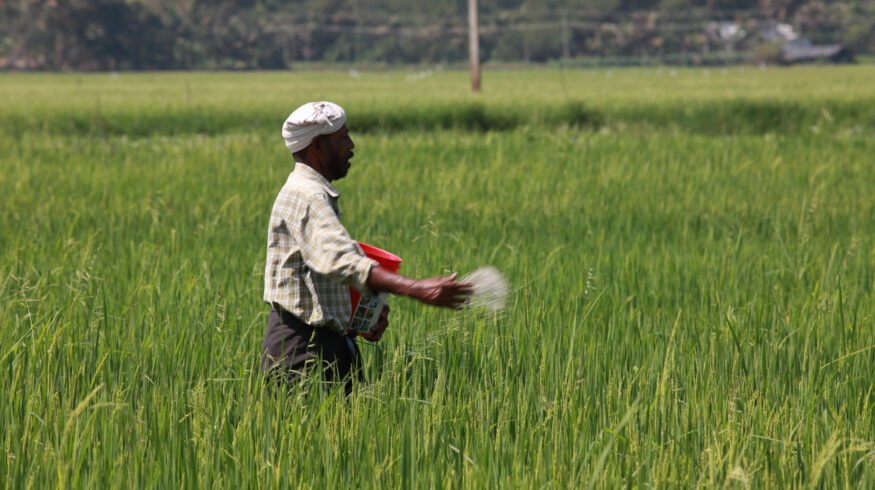

India has locked in long-term green ammonia supply for 11 of its fertilizer plants under the National Green Hydrogen Mission, signing 10-year purchase and supply agreements covering 670,000 tonnes per year at prices that come in at roughly half the global benchmark — a milestone that validates the country’s demand-aggregation model and could reshape how developing economies approach green ammonia procurement.
What the SIGHT program delivered
The agreements were brokered through the Solar Energy Corporation of India under the Strategic Interventions for Green Hydrogen Transition (SIGHT) program, which ran a competitive bidding process to discover supply prices and match developers with fertilizer plant buyers. The total allocation reached 724,000 tonnes per year across 13 fertilizer units, with the June ministerial announcement focusing on 11 plants and 670,000 tonnes of confirmed agreements.
The discovered prices ranged from Rs 49.75 to Rs 64.74 per kg — equivalent to roughly $570 to $745 per tonne at current exchange rates. The global benchmark for green ammonia, drawn from the H2Global programme’s Egypt auction results, stood at approximately Rs 110 per kg ($1,265 per tonne) at the time of the SECI process. India’s auction result is well below that and also below many European project financing assumptions.
Which plants and developers are involved
IFFCO will take 100,000 tonnes per year each at its Kandla and Paradeep plants, both supplied by ACME Cleantech. Coromandel International’s Kakinada plant will receive 85,000 tonnes per year from Jakson Green and OCIOR, while its Visakhapatnam unit will take 50,000 tonnes per year, also from ACME Cleantech. Paradeep Phosphates has three units covered: its Paradeep plant in Odisha takes 75,000 tonnes from ACME Cleantech, with further allocations to Zuarinagar in Goa and Mangalore. NTPC Renewable Energy and Oriana Power supply units in Madhya Pradesh, operated by Madhya Bharat Agro Products.
ACME Cleantech, the largest single developer in the program, secured contracts across multiple sites. The company’s scale advantages in electrolyzer procurement and renewable power sourcing appear to have driven some of the lowest discovered prices in the auction.
Why the price result matters globally
The conventional critique of green ammonia has been that it costs too much to displace grey ammonia produced from natural gas via the Haber-Bosch process. Conventional grey ammonia traded at roughly $400 to $490 per tonne FOB in early 2026, before the Strait of Hormuz conflict began pushing prices sharply higher. India’s SECI auction found prices that, while above pre-conflict grey ammonia prices, are within striking distance of conflict-elevated conventional prices — and are locked in for 10 years.
The combination of competitive solar and wind power costs, lower construction labor, and a government willing to aggregate demand through SECI has collapsed the cost curve in a way that no other country has yet replicated at this scale. The government expects the shift to green ammonia to save approximately $2.5 billion in foreign currency over the next decade by substituting for grey ammonia imports.
Outlook and next steps
Union Minister Pralhad Joshi said the National Green Hydrogen Mission has awarded incentives for 862,000 tonnes per year of green hydrogen production capacity under SIGHT. The mission has an outlay of Rs 19,744 crore and a production target of five million tonnes of green hydrogen per year by 2030, though most analysts treat that figure as aspirational. A more realistic near-term outcome is 0.5 to one million tonnes by 2030.
The 10-year supply contracts provide developers with the revenue certainty needed to secure project finance and begin construction. As electrolyzer costs continue to fall and India’s renewable power base expands, further auctions are expected to produce even lower prices. The SIGHT model — using a state agency to aggregate demand and run competitive tenders — is now being studied by other large fertilizer-importing nations seeking to replicate it.
Source: Deccan Herald
India green ammonia SIGHT program: five things to know
SECI has contracted 724,000 tonnes per year of green ammonia supply across 13 fertilizer units. Prices discovered through the competitive auction ranged from Rs 49.75 per kg at the lowest (for IFFCO’s Paradeep plant, supplied by ACME Cleantech) to Rs 64.74 per kg at the highest (for Indorama India’s Haldia unit). At current exchange rates these equate to roughly $570 to $745 per tonne — approximately 45% to 55% below the global green ammonia benchmark of around Rs 110 per kg cited by SECI.
India is the world’s second-largest consumer of fertilizers and produces roughly 165 to 170 lakh tonnes per year of phosphatic and potassic (P&K) fertilizers including DAP and complex grades. A large share of this output depends on imported grey ammonia as a feedstock, exposing producers to global ammonia price swings and supply disruptions. The current Strait of Hormuz crisis has underlined that vulnerability: several Indian P&K fertilizer plants had to manage supply risk when ammonia flows from the Persian Gulf were curtailed. Replacing imported grey ammonia with domestically produced green ammonia removes that exposure and lowers the long-run subsidy burden on the government, which underwrites India’s fertilizer prices.
SECI acts as an aggregator: it identifies demand from fertilizer plants, issues a competitive tender to green ammonia developers, runs the auction to discover the lowest viable price, and then facilitates 10-year binding purchase and supply agreements between the winning developers and the fertilizer manufacturers. The government’s role is to create demand certainty and a transparent price-discovery mechanism — not to subsidize the green ammonia price directly. The model is analogous to renewable energy auctions that India has used successfully to drive down solar and wind power costs.
The purchase and supply agreements have been signed, but the green ammonia projects themselves are still in the development and financing phase. Construction of electrolyser capacity and associated renewable power infrastructure takes two to four years. Developers will need to raise project finance — made easier by the 10-year revenue contracts — and complete engineering and permitting. The first deliveries to fertilizer plants are not expected before 2028 at the earliest, with 2029 to 2030 a more realistic timeline for the bulk of the contracted volume to come online.
India’s National Green Hydrogen Mission targets five million tonnes per year of green hydrogen production capacity by 2030, supported by around 125 GW of dedicated renewable energy. As of early 2026, commissioned capacity stood at approximately 8,000 tonnes per year — a fraction of the target. Most analysts consider five million tonnes by 2030 aspirational; realistic near-term expectations are in the range of 0.5 to one million tonnes. The SIGHT programme’s contracted 724,000 tonnes per year of green ammonia represents the equivalent of roughly 130,000 tonnes per year of green hydrogen feedstock, providing a meaningful anchor to the demand side of the market.

Enjoyed this story?
Every Monday, our subscribers get their hands on a digest of the most trending agriculture news. You can join them too!




Discussion0 comments