

China’s northern cropland expansion delivers diminishing gains while raising biodiversity costs, study finds

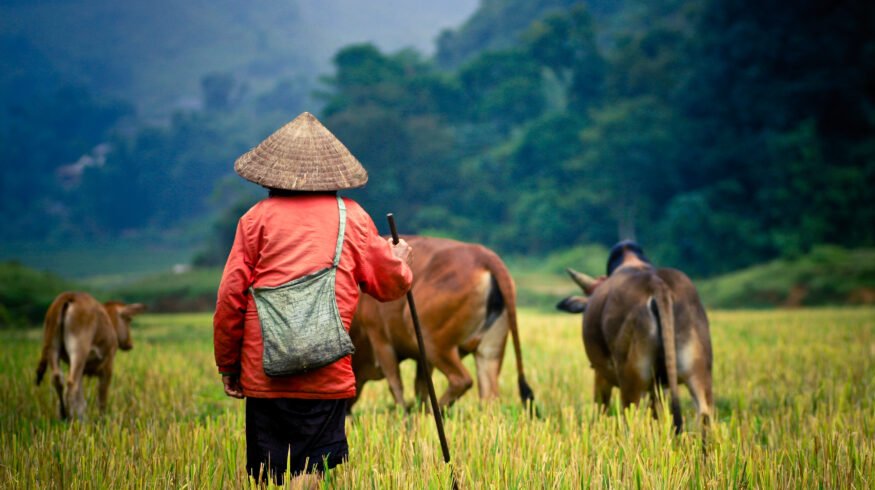

Large-scale cropland expansion in northern China has delivered declining agricultural benefits while imposing growing ecological costs, according to a new study published in Communications Sustainability. Researchers found that farmland reclamation in four northern provinces—Xinjiang, Inner Mongolia, Heilongjiang, and Jilin—significantly increased grain production in the early 2000s, but its contribution to yields weakened after 2010 as cultivation expanded into less productive marginal lands.
The study found that between 2000 and 2020, about 85,000 square kilometers (32,800 square miles) of new cropland were created in the four provinces, accounting for 35% of China’s total reclaimed farmland during the period. Much of the new farmland came from grasslands, forests, and wetlands, contributing to a nearly 1% decline in the regional Biodiversity Intactness Index. Around 15% of newly reclaimed cropland overlapped with Key Biodiversity Areas, highlighting growing conflicts between agricultural expansion and conservation goals. Stable cropland consistently produced higher yields than newly reclaimed land, suggesting that expansion into marginal areas has become increasingly inefficient.
Researchers concluded that improving productivity on existing low-yield farmland could provide a more sustainable path to food security. Scenario modeling showed that upgrading low-yield fields could raise grain production by up to 30.8 million tonnes while avoiding as much as 70,300 square kilometers (27,100 square miles) of additional cropland reclamation. The findings support China’s strategy of developing high-standard farmland and suggest that agricultural intensification, combined with land conservation measures, may better balance food production and biodiversity protection.
Source: Nature

Enjoyed this story?
Every Monday, our subscribers get their hands on a digest of the most trending agriculture news. You can join them too!








Discussion0 comments