

Hidden rainfall origins may reshape drought risk for global farming

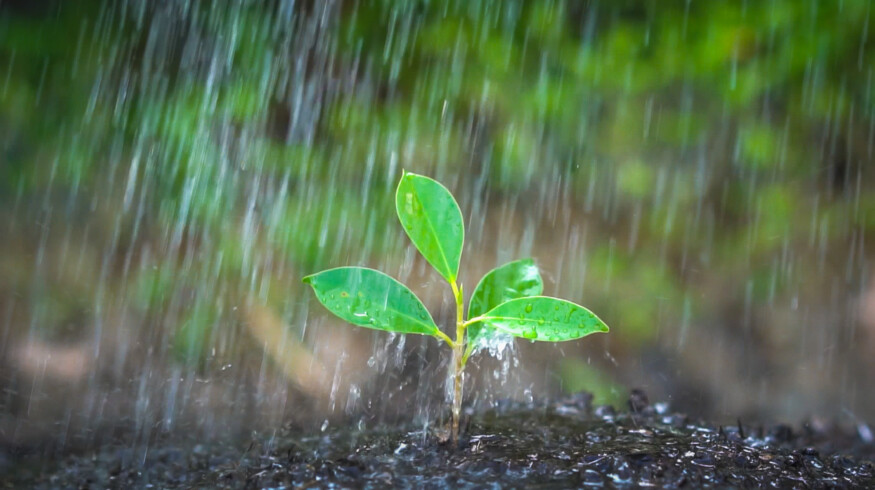
Scientists have identified a previously overlooked factor shaping drought risk and crop stability: the original source of rainfall. Research published in Nature Sustainability finds that whether precipitation originates from oceans or from land surfaces such as soil, forests and lakes plays a decisive role in agricultural resilience.
The study, led by researchers at the University of California San Diego and Stanford University, traces atmospheric moisture back to where it first evaporated. Ocean-derived moisture can travel long distances through large-scale weather systems such as monsoons, atmospheric rivers and tropical storms. By contrast, land-derived moisture—often described as recycled rainfall—comes from nearby evaporation and tends to generate more localized and less predictable precipitation.
Using nearly 20 years of satellite observations, the researchers found that when more than about one-third of rainfall in cropland areas originates from land rather than the ocean, drought risk rises sharply. In such regions, soil moisture declines and crop yields become more vulnerable to rainfall variability. Ocean-driven systems, the study found, generally produce heavier and more reliable rainfall than land-driven systems.
“Our work reframes drought risk—it’s not just about how much it rains, but where that rain comes from,” said Yan Jiang, the study’s lead author and a postdoctoral scholar at UC San Diego. He said identifying rainfall origins could help policymakers and farmers anticipate drought stress earlier and adjust land and water management accordingly.
The findings point to two major global hotspots: the U.S. Midwest and tropical East Africa. Despite its high productivity, the Midwest relies heavily on land-sourced moisture from surrounding soils and vegetation. As droughts become more frequent, this dependence can intensify so-called rainfall feedback loops, in which dry soils reduce evaporation, leading to less rainfall and reinforcing drought conditions.
Given the region’s importance to global grain markets, disruptions in the Midwest can have far-reaching effects on food supply. The researchers suggest that improved soil moisture conservation, irrigation efficiency and planting strategies could help reduce vulnerability.
In East Africa, the risks stem from rapid agricultural expansion and deforestation. Clearing forests to create new cropland can undermine the very moisture sources that sustain rainfall, the study argues, increasing threats to long-term food security. The researchers say that forest conservation and vegetation restoration could help preserve local rainfall patterns while supporting agricultural growth.
The study also underscores the role of forests as natural generators of rainfall. Through evaporation and transpiration, forested ecosystems release large volumes of water vapor that contribute to cloud formation and precipitation over nearby farmland. Protecting these ecosystems, the authors argue, is as critical for agriculture as it is for biodiversity.
The researchers say their satellite-based mapping approach could inform climate-smart land and water planning, guiding investments in irrigation, soil water retention and ecosystem protection as climate pressures intensify.

Enjoyed this story?
Every Monday, our subscribers get their hands on a digest of the most trending agriculture news. You can join them too!

Discussion0 comments