

SUBLIME Energie launches on-farm biogas liquefaction system in France

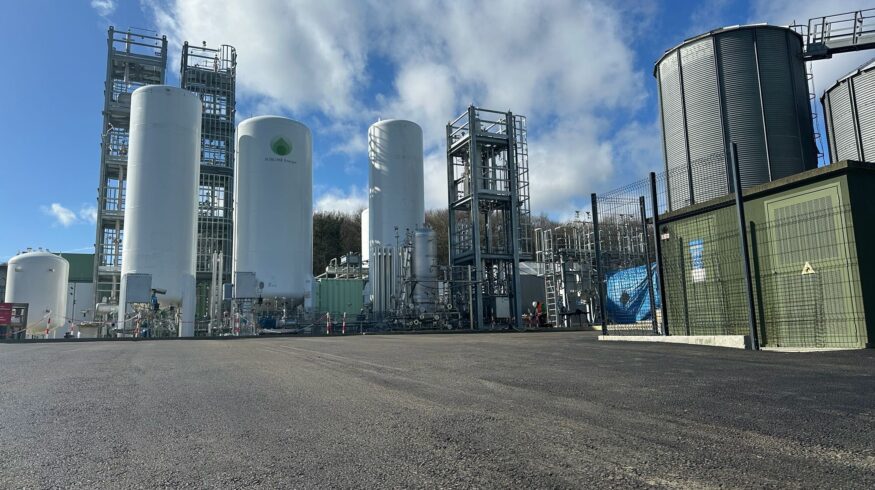

SUBLIME Energie has inaugurated what it describes as the first system capable of liquefying biogas directly on a farm, marking a shift in how anaerobic digestion outputs can be processed and transported. The prototype, named “Charlie,” has been commissioned in Plélo, in France’s Brittany region, and enables farms to convert biogas into a liquefied form on-site without relying on connection to gas grid infrastructure. The approach is designed to address longstanding constraints in the sector, including small production volumes, high capital costs and limited access to gas networks.
The system increases the energy density of biogas through liquefaction, allowing it to be transported by road to centralized facilities. There, it is upgraded into bioLNG for use in heavy transport and liquid bioCO₂, which can substitute fossil-derived carbon dioxide in industrial and agricultural applications.
SUBLIME Energie said the model draws on a “hub-and-spoke” logistics approach, comparable to milk collection systems, in which liquefied gas is aggregated from multiple farms and processed at shared hubs. The company argues that this decentralized structure could enable smaller or remote farms to participate in renewable gas production.
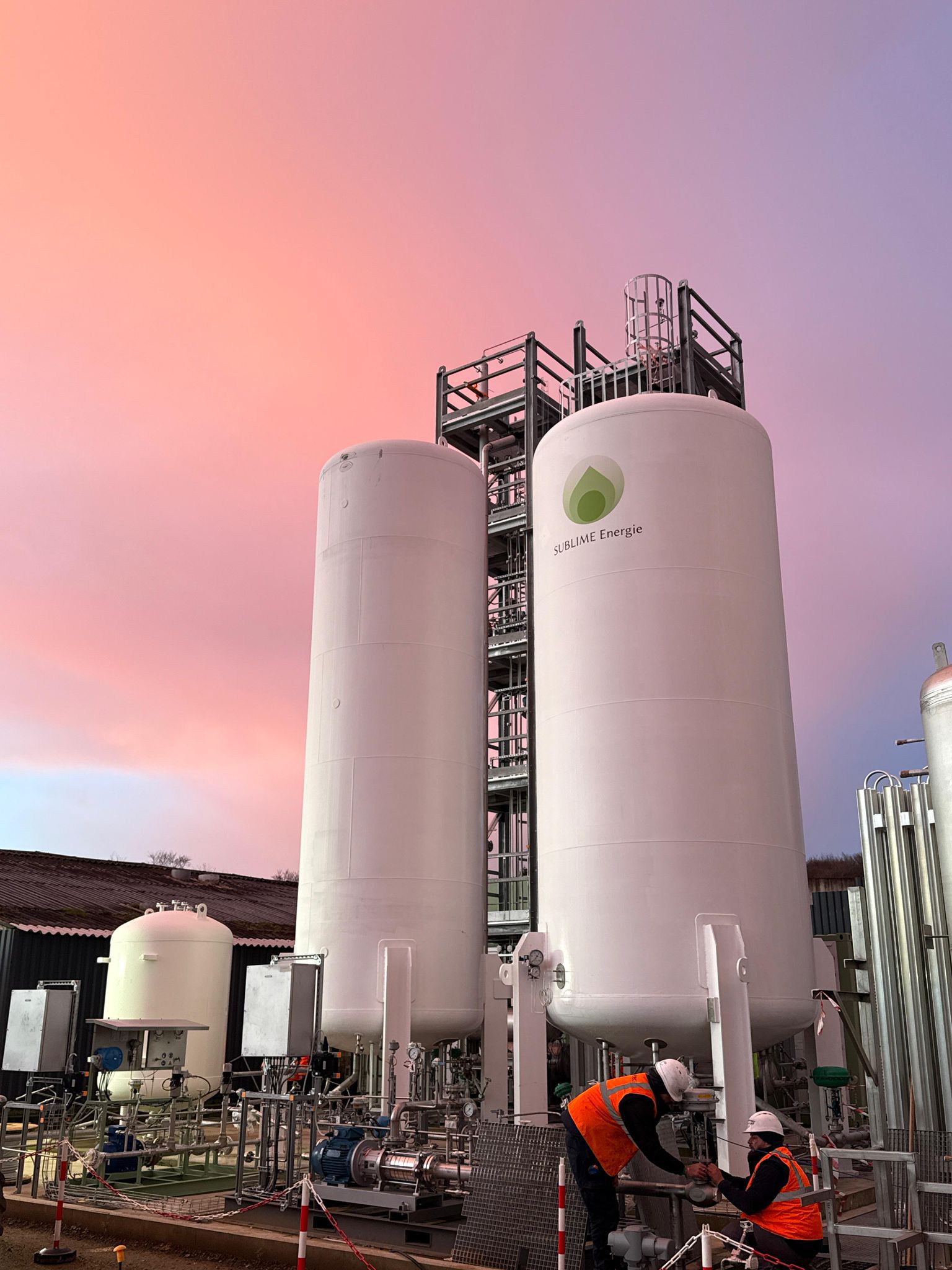
The Charlie unit has been installed at the Gazéa farm, an early adopter of anaerobic digestion in Brittany. It is expected to process enough biogas annually to produce around 180 tonnes of bioLNG and 330 tonnes of liquid bioCO₂, with initial output scheduled to begin following commissioning and testing phases this year.
The company said the project represents the final stage of its research and development program, integrating liquefaction and downstream separation technologies into a single operational system.
Industry development has been constrained by the economics of grid injection, which excludes a large share of potential producers. SUBLIME Energie estimates that a significant portion of France’s biomethane potential—26 TWh by 2050—remains untapped due to infrastructure constraints.
The company’s model involves purchasing raw biogas from farmers, offering an additional revenue stream without requiring them to invest in upgrading equipment. Farmers may also participate in project ownership.
Beyond economics, the company positions the technology as contributing to emissions reduction. Anaerobic digestion can reduce methane emissions from livestock waste, while bioLNG can serve as a lower-carbon alternative to diesel in sectors such as heavy transport and maritime applications, where electrification remains limited.
SUBLIME Energie is preparing a next-stage project, “Delta,” which aims to connect around 10 farms to a shared processing hub in the same region. The commercial-scale unit is expected to be operational by 2028, with further expansion planned across France and Europe.

Enjoyed this story?
Every Monday, our subscribers get their hands on a digest of the most trending agriculture news. You can join them too!


Discussion0 comments