

Wild Bioscience targets market-ready climate-resilient crops after £45M Series A and U.K. wheat consortium launch

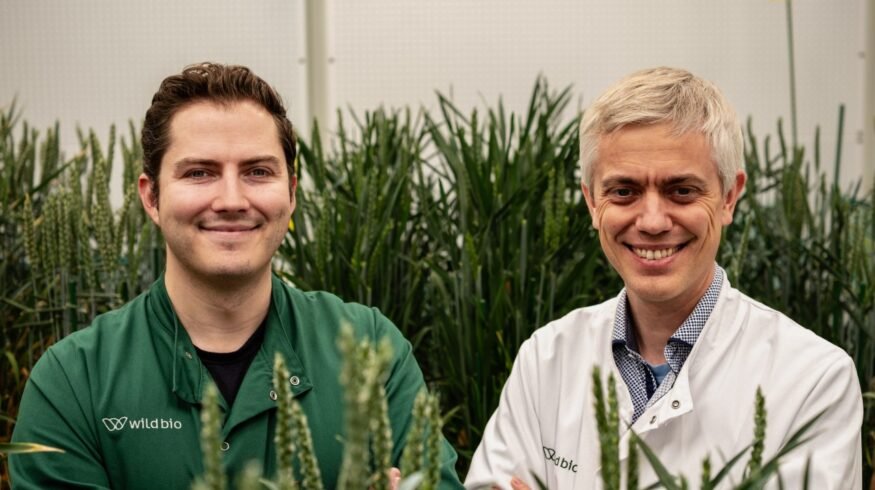

Wild Bioscience, the Oxford University spinout that uses evolutionary biology and artificial intelligence to develop climate-resilient crops, says it is shifting from research into commercial delivery following a £45M ($60M) Series A round and a new U.K. consortium focused on precision-bred wheat.
The Series A, led by the Ellison Institute of Technology and backed by Oxford Science Enterprises, Braavos Capital and the University of Oxford, was announced in October 2025 but the company has since detailed how the capital will be deployed. Wild Bio, as the company is known, describes the investment as enabling a “step-change” — moving from building scientific capability to validating and delivering crops ready for field trials and commercial licensing. The company, which employs around 30 people at its Oxford headquarters, has crop projects in field trial programs across four countries.
Separately, Wild Bio announced in April 2026 that it has formed a U.K. agricultural consortium to accelerate the development of precision-bred wheat, backed by £1.13 million from Defra’s Farming Innovation Programme and Innovate UK. The consortium brings together U.K. agricultural organizations to integrate Wild Bio’s proprietary traits into elite wheat germplasm, with field validation conducted under real farming conditions rather than controlled greenhouse environments. The program is designed to compress development timelines and reduce capital requirements through collaborative integration.
Wild Bio’s platform works by analyzing hundreds of millions of years of plant evolution to identify genetic traits in wild species — drought tolerance, disease resistance, photosynthetic efficiency — that were not selected into modern elite varieties during the domestication process. Those traits are then transferred into high-yielding commercial lines using precision breeding, without the introduction of foreign DNA. The approach is regulatory distinct from GMO development: precision-bred varieties received their first U.K. field clearance under the 2024 Precision Breeding Act, opening a commercialization pathway that was not available before.
For the fertilizer industry, a new generation of climate-resilient, nutrient-efficient crop varieties carries clear demand implications. Varieties bred for improved nitrogen use efficiency could reduce the volume of synthetic nitrogen fertilizer needed per tonne of grain produced — a development that major producers and distributors are tracking as part of longer-term demand modelling. The wheat consortium, targeting market-ready varieties within a commercially relevant timeframe, is the most concrete test of whether Wild Bio’s platform can deliver on that promise at field scale. A commercial launch timeline has not been disclosed.
Source: AgTech Navigator

Enjoyed this story?
Every Monday, our subscribers get their hands on a digest of the most trending agriculture news. You can join them too!







Discussion0 comments