

Ostara targets phosphate fertilizer market with efficiency-focused alternative

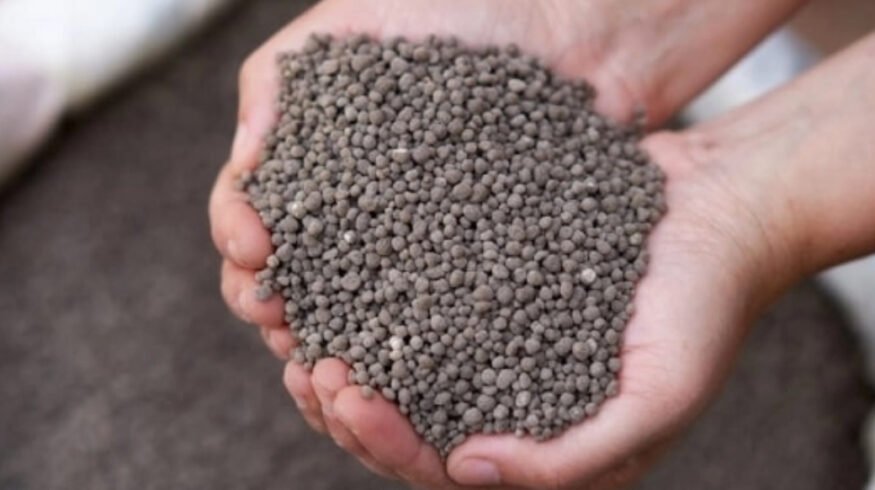

Ostara is positioning itself as a rare disruptor in one of agriculture’s oldest and least-changed product categories: phosphate fertilizer. The U.S.-based company, which operates globally and manufactures from a major facility in St. Louis, Missouri, has developed a patented phosphate fertilizer technology marketed under the Crystal Green.
According to the company’s CEO, Tom Snipes, the product was designed to solve a problem that has existed for more than a century in conventional phosphate fertilizers such as monoammonium phosphate (MAP) and diammonium phosphate (DAP). “Traditional ammonium phosphates were synthesized pre-Civil War,” Snipes said in an interview to Fertilizer Daily. “It is quite possibly the only farming practice in modern agriculture to have seen essentially no level of development or enhancement.”
The company aims to address a longstanding problem with conventional phosphate fertilizers: much of the phosphorus becomes chemically locked in the soil soon after application, making it unavailable to crops. Ostara estimates that traditional MAP and DAP fertilizers are typically only 10% to 30% effective, with the remainder either leaching away or binding to soil minerals such as iron, calcium, and aluminum. By contrast, Ostara’s non-water-soluble CG P2X fertilizer (9-42-0 w.9% Mg) releases nutrients only when activated by root exudates and soil microbes from the plant itself, reducing nutrient soil tie-up and limiting nitrogen and phosphorus losses through runoff and leaching.
Selling efficiency, not volume
Unlike traditional fertilizer suppliers that compete largely on tonnage and commodity pricing, Ostara is marketing efficiency as its core value proposition. The company says farmers can apply lower volumes of fertilizer while delivering more plant-available nitrogen, phosphate and magnesium to crops. Any unused CG PX will remain stable in the soil, available for future growing seasons.
Snipes said the economics are increasingly resonating with growers facing volatile input costs and tighter operating margins. “For the same price per acre with CG P2X , farmers are going to get twice the available nutrients, or more” he said.
The efficiency gains extend beyond nutrient uptake. Lower application volumes can reduce fuel consumption, labor requirements, and time spent in the field during narrow planting windows — a particularly important issue for large row crop growers in the U.S. Midwest and Canada. It means that farmers can cover more acreage with fewer fertilizer loads.
The product is also compatible with existing fertilizer infrastructure, eliminating the need for growers or retailers to purchase new equipment. “The retailer doesn’t have to do anything different,” Snipes said. “If there is a bin of ammonium phosphate fertilizer now, it could just be replaced with CG P2X, it’s a complete replacement product.”
Soil health and water quality becoming bigger drivers

While Ostara emphasizes agronomics and economics first, the company also sees environmental performance becoming an increasingly important market driver. Traditional phosphate fertilizers are associated with nutrient loss from runoff and leaching into waterways, particularly in regions with heavy rainfall or snowmelt. Excess nitrogen and phosphorus entering waterways can contribute to harmful algal blooms and broader water quality issues.
Because Ostara’s CG P2X remains stable in the soil until accessed by plant roots, the company argues that runoff and leaching risks are significantly reduced. “Phosphate is almost like nitrous oxide versus CO2 — a little bit of phosphate fertilizer in the water supply can have big effects,” Snipes said. “With our product, it absolutely has no impact.”
The company is working with regulators and state agencies, including in Illinois, where large amounts of ammonium phosphate fertilizer are applied in the fall. Some U.S. states have considered restrictions on fall fertilizer applications due to concerns about runoff and leaching. Ostara believes its crop signal release advantage will provide an alternative solution that allows growers to maintain existing application practices with lower environmental risk.
The fertilizer’s lower salt index also appears to improve compatibility with seed placement systems and reduce stress on soil microbiology, according to the company. Snipes said growers using one-pass seeding systems in northern U.S. states and Canada have shown particular interest because the product can be applied directly with seed without the burn risk associated with traditional phosphate fertilizers.
Why St. Louis became central to Ostara’s strategy
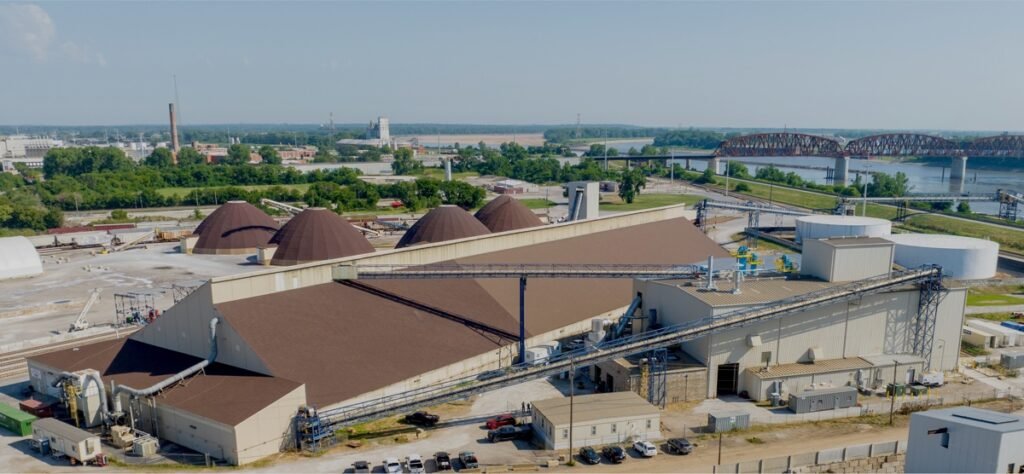
Ostara selected St. Louis for its production operations largely because of logistics and proximity to the Corn Belt, the company’s primary target market. The facility is located near major fertilizer distribution infrastructure on the Mississippi River, giving Ostara access to low-cost barge transportation, rail connections, and truck distribution routes. The company also benefits from its location within the city’s growing agricultural technology ecosystem, centered on the 39 North innovation district.
“We’re co-located on a really large fertilizer distribution point on the Mississippi River,” Snipes said. “The most efficient way to move fertilizer is really on barges.”
Snipes described the U.S. river system as a major competitive advantage compared with agricultural exporters such as Brazil, where infrastructure bottlenecks can raise transportation costs.
The company is currently concentrated in the greater Corn Belt and mid-south, though its fertilizer can be used on virtually any crop requiring phosphate inputs. Canada already accounts for roughly half of Ostara’s sales through a limited distribution network.
Scaling adoption in a conservative industry
Despite strong growth, Ostara still faces the challenge common to many agricultural technology companies: convincing farmers to change longstanding practices. Growers rarely adopt new fertilizer systems at full scale immediately, with most of them starting with field trials before expanding use across larger acreage.
The company says interest is accelerating. Ostara doubled sales last year and expects to double them again this year, according to Snipes. One unexpected bottleneck has been the storage infrastructure at fertilizer retailers. Switching to a new fertilizer often requires dedicating an entire storage bin to the product, slowing adoption compared to other agricultural inputs.
Still, Snipes believes awareness is now the biggest remaining barrier rather than skepticism about performance. “We have a really deep data set that shows that over 90% of the time, the replacement of traditional MAP/DAP fertilizer with CG P2X provides farmers with a better return on investment,” he said.
As growers increasingly prioritize input efficiency, precision application, and operational flexibility, Ostara sees enhanced-efficiency fertilizers becoming more mainstream.

Enjoyed this story?
Every Monday, our subscribers get their hands on a digest of the most trending agriculture news. You can join them too!




Discussion0 comments