

AI data center boom increasingly targets drought-prone regions across the U.S.

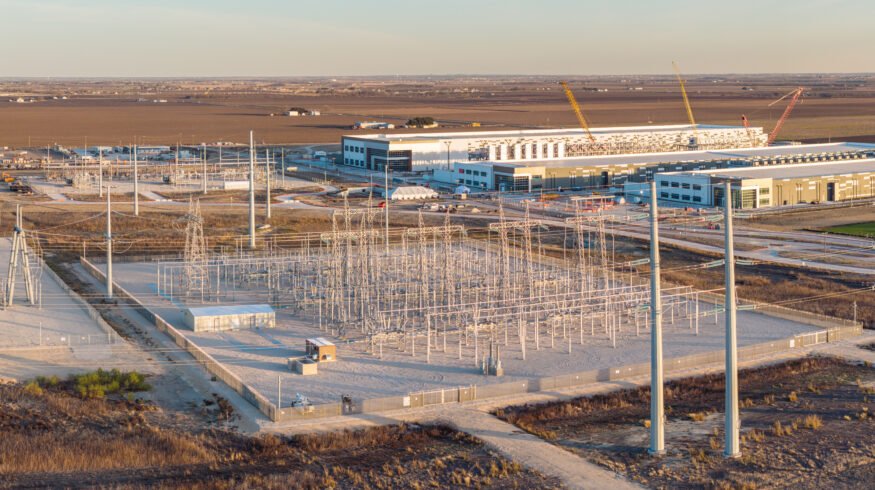

Nearly two-thirds of the 809 data centers planned across the United States are expected to be built in areas that have experienced drought conditions during the past year, according to an analysis by The Guardian, citing data from the National Oceanic and Atmospheric Administration’s National Integrated Drought Information System.
The report found that 517 proposed data centers are located in regions classified as drought-stricken, highlighting growing concerns over the water footprint of the rapidly expanding artificial intelligence industry.
Water demand extends beyond data center cooling
While data center cooling systems often receive the most attention, a January study by Xylem and Global Water Intelligence found that cooling accounts for only about 4% of AI-related water demand projected by 2050. The study estimated that power generation represents roughly 54% of water use, while semiconductor manufacturing accounts for another 42%.
Industry representatives frequently note that data centers consume significantly less water than agriculture. However, critics argue that such comparisons often exclude the water requirements associated with electricity generation and semiconductor manufacturing, both of which are essential to supporting AI infrastructure. As a result, the total water footprint of AI development may be substantially larger than cooling-related figures suggest.
Semiconductor production adds pressure on water supplies
The increasing demand for AI chips is expected to place additional pressure on water resources. Modern semiconductor fabrication plants can consume between 2 million and 10 million gallons of water per day, much of it requiring extensive treatment into ultrapure water. Producing 1,000 gallons of ultrapure water typically requires 1,400 to 1,600 gallons of municipal water, creating significant losses during processing.
One example is Taiwan Semiconductor Manufacturing Company’s semiconductor complex in Phoenix, Arizona, where three fabrication plants are projected to consume a combined 16.4 million gallons of water daily once fully operational. Although the facilities are designed to recycle approximately 85% of their water, with plans to increase that rate to 90%, the plants are located in one of the driest states in the country.
Efficiency gains may shift water use elsewhere
Technology companies are increasingly adopting liquid-cooling systems to improve efficiency. Nvidia has said its GB200 NVL72 platform can achieve up to 300 times greater water efficiency than traditional air cooling for server racks. However, experts note that rising computing power also increases electricity demand, potentially shifting water consumption from data centers to power plants.
Meta’s proposed Hyperion data center project in Louisiana illustrates the challenge. The facility is expected to use closed-loop cooling technology while relying on electricity generated by multiple natural gas-fired power plants, which themselves require water for operation. Analysts say such arrangements may reduce on-site water consumption while increasing indirect water use elsewhere in the supply chain.
States consider new regulations
As concerns grow, several states are considering new regulations. California, Michigan, and Iowa are evaluating water-use reporting requirements for data centers, while lawmakers in South Carolina and Kansas have proposed mandating closed-loop cooling systems.
In New York, some legislators have discussed a temporary moratorium on new data center construction. Critics of these measures argue that they focus primarily on reducing water consumption while overlooking the broader impacts of power generation and chip production.
Source: Tom’s Hardware

Enjoyed this story?
Every Monday, our subscribers get their hands on a digest of the most trending agriculture news. You can join them too!





Discussion0 comments