

AgFunder: five investment themes set to attract agtech capital in 2026

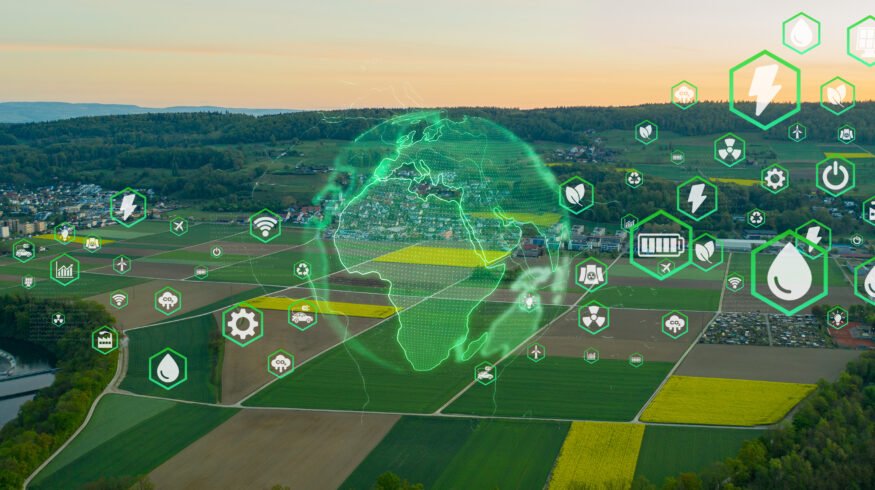

Global agrifoodtech investors are converging on five technology categories likely to attract the bulk of new capital through 2026, according to a June analysis from Global Agriculture, with the fertilizer supply shock triggered by the Strait of Hormuz crisis reshaping which bets investors consider most defensible.
Biologicals move from sustainability story to risk hedge
Global agrifoodtech funding reached $16.2 billion in 2025, according to AgFunder’s Global AgriFoodTech Investment Report 2026, with overall investment roughly flat year-on-year even as capital shifted toward companies with measurable outcomes and clearer paths to revenue. The most pronounced shift is in biologicals and nutrient-efficiency technologies, which investors increasingly view as a structural hedge against fertilizer market volatility rather than purely a sustainability play.
The World Bank’s April 2026 Commodity Markets Outlook projects fertilizer prices will rise 31% during 2026, driven largely by a projected 60% increase in urea prices tied to the Hormuz disruption. That backdrop has elevated biostimulants, biofertilizers, microbial products and soil health platforms from sustainability-adjacent bets to strategies for reducing direct exposure to concentrated, geopolitically fragile fertilizer supply chains. Soil analytics, microbial discovery platforms, fermentation technology and precision nutrient management systems are emerging as complementary investment areas around the core biological inputs themselves.
AI enters its commercial phase
Artificial intelligence in agriculture is shifting from data collection to measurable outcomes, with capital increasingly directed toward tools that help farmers cut costs and optimize fertilizer, irrigation and crop protection inputs rather than experimental applications. AI-powered crop monitoring, disease prediction platforms, autonomous machinery and precision spraying technology are drawing the strongest investor interest, with labour shortages in major farming regions adding urgency to autonomous tractors, robotic harvesters and machine-vision systems.
Climate adaptation becomes a standalone category
Drought-tolerant crop genetics, biological crop protection, precision irrigation, water-use-efficiency systems and climate-risk analytics are attracting capital as a distinct category rather than a subset of general sustainability investment. Unlike technologies dependent on future regulatory incentives, climate adaptation tools address operational pressures — drought, heat stress, erratic rainfall — that producers across major growing regions are already managing today, giving them a clearer adoption pathway.
Supply chain resilience gains standing of its own
The World Bank forecasts overall commodity prices will rise 16% during 2026 on higher energy, fertilizer and raw material costs, and the fertilizer crisis has become the clearest recent illustration of how quickly a geopolitical shock thousands of kilometres away can hit farm economics. That has pushed governments, food companies and agribusinesses to diversify sourcing and strengthen regional production, creating investment demand in post-harvest technology, agricultural logistics platforms, procurement systems and controlled-environment agriculture.
Farm data infrastructure becomes the connective layer
What was once simple farm recordkeeping is increasingly treated as a strategic asset influencing access to agricultural finance, insurance, sustainability programmes and carbon markets. Food companies, lenders and regulators are demanding greater transparency on production practices, driving demand for farm management software, traceability platforms and compliance systems that link growers, input suppliers, processors and exporters into a single data layer.
What this means for adoption
Adoption ultimately depends on farm economics rather than novelty. Biological crop inputs, AI-powered advisory tools, precision nutrient management, climate-resilient genetics and digital recordkeeping platforms are expected to see the broadest uptake over the next five years, while more capital-intensive technologies expand more gradually, particularly in markets where affordability remains a binding constraint. For fertilizer-sector observers, the throughline across all five themes is the same: 2026 capital is rewarding technologies that reduce exposure to exactly the kind of supply shock that has defined the year’s fertilizer market.
Source: Global Agriculture

Enjoyed this story?
Every Monday, our subscribers get their hands on a digest of the most trending agriculture news. You can join them too!



Discussion0 comments