

CHS and OCP plan $450 million phosphate plant in Louisiana, first new U.S. facility since 1984

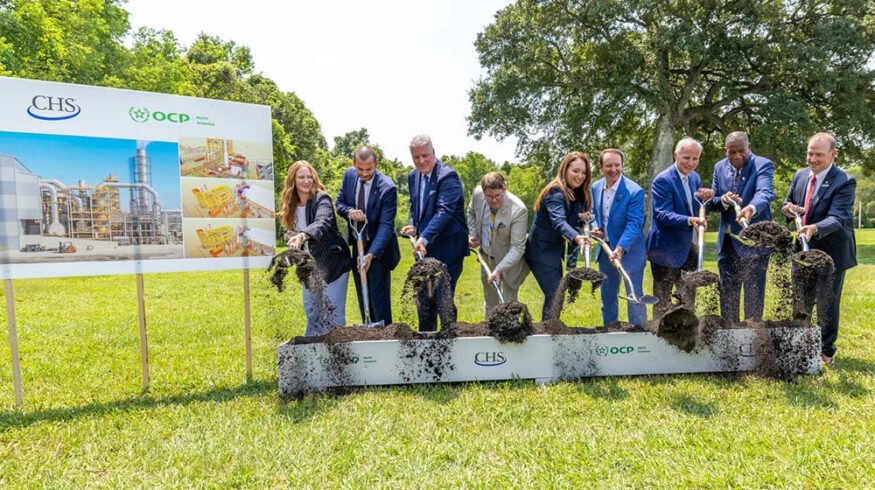

CHS and OCP North America, a subsidiary of Morocco’s OCP Group, have proposed a joint venture to build and operate a phosphate fertilizer production facility at Cornerstone Energy Park in Waggaman, Louisiana. The plant would be the first phosphate fertilizer facility constructed in the U.S. since 1984 and is expected to produce more than 1 million metric tons of phosphate-based fertilizer per year.
The companies said the project represents an anticipated investment of up to $450 million. If completed, the new capacity could reduce U.S. dependence on imported phosphate fertilizer by more than 48%, according to the announcement. The U.S. currently imports approximately 40% of the phosphate fertilizer its farmers use, as domestic phosphate reserves continue to decline. Under the proposed structure, OCP Group would supply phosphoric acid to the facility, while finished fertilizer products would be distributed through both OCP North America and CHS, which serves roughly 75,000 producer accounts across the Midwest and Northern Plains.
The announcement comes as U.S. trade policy on Moroccan phosphate imports remains under review, with the Commerce Department maintaining countervailing duties of more than 20% on OCP shipments. CHS said an application has been submitted for potential funding through the USDA’s Fertilizer Investment and Expansion for Long-term Domestic Supply program. U.S. Secretary of Agriculture Brooke Rollins and Louisiana Governor Jeff Landry attended the announcement event.
What to know about the CHS OCP phosphate plant
U.S. phosphate rock reserves have been declining for decades, and production has consolidated around a small number of existing facilities in Florida, Louisiana, and Idaho. Low-cost imports from Morocco and China made it cheaper to buy phosphate fertilizer abroad than to build new domestic capacity. The Strait of Hormuz disruption in 2026 has changed that calculus by highlighting supply-chain vulnerability.
OCP Group would supply phosphoric acid from its global operations. OCP mines phosphate rock in Morocco and processes it into phosphoric acid at facilities including its Jorf Lasfar complex. The acid would be shipped to Louisiana and converted into finished phosphate fertilizer products such as DAP and MAP at the Waggaman plant.
The U.S. Commerce Department maintains countervailing duties on Moroccan phosphate imports exceeding 20%, based on findings that OCP benefits from government subsidies. A domestic plant using OCP acid as feedstock rather than importing finished fertilizer could sidestep some of those trade barriers while still drawing on OCP’s low-cost phosphate resources.
Neither CHS nor OCP has disclosed a target construction start or completion date. The companies described the venture as a “proposed” joint venture, indicating it has not yet reached final investment decision. Permitting, engineering, and financing steps remain ahead.
Mosaic is the largest U.S. phosphate producer, operating mines and processing plants in Florida and Louisiana. Itafos runs a smaller phosphate operation in Idaho. Koch Fertilizer also has a joint venture with OCP at Jorf Lasfar in Morocco. Adding 1 million metric tons of domestic capacity would represent a significant expansion of the U.S. production base.

Enjoyed this story?
Every Monday, our subscribers get their hands on a digest of the most trending agriculture news. You can join them too!




Discussion0 comments