

Neo and Rainbow target rare earths from fertilizer waste at Phalaborwa


Neo Performance Materials and Rainbow Rare Earths have signed a memorandum of understanding covering technology support and future offtake from the Phalaborwa rare earths project in South Africa, where valuable magnet metals are expected to be recovered from legacy phosphogypsum generated by historic fertilizer production.
The agreement, announced on September 24, 2026, gives Neo Performance Materials proposed offtake rights to 40% of Phalaborwa’s annual separated neodymium-praseodymium oxide production and 65% of its mixed SEG+ rare earth carbonate. The latter product is expected to contain dysprosium and terbium alongside several other medium and heavy rare earth elements.
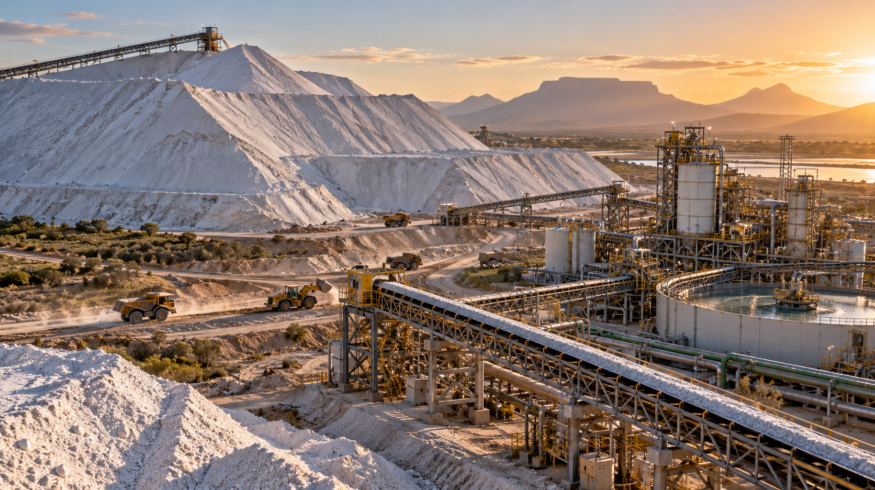
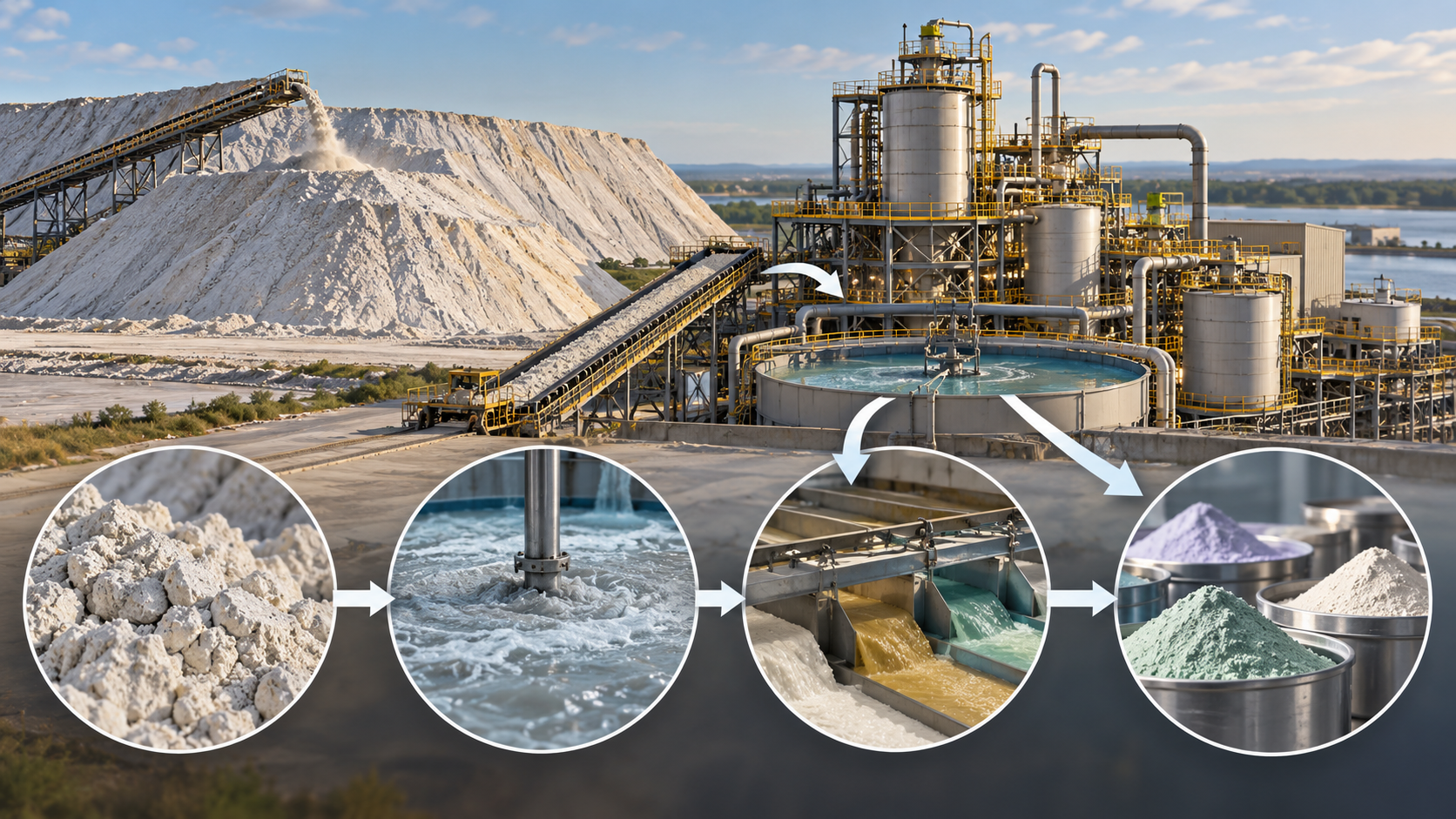
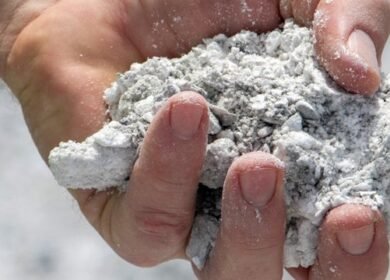
Unlike a conventional rare earth mine, Phalaborwa is designed to process phosphogypsum already stored above ground. The material was created during historic phosphate and phosphoric acid production, meaning the project aims to recover critical minerals from an existing fertilizer-industry waste stream rather than developing a new hard-rock mine.
What Neo and Rainbow agreed
Under the memorandum of understanding, Neo will support Rainbow with the final solvent-extraction stage needed to separate and purify the rare earth products.
The planned cooperation covers three main areas:
- NdPr offtake: Neo would have rights to 40% of annual separated neodymium-praseodymium oxide production at more than 99% purity.
- Heavy rare earth offtake: Neo would take 65% of the annual SEG+ mixed rare earth carbonate containing dysprosium, terbium and other rare earth elements.
- Separation technology: Neo will provide technical input and support for the project’s solvent-extraction circuit.
Test work is currently underway at Neo’s facilities in Estonia, with an integrated pilot-scale campaign expected to follow in Johannesburg.
The companies have also agreed to consider processing the remaining 35% of the SEG+ material at Neo facilities on a toll-treatment basis. Under that concept, separated dysprosium, terbium and yttrium would be returned to Rainbow for sale.
The current arrangement is an MOU rather than a final binding offtake contract. Neo and Rainbow said they have begun work on definitive agreements, meaning the commercial terms remain subject to negotiation and execution.
Phalaborwa turns fertilizer waste into a rare earth resource
The key feature of Phalaborwa is its feedstock. According to Rainbow Rare Earths, the project contains a JORC-compliant resource of approximately 35 million tonnes of phosphogypsum grading 0.44% total rare earth oxides.
Phosphogypsum is produced when phosphate rock is treated with sulfuric acid to manufacture phosphoric acid. The U.S. Environmental Protection Agency explains that phosphogypsum is the principal solid byproduct of the wet-process route used to produce phosphoric acid for fertilizers.
At Phalaborwa, decades of previous processing created two large phosphogypsum stacks in which rare earth elements became concentrated and chemically altered. Rainbow says this historic treatment leaves much of the rare earth content in a form that can be recovered without many of the mining, crushing and grinding stages required by conventional rare earth projects.
| Phalaborwa project indicator | Current project estimate |
|---|---|
| Phosphogypsum resource | 35.0 million tonnes |
| Average TREO grade | 0.44% |
| Planned phosphogypsum processing | 2.2 million tonnes/year |
| Projected NdPr production | About 1,850 tonnes/year |
| Projected Dy + Tb production | About 80 tonnes/year |
| Projected yttrium in SEG+ product | About 140 tonnes/year |
| Current target for first production | 2028 |
Why the fertilizer industry should pay attention
Phosphogypsum is normally treated as a large-volume residue of phosphate fertilizer production. The possibility of recovering rare earth elements changes the economics of at least some phosphogypsum deposits by giving an existing waste stream potential value as a secondary mineral resource.
For phosphate and fertilizer producers, projects such as Phalaborwa could create several potential benefits:
- recovering valuable materials from historic waste stacks;
- reducing the long-term volume of legacy phosphogypsum requiring management;
- creating a secondary revenue stream alongside phosphate production;
- supporting rehabilitation of historic industrial sites;
- reducing the need for new rare earth mining where suitable material already exists.
However, the Phalaborwa model cannot automatically be applied to every phosphogypsum stack. Rare earth concentration, mineralogy, radioactive-element content, processing history, infrastructure and local economics vary significantly between sites.
The commercial relevance therefore depends on whether individual phosphogypsum deposits contain enough recoverable rare earths to justify additional processing.
Phalaborwa is part of a wider fertilizer-waste strategy
Rainbow is already applying the same broad concept to other phosphate-industry waste streams.
In Brazil, Rainbow is working with fertilizer producer Mosaic on the Uberaba project in Minas Gerais. Fertilizer Daily reported in March that the companies are studying a facility capable of processing approximately 2.7 million tonnes of phosphogypsum per year and producing rare earth products from residue generated by Mosaic’s phosphate operations.
Rainbow is also working with Morocco’s OCP and Mohammed VI Polytechnic University to study rare earth recovery from phosphogypsum generated from sedimentary phosphate rock.
Together, the projects suggest that rare earth recovery from fertilizer-industry residues is moving beyond a single experimental site and becoming a broader development strategy.
| Project | Location | Fertilizer-industry connection | Status / partner |
|---|---|---|---|
| Phalaborwa | South Africa | Legacy phosphogypsum from historic phosphoric acid production | Rainbow + Neo |
| Uberaba | Brazil | Phosphogypsum from Mosaic phosphate operations | Rainbow + Mosaic |
| OCP research program | Morocco | Phosphogypsum from sedimentary phosphate processing | Rainbow + OCP + UM6P |
U.S. and European policy also support the project’s strategic relevance
Phalaborwa has attracted attention beyond the fertilizer and mining industries because neodymium, praseodymium, dysprosium and terbium are important materials for high-performance permanent magnets.
The U.S. International Development Finance Corporation previously approved a $50 million equity investment in TechMet intended to support development of the Phalaborwa project and diversify critical-mineral supply chains.
Neo’s involvement also strengthens the European connection. The company operates rare earth separation and magnet manufacturing assets in Estonia, giving Phalaborwa a potential route into European supply chains.
This aligns with the objectives of the European Critical Raw Materials Act, which specifically promotes recovery of critical raw materials from waste and aims to reduce dependence on highly concentrated international supply chains.
Project economics remain attractive, but the figures need context
Rainbow’s latest published Phalaborwa project page cites an interim economic study with a post-tax net present value of approximately $611 million, a post-tax internal rate of return of 38% and capital costs of about $326 million.
The study assumes a 16-year operating life and annual processing of approximately 2.2 million tonnes of phosphogypsum.
These figures should not be treated as a new valuation produced for the September 2026 Neo agreement. Rainbow notes that the interim study uses an earlier rare earth price basket for comparability. The definitive feasibility study now in preparation will therefore be more important for determining updated construction costs, operating assumptions and project economics.
What the Neo agreement changes
The new MOU does not finance or fully de-risk Phalaborwa by itself, but it addresses two important development questions: how the project’s rare earth products will be separated to the required purity and where a substantial share of those products could be sold.
Neo brings established rare earth separation expertise and downstream manufacturing capacity. Rainbow brings access to the phosphogypsum resource and the recovery process developed around it.
If definitive agreements are completed, the partnership could connect a former fertilizer-production waste stream in South Africa directly to rare earth processing and permanent-magnet supply chains in Europe.
That makes the announcement particularly relevant for the fertilizer industry: the value of phosphogypsum may increasingly depend not only on how it is stored or reused as gypsum, but also on what critical minerals can economically be recovered from it.
What happens next
The next milestones will determine whether the MOU develops into a commercial supply relationship.
- Neo and Rainbow must negotiate definitive technical and offtake agreements.
- Current solvent-extraction test work must confirm the required product specifications.
- Rainbow must complete the definitive feasibility study for Phalaborwa.
- The project will require final financing and construction decisions.
- Rainbow currently targets construction from 2027 and first production in 2028.
For fertilizer producers, the broader question is whether Phalaborwa can demonstrate a repeatable commercial model for extracting critical minerals from phosphogypsum. If it does, large fertilizer-industry waste inventories in other regions could receive substantially more attention as potential secondary raw-material resources.
Frequently asked questions
Phosphogypsum is the calcium-sulfate-rich solid residue left after phosphate rock is processed with sulfuric acid to produce phosphoric acid. Phosphoric acid is a major feedstock for phosphate fertilizers such as MAP and DAP.
Phosphate rock naturally contains a range of trace elements, including rare earths. During phosphoric acid production, some of these elements can remain in or become concentrated within the phosphogypsum residue. The exact concentration varies significantly according to the original phosphate deposit and processing method.
No. The planned project is based on reprocessing phosphogypsum already stored in above-ground stacks from historic phosphate processing. Rainbow therefore describes the material as a secondary resource that does not require a new conventional mine.
Under the current MOU, Neo would have proposed offtake rights to 40% of annual separated NdPr oxide production and 65% of the annual SEG+ mixed rare earth carbonate. The terms are still subject to definitive agreements.
Rainbow currently targets construction beginning in 2027 and first production in 2028, subject to completion of the definitive feasibility study, financing, permitting and final investment decisions.
Potentially, but not every phosphogypsum deposit will be economically suitable. Rare earth grades, chemistry, radioactive-element content, infrastructure and processing costs differ between sites. Projects such as Uberaba in Brazil and Rainbow’s research program with OCP in Morocco are testing whether the concept can be replicated in other phosphate-production systems.
Sources: Neo Performance Materials, Rainbow Rare Earths, U.S. EPA, U.S. DFC, European Commission

Enjoyed this story?
Every Monday, our subscribers get their hands on a digest of the most trending agriculture news. You can join them too!





Discussion0 comments