

USDA taps CIBO as tech partner in $80 million climate-smart farming program


CIBO Technologies has been chosen as the technology partner for a new $80 million USDA-funded initiative aimed at accelerating climate-smart agriculture in the United States. Led by Virginia Tech University, the Alliance to Advance Climate-Smart Agriculture will distribute financial incentives to farmers in Arkansas, Minnesota, North Dakota, and Virginia for implementing regenerative practices.
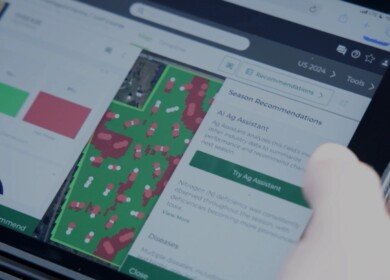
CIBO, a Minneapolis-based agricultural software firm, will contribute its advanced modeling platform to quantify the environmental outcomes of conservation techniques such as cover cropping and crop rotation. The data will support the development of a new market for climate-smart commodities that could attract price premiums from downstream buyers, including food processors and fuel companies.
The program is structured to offer direct payments to producers, while also supporting long-term economic and environmental resilience in agriculture. It is one of the latest examples of a growing effort to use public-private partnerships to shift farming systems toward sustainability.
“This program aligns government funding with quantification tools to create a win-win for farmers, communities, and the planet,” said Daniel Ryan, CEO of CIBO Technologies. “By linking measurable environmental outcomes to financial incentives, we’re supporting producers in adopting scalable, high-impact practices that improve both land health and profitability.”
The Alliance includes more than 14 public, private, and academic partners and is managed by Virginia Tech’s College of Agriculture and Life Sciences. With CIBO’s modeling capabilities integrated, the program will also track greenhouse gas reductions and water quality outcomes, supporting verification frameworks that meet evolving buyer and regulator expectations.
“CIBO is uniquely positioned to connect field data with marketplace opportunities and deliver reliable impact reporting across the value chain,” said Rebekah Slabach, Associate Director of the Alliance. “This partnership adds both rigor and reach to our efforts.”
The program’s scope reflects broader USDA goals to reduce agriculture’s carbon footprint while boosting economic resilience in rural areas. It also underscores the increasing role of digital infrastructure in shaping conservation finance and sustainable supply chains.

Enjoyed this story?
Every Monday, our subscribers get their hands on a digest of the most trending agriculture news. You can join them too!




Discussion0 comments