

Australia invests AUD 21 million to future-proof canola as demand and climate risks grow

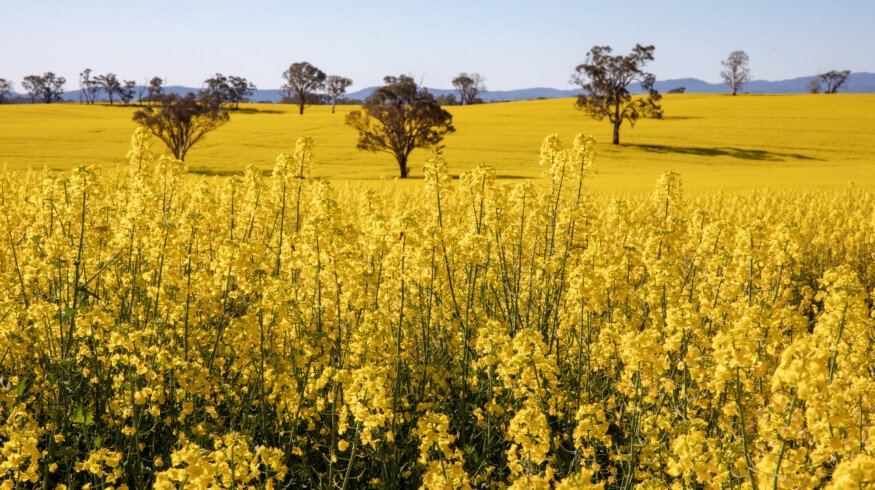

Australia is channeling AUD 21 million (approx. USD 14 million) into canola research aimed at increasing profitability and resilience of the oilseed crop amid changing climatic conditions and rising global demand.
The investment—led by the New South Wales Department of Primary Industries and Regional Development (NSW DPIRD) and the Grains Research and Development Corporation (GRDC)—will support three advanced research projects targeting critical performance traits in canola: improved yield efficiency, acid soil tolerance, and pod shatter resistance.
“Canola remains one of Australia’s most valuable crops, but its agronomic potential is far from fully realized,” said Dr. Harsh Raman, Senior Principal Research Scientist at NSW DPIRD. “We’re still uncovering how best to convert plant growth into seed yield, especially under water-limited conditions.”
While breeding has improved canola vigor, some varieties still struggle to convert vegetative growth into seed production—limiting yield and profitability. Researchers will use drones, imaging, and high-throughput phenotyping to identify traits that drive more efficient biomass partitioning and improve harvest index under variable climate conditions.
The effort builds on a February breakthrough, when Dr. Raman’s team identified a gene linked to manganese toxicity tolerance in acidic soils—an issue for many Australian growers. Backed by AUD 8 million (approx. USD 5.4 million) in co-investment, the next phase will focus on breeding acid-tolerant canola varieties.
A parallel project, led by Dr. Rosy Raman, will develop standardized methods to measure pod shatter resistance—an important trait for minimizing harvest losses and reducing volunteer weeds in follow-up crops.
“These projects are designed to equip growers with canola varieties better suited to both economic and environmental pressures,” Dr. Raman said.
Australia’s research effort draws on the Australian Plant Phenomics Network (APPN), a federally supported infrastructure initiative working with institutions such as the Australian National University and Analytics for the Australian Grains Industry. While domestically led, the findings are expected to inform global breeding strategies and support seed developers seeking higher canola efficiency under climate stress.

Enjoyed this story?
Every Monday, our subscribers get their hands on a digest of the most trending agriculture news. You can join them too!







Discussion0 comments