

AgTech venture capital investment declined in Q2 2025 by 22.8% driving away from early-stage deals



Venture capital investment in agricultural technology fell sharply in Q2 2025, according to PitchBook’s latest report, as investors continued to consolidate bets on mature companies offering scalable and resilient solutions. The report shows that total agtech VC deal value dropped 22.8% quarter-over-quarter to $1.5 billion, with deal count also down nearly 23%, marking one of the weakest quarters since 2020.
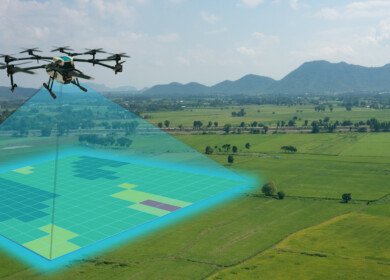
The downturn reflects a broader retraction in private markets that has persisted since the peak in early 2022. Yet, within the sector, precision agriculture startups bucked the trend, attracting $580.2 million across 36 deals, outpacing ag biotech for the first time since 2017. By contrast, ag biotech companies raised $270.6 million over 35 deals, a steep 72.5% fall from the previous quarter.
The divergence underscores shifting investor priorities, with automation, AI applications, and near-term efficiency gains taking precedence over longer-horizon biotech innovations. “Labor shortages and immediate operational efficiency challenges are driving capital toward solutions that can deliver tangible results faster,” the report notes.
Notable deals in precision ag included DroneDeploy’s $15.2 million Series E round, RootWave’s $15 million investment, and FlyGuys’ $13.2 million raise. Meanwhile, ag biotech’s top deal was Vensaron’s $102.8 million late-stage round.
Despite the pullback in deal count, median deal size rose from $3.1 million in 2024 to $5 million in 2025, while median pre-money valuations increased from $15.1 million to $24 million. These figures suggest that capital is consolidating in fewer, higher-quality companies.
PitchBook data also indicates that late-stage deals now dominate the market, comprising 54% of transactions so far this year, compared with just one-third in 2020. Early-stage and seed investments each accounted for less than 15%, pointing to a maturing sector where investors increasingly back proven business models.
Exit activity remained muted but steady, with 12 exits recorded in Q2. Strategic buyers—facing reduced startup formation and ample acquisition opportunities—have been especially active in segments like plant biotech, livestock tech, and imagery analytics. Key acquisitions included Sentera by John Deere and Intrinsyx Bio by Syngenta.
Looking ahead, the report suggests that agtech funding will likely continue favoring later-stage companies with clear commercial pathways. Sectors integrating AI and robotics are expected to maintain momentum as investors navigate uncertain market conditions with a “flight to quality” approach.

Enjoyed this story?
Every Monday, our subscribers get their hands on a digest of the most trending agriculture news. You can join them too!







Discussion0 comments