Skip to content
  • Professionals
  • Gardeners
 
Search
Log in
EN
RU
  • Trade & Policy
  • Markets
  • AgTech & Research
  • Corporate
  • Sustainability
  • Interviews
  • Rankings
  • Events
  • Stock Quotes
  • Business Directory
Trending topic:

El Niño

Featured company:
 
RU
  • Professionals
  • Gardeners
Sections
    Events
    Stock Quotes
    Business Directory
    Trending topic:

    El Niño

    Featured company:
    Follow us...
    Helpful information
    • About
    • Team
    • Advertise
    • Contacts
    • Submit a Tip
    • Privacy Policy
    • Terms of Service
    • Site Map
    Sections
      Seasonal tips
      • Spring
      • Summer
      • Autumn
      • Winter
      Trending topics
      • compost
        25
      • garlic
        2
      • lemon
        1
      • potato
        16
      Follow us...
      Helpful information
      • About
      • Team
      • Advertise
      • Contacts
      • Submit a Tip
      • Privacy Policy
      • Terms of Service
      • Site Map
      Copyright © 2014-2026 DigitalTree LLC. All rights reserved.
      We deliver content lightning-fast thanks to the managed cloud WordPress hosting with CDN.
      16+

      Home / AgTech & Research

      Soil fungus shows potential to replace chemical fungicides

      Elena Shalashnik avatar Elena Shalashnik
      October 2, 2025, 12:00 pm
      October 2, 2025, 12:00 pm
      [esi post-views ttl=0]
      AgTech & Research
      Soil fungus shows potential to replace chemical fungicides

      Save for later
      Share
      Never miss important fertilizer news

      A common soil fungus may provide farmers with an alternative to synthetic fungicides, according to new research by Rothamsted scientists and their partners at the universities of Exeter and Warwick.

      The study, published in Environmental Microbiology Reports, shows that Trichoderma hamatum GD12 — a fungus already used in crop protection — produces volatile organic compounds (VOCs) that can suppress devastating pathogens. When grown alongside Sclerotinia sclerotiorum, a mold that causes rot in lettuce, beans and oilseed rape, the fungus released a surge of airborne chemicals that stalled the pathogen’s growth.

      Among the most potent was 1-octen-3-one, which not only halted S. sclerotiorum but also blocked other damaging fungi including Botrytis cinerea (grey mold), Pyrenopeziza brassicae (light leaf spot) and Gaeumannomyces tritici (wheat take-all). Laboratory tests showed VOC production peaked 17 days after the fungi were grown in co-culture.
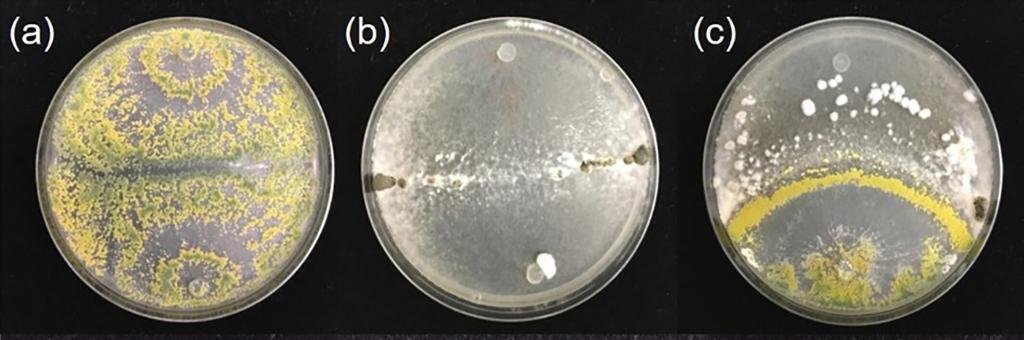
      Plate cultures of (a) Trichoderma hamatum GD12 strain; (b) Sclerotinia sclerotiorum (c) co-culture of the two showing inhibitory effect of T. hamatum GD12 (bottom) on S. sclerotiorum (top) .

      The findings come as regulators in Europe and the UK tighten restrictions on synthetic fungicides, pushing the agriculture sector to seek greener solutions. “Further work is needed to understand how these fungal VOCs operate in real-world farming conditions, and whether they can be harnessed effectively at scale,” said Dr. József Vuts of Rothamsted, a co-author of the study. “But the discovery offers fresh hope for greener crop protection at a time when agriculture is under pressure to cut chemical inputs.”

      Industry observers say such discoveries could feed into the development of commercial biocontrol products, an expanding market as agrochemical companies search for new tools to meet sustainability and regulatory demands.

      biocontrol
      crop protection
      fungicide
      green solution
      mold
      Rothamsted Research
      soil fungus
      VOC
      volatile organic compound

      Enjoyed this story?

      Every Monday, our subscribers get their hands on a digest of the most trending agriculture news. You can join them too!

      Sign me up
      Check the example

      Discussion0 comments

      Спасибо за комментарий, он будет опубликован на сайте после проверки модератором. Хотите, чтобы ваши комментарии появлялись на сайте мгновенно? Достаточно пройти регистрацию.
      Congratulations, you can be the first to start the conversation.
      Do you have a question or suggestion? Please leave your comment to ignite conversation.
      What’s on your mind?
      Cancel Log in and comment
      Or continue without registration
      Get notified about new comments by email.
      Advertisement
      In focus
      How to get here?
      Stock quotes
      Bayer
      14
      2.41
      Bayer Crop Science
      48.44
      1.57
      CF Industries
      127.35
      3.6
      Corteva Agriscience
      89.34
      1.29
      ICL Group
      5.1
      2.67
      Intrepid Potash
      35.46
      0.51
      Mosaic
      22.62
      1.99
      Nutrien
      70.59
      1.63
      Yara International
      23.64
      1.03
      See all
      Most read
      Mosaic cuts phosphate output at four U.S. plants as critical sulfur shortage bites
      Mosaic cuts phosphate output at four U.S. plants as critical sulfur shortage bites
      China extends phosphate export curbs through August 2026 as Russia holds fertilizer quotas
      China extends phosphate export curbs through August 2026 as Russia holds fertilizer quotas
      Koch and OCP expand 50/50 phosphate JV to 2.5 million metric tons at Jorf Lasfar
      Koch and OCP expand 50/50 phosphate JV to 2.5 million metric tons at Jorf Lasfar
      Fertilizer prices could climb 30% in 2026 as Hormuz risks bite
      Fertilizer prices could climb 30% in 2026 as Hormuz risks bite
      Green ammonia is easier to make than to sell
      Green ammonia is easier to make than to sell
      Events
      Farm Progress Show
      Boone (IA), USA
      Sep 1 — 3, 2026
      Fertilizer Canada Annual Conference
      Charlottetown, Canada
      Sep 14 — 16, 2026
      Argus Methanol & Ammonia Conference
      Houston (TX), USA
      Sep 21 — 23, 2026
      World Fertilizer Conference
      San Diego (CA), USA
      Sep 28 — 30, 2026
      Argus Fertilizer Europe
      Prague, Czechia
      Oct 20 — 22, 2026
      See all
      Live
      Trader
      July 29, 06:28 pm
      100 percent AI generated, from a company with a 100 percent AI generated website. I’m sure they have good data, but it’s hard to take it seriously wen it’s just AI church
      Green ammonia is easier to make than to sell
      Stefan Petko
      May 6, 06:48 pm
      It is alarming to see these developments in California. As a vineyard grower, I have faced significant challenges this year, with fertilizer costs rising sharply while market conditions have made it difficult to sell the harvest.
      California peach growers forced to remove 420,000 trees after bankruptcy of Del Monte Foods canneries
      Estebel
      April 23, 10:26 pm
      Sounds like magic ))
      MIT study: rice seeds germinate faster when exposed to rainfall sounds
      Isabelita Barreiro
      December 11, 2025, 01:54 am
      Excellent management of water resources and effective use of water-soluble fertilizers!
      Argentine nano-fertilizer firm AKO Agro expands to Brazil
      Meripa Corson
      August 4, 2025, 01:18 pm
      Where does the money actually go? As a timber land owner, how do I benefit from the legislation?
      USDA commits $80 million to expand timber markets and improve forest resilience
      About
      Sections
      Trade & Policy  ·  Markets  ·  AgTech & Research  ·  Corporate  ·  Sustainability  ·  Interviews  ·  Rankings
      Support
      About  ·  Team  ·  Advertise  ·  Contacts  ·  Submit a Tip  ·  Privacy Policy  ·  Terms of Service  ·  Site Map
      Copyright © 2014-2026 DigitalTree LLC. All rights reserved.
      We deliver content lightning-fast thanks to the managed cloud WordPress hosting with CDN.
      16+
      More to read
      Gene-edited crops set for groundbreaking European trials
      Gene-edited crops set for groundbreaking European trials
      Brazilian scientists discover Antarctic fungus with biopesticide potential
      Brazilian scientists discover Antarctic fungus with biopesticide potential
      Understanding Fusarium graminearum’s spread through wheat
      Understanding Fusarium graminearum’s spread through wheat
      Advertising that helps us do quality reporting