

Cargo shift to the Baltic could cut potash fertilizer output

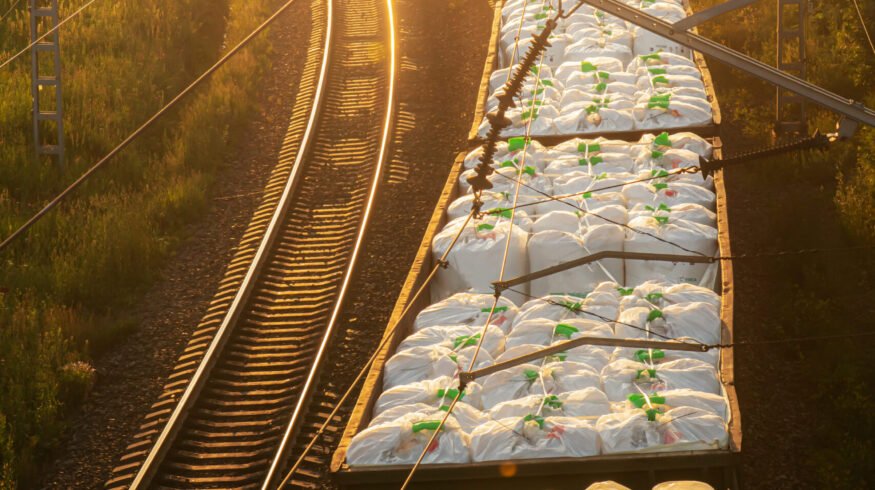

Disruption in the Azov-Black Sea basin is pushing Russian export cargoes towards other sea routes, and the Baltic is emerging as one of the main beneficiaries.
Industry sources say that in August alone, around 2.4 million tonnes of dry cargo were rerouted to other basins. The Baltic took about 0.7 million tonnes of that, the Far East took 1.1 million tonnes, the Arctic took 0.5 million tonnes, and the Caspian took 0.1 million tonnes.
Among the cargoes finding new routes are grain and coal. In fact, the grain segment is where the redistribution is particularly noticeable. In September, more than 60% of Russia’s wheat exports went through Baltic ports — a volume that industry analysts put at over 1 million tonnes.
The extra traffic is straining rail and port infrastructure in the North-West, and transportation of mineral fertilizers is coming under pressure as a result.
Industry sources estimate that fertilizer loadings on the Russian Railways network fell by 700,000–800,000 tonnes in September against the monthly average for the first eight months of the year. The drop affected all key fertilizers and reflects the growing squeeze on rail and port logistics. Market participants link the trend in part to the limited capacity for receiving and shipping cargo.
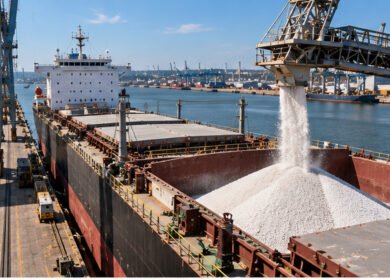
The Azov-Black Sea basin is adding to the problem. In January–August, the Tuapse bulk terminal handled around 1.5 million tonnes of mineral fertilizers, down 9% year-on-year. The company blamed external factors affecting shipping and the organization of sea transport. Potash remains one of the main cargoes for the terminal, with around 85,000 tonnes handled in August.
Potash took the biggest hit in September. Industry data shows September shipments from the largest producers running 23–27% below the monthly average for the first eight months of the year.
The Belarusian Potash Company (the trader for Belaruskali) shipped around 812,000 tonnes in September, compared with a monthly average of about 1.072 million tonnes in January–August, or 76% of its usual level. That is a 24% fall.
EuroChem’s potash shipments dropped from a monthly average of 402,000 tonnes to around 308,000 tonnes in September. This is 77% of its January–August average, a 23% decline.
Uralkali saw the steepest fall. It shipped around 827,000 tonnes in September against the January–August monthly average of about 1.13 million tonnes — 73% of its average, down around 27%.
Between them, the three producers shipped a monthly average of around 2.6 million tonnes in January–August, falling to roughly 1.95 million tonnes in September. That is a cut of about 660,000 tonnes, or 25%.
Potash production in Russia nonetheless held up well in January–August. Rosstat puts the output at around 12.5 million tonnes for the period, or about 1.56 million tonnes a month.
September’s figures show that logistics constraints can increasingly hinder the producers’ ability to move their products. If shipments stay at these levels through the last quarter of the year, the effect could start to show up in output too.
On market estimates, that could mean a shortfall of around 1.5 million tonnes of potash fertilizers in October–December.
The upshot is that cargo diverted from the Azov-Black Sea basin is adding to the pressure on the fertilizer market. As the Baltic route takes on more traffic, competition for transport infrastructure intensifies. If nothing changes, that could curb not only exports but production in Q4.

Enjoyed this story?
Every Monday, our subscribers get their hands on a digest of the most trending agriculture news. You can join them too!





Discussion0 comments