Skip to content
  • Professionals
  • Gardeners
 
Search
Log in
EN
RU
  • Markets
  • Business
  • Politics
  • Technologies
  • Interviews
  • Rankings
  • Environment
  • Events
  • Stock Quotes
  • Business Directory
Trending topic:
Featured company:
 
RU
  • Professionals
  • Gardeners
Sections
    Events
    Stock Quotes
    Business Directory
    Trending topic:
    Featured company:
    Follow us...
    Helpful information
    • About
    • Team
    • Advertise
    • Contacts
    • Submit a Tip
    • Privacy Policy
    • Terms of Service
    • Site Map
    Sections
      Seasonal tips
      • Spring
      • Summer
      • Autumn
      • Winter
      Trending topics
      • compost
        24
      • garlic
        2
      • lemon
        1
      • potato
        14
      Follow us...
      Helpful information
      • About
      • Team
      • Advertise
      • Contacts
      • Submit a Tip
      • Privacy Policy
      • Terms of Service
      • Site Map
      Copyright © 2014-2026 DigitalTree LLC. All rights reserved.
      We deliver content lightning-fast thanks to the managed cloud WordPress hosting with CDN.
      16+

      Home / Technologies

      Hidden soybean cyst nematode threatens North American yields

      Kim Clarksen avatar Kim Clarksen
      October 10, 2025, 12:00 pm
      October 10, 2025, 12:00 pm
      [esi post-views ttl=0]
      Technologies
      Business
      Crop Protection
      Hidden soybean cyst nematode threatens North American yields
      Save for later
      Share

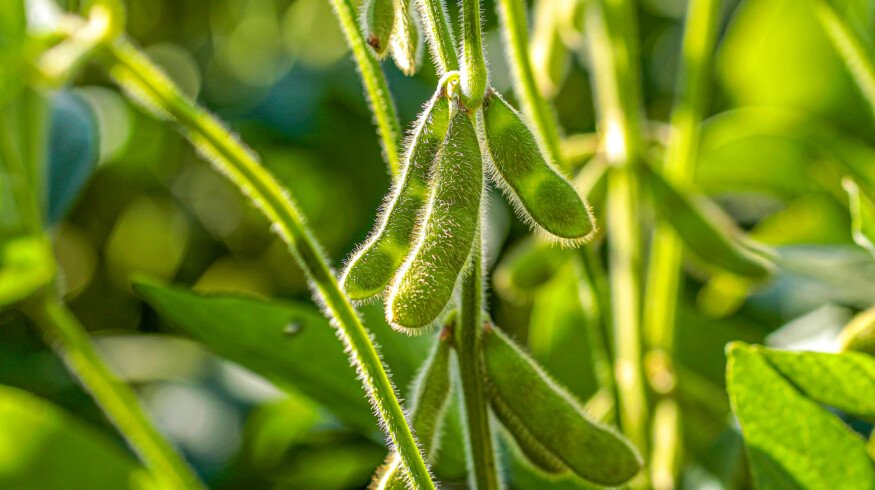
      The SCN Coalition, together with Syngenta, Indigo, and BASF, has declared October 6 National Nematode Day to draw attention to the growing threat of soybean cyst nematode (SCN)—the leading yield-reducing pathogen for soybeans in North America. The pest causes an estimated $1.5 billion in annual yield losses across the region.

      Experts warn that, despite few visible symptoms in many fields this season, the pest may still be eroding yields undetected. “It’s going to be a deceptive year for a lot of growers because we’ve had a little bit more rain than usual,” said Dylan Mangel, Extension plant pathologist at the University of Nebraska. “Something that’s already hard to detect may be a little harder still. That doesn’t mean they’re not struggling with some level of yield loss.”

      Soil testing remains crucial

      Regular soil testing for SCN populations is increasingly important as the pest shows growing resistance to PI 88788, the most common source of genetic resistance in commercial soybean varieties. Knowing SCN levels allows farmers to better assess yield risk and adjust management plans.

      Harvest is generally the best time to test for SCN in corn–soybean rotations, according to Mangel. “The nematode levels are going to hit their peak at the end of the soybean season,” he said. “Soil sampling at the end of the soybean season is your best chance at catching them if they’re there.”
      ADVERTISEMENT

      Experts recommend sampling from uniform landscapes or collecting separate samples from distinct high and low areas. Fields with high pH, visible sudden death syndrome, or chronically low yields should be prioritized. Soil tests should be repeated every three to five years, ideally at the same time of year, to monitor population changes over time.

      “Soil sampling every second soybean crop over a period of years will give you a general idea of how SCN levels are changing and if management practices are working,” said Dale Ireland, technical product lead at Syngenta. Several U.S. states, including Nebraska and Ohio, currently offer free testing services through university Extension programs.

      To help growers estimate potential yield impacts, the SCN Coalition has developed the SCN Profit Checker, an online tool combining location, egg count data, and soil characteristics to predict likely yield losses.

      New management options on the horizon

      Seed companies are advancing new genetic and chemical solutions to strengthen SCN control. BASF’s Nemasphere transgenic trait produces a Cry14 protein that disrupts nematode feeding. In more than 200 U.S. field trials, the technology has shown yield increases of up to 8%. BASF plans to stack Nemasphere with the Enlist E3 herbicide tolerance trait, targeting market introduction by 2028 pending regulatory approvals.

      Syngenta’s Victrato seed treatment, currently under U.S. EPA review, uses a new SDHI active ingredient (TYMIRIUM technology) to target SCN eggs, juveniles, and adults while suppressing early foliar diseases. Field trials conducted between 2015 and 2022 showed an 84% yield advantage compared to untreated controls.

      Stewardship remains essential

      As resistance to PI 88788 continues to expand, agronomists stress the need for crop and trait rotation. “If you find a good variety, the last thing you want to do is switch,” Mangel said. “But switching it up will make that variety and those resistance sources stronger for longer. Don’t give nematodes a chance to find new ways to work around those varieties.”

      Growers are urged to combine resistant varieties, crop rotation, and seed treatments to preserve the effectiveness of emerging management tools and reduce long-term yield losses from this hidden but costly pest.

      BASF
      crop protection
      Indigo Agriculture
      nematode
      soybean
      Syngenta
      U.S.

      Enjoyed this story?

      Every Monday, our subscribers get their hands on a digest of the most trending agriculture news. You can join them too!

      Sign me up
      Check the example

      Discussion0 comments

      Спасибо за комментарий, он будет опубликован на сайте после проверки модератором. Хотите, чтобы ваши комментарии появлялись на сайте мгновенно? Достаточно пройти регистрацию.
      Congratulations, you can be the first to start the conversation.
      Do you have a question or suggestion? Please leave your comment to ignite conversation.
      What’s on your mind?
      Cancel Log in and comment
      Or continue without registration
      Get notified about new comments by email.
      Advertisement
      In focus
      How to get here?
      Stock quotes
      Bayer
      11.16
      5.88
      Bayer Crop Science
      38.05
      4.39
      CF Industries
      124.2
      2.04
      Corteva Agriscience
      81.01
      2.07
      ICL Group
      5.49
      3
      Intrepid Potash
      39.57
      2.75
      Mosaic
      23.27
      1.04
      Nutrien
      76
      2.52
      Yara International
      29.06
      1.96
      See all
      Most read
      BASF acquires AgBiTech to expand biological insect control portfolio
      BASF acquires AgBiTech to expand biological insect control portfolio
      China limits fertilizer exports as the country prioritizes domestic market
      China limits fertilizer exports as the country prioritizes domestic market
      Mosaic suspends two phosphate facilities in Brazil considering their potential sale
      Mosaic suspends two phosphate facilities in Brazil considering their potential sale
      Russia limits fertilizer exports to 20 million tons through November 2026
      Russia limits fertilizer exports to 20 million tons through November 2026
      EU approves French funding for LAT Nitrogen’s Ottmarsheim hydrogen project
      EU approves French funding for LAT Nitrogen’s Ottmarsheim hydrogen project
      Events
      Argus Clean Ammonia North America
      Houston (TX), USA
      Apr 27 — 29, 2026
      CaspianAgro
      Baku, Azerbaijan
      May 5 — 8, 2026
      Fertilizer Summit
      Chicago (IL), USA
      Jun 1 — 2, 2026
      Argus Clean Ammonia Asia
      Tokyo, Japan
      Jun 2 — 4, 2026
      Wood Mackenzie Hydrogen Hydrogen Conference
      London, UK
      Jun 4, 2026
      See all
      Live
      Estebel
      April 23, 10:26 pm
      Sounds like magic ))
      MIT study: rice seeds germinate faster when exposed to rainfall sounds
      Isabelita Barreiro
      December 11, 2025, 01:54 am
      Excellent management of water resources and effective use of water-soluble fertilizers!
      Argentine nano-fertilizer firm AKO Agro expands to Brazil
      Meripa Corson
      August 4, 2025, 01:18 pm
      Where does the money actually go? As a timber land owner, how do I benefit from the legislation?
      USDA commits $80 million to expand timber markets and improve forest resilience
      Patonkas Luksompulus
      January 21, 2025, 12:36 pm
      Greece meeds biological fertilizers! Great news about De sangosse.
      DE SANGOSSE expands operations with Greek subsidiary
      Pedro Diaz
      November 20, 2024, 08:42 pm
      Is it a Roundup lawsuit or more about bad financials? I think the market reacted only to announced financial results.
      Bayer’s shares are pressed down by ongoing Roundup cancer lawsuit
      About
      Sections
      Markets  ·  Business  ·  Politics  ·  Technologies  ·  Interviews  ·  Rankings  ·  Environment
      Support
      About  ·  Team  ·  Advertise  ·  Contacts  ·  Submit a Tip  ·  Privacy Policy  ·  Terms of Service  ·  Site Map
      Copyright © 2014-2026 DigitalTree LLC. All rights reserved.
      We deliver content lightning-fast thanks to the managed cloud WordPress hosting with CDN.
      16+
      More to read
      BASF unveils nematode-resistant soybean trait for Brazil
      BASF unveils nematode-resistant soybean trait for Brazil
      Soil profile tests can help you reduce fertilizer costs
      Soil profile tests can help you reduce fertilizer costs
      BASF expands alcoholates production with new German plant
      BASF expands alcoholates production with new German plant
      Advertising that helps us do quality reporting