

AI-powered field cameras target black-grass in new precision spraying breakthrough

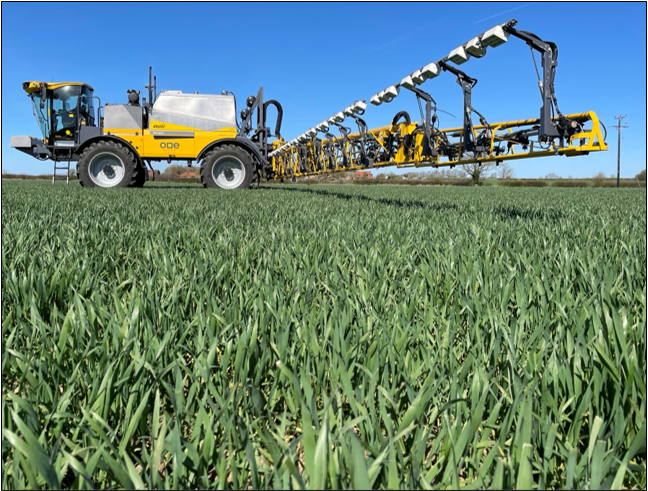

A partnership between Rothamsted Research and industry partners Bosch, Chafer Machinery, and Xarvio has developed a new artificial intelligence-based approach to controlling black-grass (Alopecurus myosuroides), one of the UK’s most persistent arable weeds.
The system uses cameras mounted on a Chafer Machinery sprayer boom to detect black-grass across different growth stages and direct herbicide application only to affected field areas. By localizing treatment, the technology aims to reduce chemical use, lower costs, and limit the spread of herbicide-resistant weeds.
Rothamsted scientists trained the AI algorithm using thousands of field images capturing both crops and black-grass plants under varied conditions. In collaboration with Bosch, nearly 5,000 photographs were annotated manually to identify over 12,000 black-grass plants and 10,000 other weeds. These data were then used to teach the system to distinguish black-grass among crops including wheat, barley, and beans.
Field experiments established an optimal setup using 28 cameras mounted 1.1 meters above ground on the Chafer sprayer. Unlike spot-spraying systems that target individual plants, this configuration operates map-based—directing the sprayer to cover zones where black-grass is detected.
Each partner contributed specific expertise: Bosch led AI and imaging technology, Chafer adapted its machinery for precision application, and Xarvio developed the agronomic component by testing herbicide options and application parameters.
“Black-grass is a particularly troublesome weed, and growers have resorted to increasingly complex and costly herbicide mixtures to control it,” said Dr. David Comont of Rothamsted Research. “By targeting herbicides only where they are needed, we can reduce chemical use and costs while maintaining effective control.”
Bosch’s Peter Frankland noted that evolving cultivation practices, including reduced tillage, have made weed control more challenging. “No-till and low-till systems leave seeds closer to the surface, increasing the need for smart, sustainable control tools,” he said.
The AI system achieved about 85% detection accuracy across multiple seasons and crop types, according to Bosch AI expert Muhammad Kassem. The project was funded by the UK’s Department for Environment, Food and Rural Affairs (DEFRA) through the Farming Innovation Programme and the UK Research and Innovation (UKRI) Transforming Food Production challenge.
The collaboration underscores the growing role of digital technologies in precision agriculture, as producers seek to balance crop productivity with sustainability and input efficiency.

Enjoyed this story?
Every Monday, our subscribers get their hands on a digest of the most trending agriculture news. You can join them too!






Discussion0 comments