IITA and Bayer expand crop-breeding partnership in sub-Saharan Africa

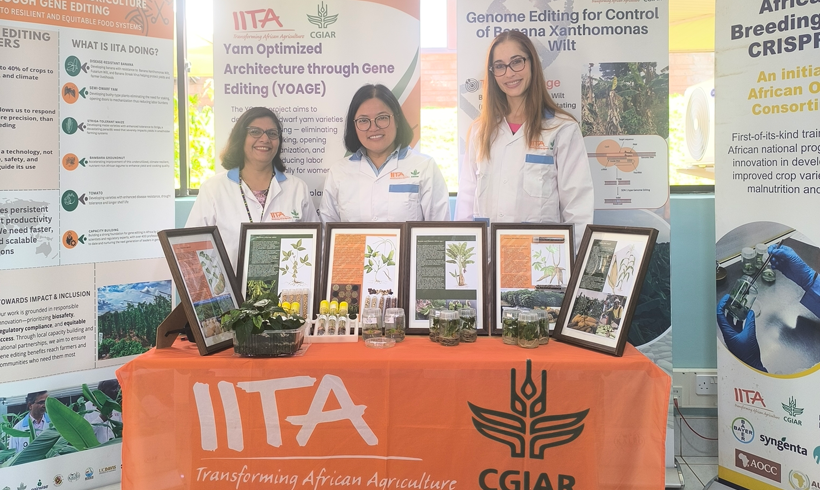
The International Institute of Tropical Agriculture and Bayer have expanded a research partnership to develop higher-yielding and climate-resilient crop varieties for sub-Saharan Africa, sharpening efforts to raise productivity in smallholder farming systems.
The agreement, which runs through 2028, combines IITA’s expertise in tropical crops with Bayer’s breeding technologies. The partners are targeting yield gains of at least 25% in farmers’ fields across seven staple crops: maize, soybean, cowpea, cassava, yam, banana and plantain, and Bambara groundnut. The initiative is expected to reach about 30 million smallholder farmers.
The program centers on three areas: training researchers, upgrading breeding systems, and developing new seed varieties. It will expand capabilities in genomic selection, molecular breeding, and data-driven decision-making, while strengthening digital phenotyping and centralized breeding operations to improve the speed and precision of variety development.
Joint research will focus on specific outputs, including biotech maize adapted to West Africa, rust-resistant soybean varieties, gene-edited insect-resistant cowpea, and disease-resistant banana lines.
Bill & Melinda Gates Foundation is supporting the effort through its Genetic Innovations Public-Private Partnerships platform. Bayer is contributing up to $1.2 million in in-kind support, including access to breeding tools, advisory services, and training systems, while IITA will lead implementation through its regional research network.
The collaboration builds on earlier joint projects in modern breeding and genetic improvement. It comes as seed developers and research institutions increase investment in Africa, where yield gaps remain wide and climate variability is adding pressure to food systems.

Enjoyed this story?
Every Monday, our subscribers get their hands on a digest of the most trending agriculture news. You can join them too!


Discussion0 comments