

Arevo introduces Arginex to tackle nitrogen loss in peat-free substrates

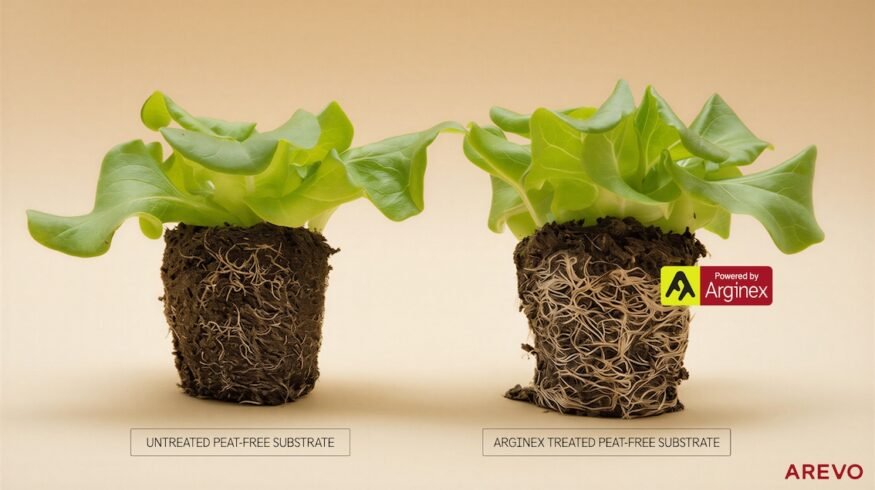

Europe’s professional horticulture industry is experiencing a significant transition as regulators, retailers, and consumers encourage a shift from peat-based growing media. Arevo notes that this move to peat-free substrates reveals a critical weakness in conventional fertilizer systems: nitrogen loss.
The company reports that standard ammonium nitrate fertilizers, designed for peat-based systems, perform poorly in peat-free alternatives such as coir, bark, and wood fiber. In these substrates, over half of the nitrogen is lost after the first watering, and retention drops to approximately 10% after six watering cycles.
Arevo states that this issue threatens both grower profitability and the environmental goals of the peat-free transition. Growers experiencing nutrient losses often increase fertilizer use and irrigation, which can raise runoff and production costs.
“A combination of EU climate law, biodiversity regulation, corporate disclosure requirements and national bans has created structural pressure on peat extraction and use,” said Niklas Astrom. “But the nutrition systems currently being used were designed for peat, not for modern peat-free substrates.”
Growers face inconsistent performance from peat alternatives
The move away from peat has accelerated in ornamental horticulture, nursery production, and increasingly in food crop cultivation. However, growers report inconsistent performance from peat-free products, especially regarding water retention, nutrient stability, and crop uniformity.
Peat has historically offered a stable, moisture-retentive, and uniform growing environment. Alternative substrates require changes to watering schedules and fertilization strategies due to their different properties.
Arevo notes that these challenges have increased skepticism among commercial growers, who are also facing higher substrate costs and inconsistent crop performance.
“The peat-free transition has a nitrogen retention problem that growers are trying to compensate for with more frequent topups, higher application rates, and increased runoff,” Astrom said. “This is a category-level issue, not a product-level one.”
Arevo positions Arginex as alternative nitrogen technology
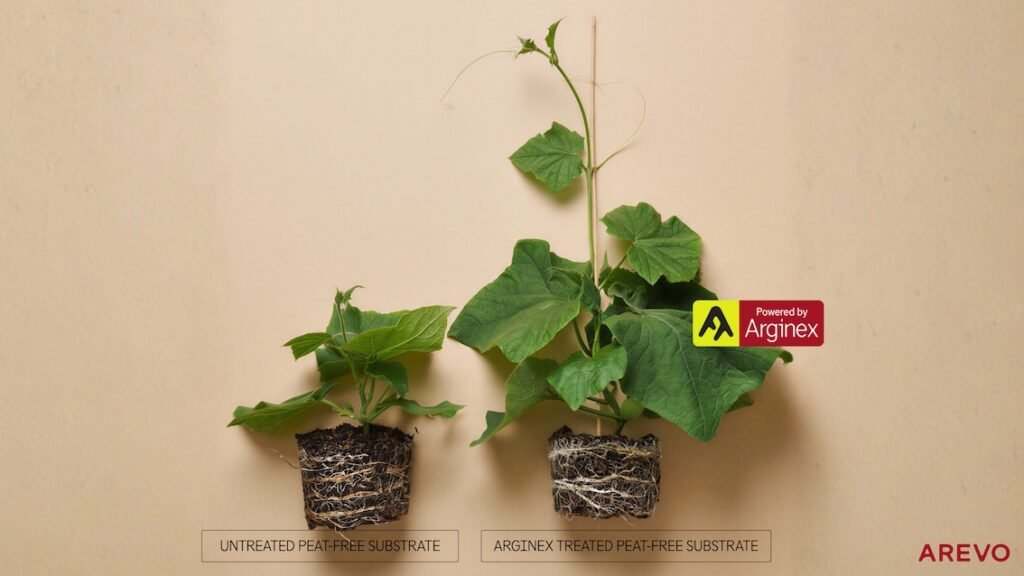
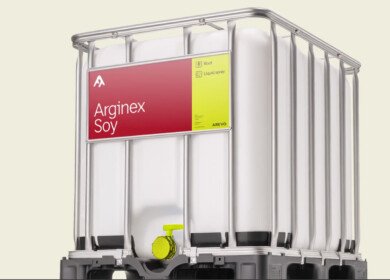
Arevo is promoting its patented nitrogen technology, Arginex, as a solution specifically developed for peat-free systems.
The product uses arginine phosphate nutrition and is formulated to bind to negatively charged substrate particles, reducing nutrient leaching during irrigation. The company reports that independent trials across Europe showed Arginex retained nearly 80% of its nitrogen after six leaching cycles in commercially available peat-free substrates, which is about seven times higher than conventional fertilizers.
The technology is non-living and has a shelf life of up to five years. Arevo states this reduces complications linked to biological additives, including cold-chain logistics, storage management, and batch variability.
Arginex is already used commercially in forestry planting, forest nurseries, and seed treatment for crops such as soybeans, corn, and winter wheat in Europe. The company states the product is CE-certified and backed by more than 70 patents and over a decade of research into nitrogen uptake and nutrient efficiency.
Industry searches for scalable peat-free solutions
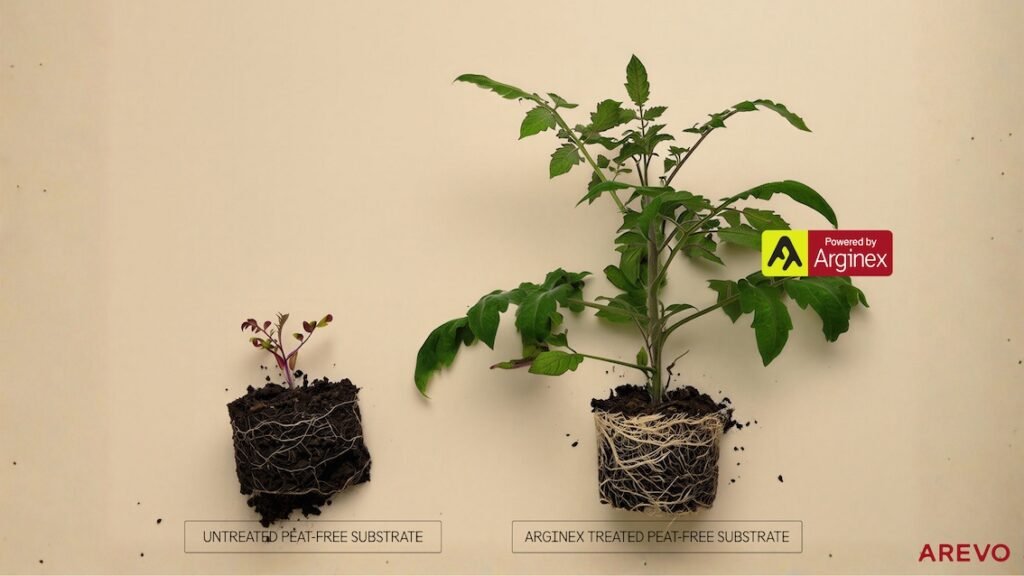
The debate over peat alternatives has intensified as European policymakers strengthen environmental standards related to carbon emissions and biodiversity protection. Peatlands are major carbon sinks, and extraction restrictions are reshaping substrate supply chains across Europe.
Manufacturers are also under pressure to provide peat-free products that maintain crop performance and meet sustainability expectations from retailers and consumers.
Arevo plans to market Arginex as both a standalone branded nutrition product and as an ingredient in third-party substrate formulations labeled as “powered by Arginex.”
Arevo and the challenge of peat-free nutrition
Peat-free substrates such as coir, bark, and wood fiber behave differently from traditional peat-based growing media. According to Arevo, standard ammonium nitrate fertilizers were originally designed for peat systems and tend to leach quickly in peat-free environments. The company says more than half of the nitrogen can be lost after the first watering, with retention dropping to about 10% after six watering cycles.
Arginex is a patented arginine phosphate nutrition technology developed by Arevo. The company says the product carries a positive charge that allows it to bind to negatively charged substrate particles, helping retain nitrogen instead of washing out during irrigation. Arevo describes the mechanism as acting “like a magnet” inside the substrate.
The European horticulture sector is moving away from peat due to environmental regulations, retailer sustainability targets, and consumer pressure linked to carbon emissions and biodiversity concerns. As peat-free substrates become more common, growers are facing higher fertilizer use, inconsistent crop performance, and increased nutrient runoff. Improving nitrogen retention is viewed as critical for maintaining productivity while supporting sustainability goals.
Arevo says independent trials conducted across Europe showed Arginex retained nearly 80% of its nitrogen in commercially available peat-free substrates after six leaching cycles. The company says this is roughly seven times higher than retention rates from conventional fertilizers. Arevo also says the technology is CE-certified, protected by more than 70 patents, and backed by over a decade of research and field trials.
According to Arevo, Arginex is already being used in forestry planting, forest nurseries, and agricultural seed treatments for crops including soybeans, corn, and winter wheat in Europe. The company plans to expand the technology into horticulture and peat-free substrate formulations through partnerships with substrate manufacturers and ingredient suppliers.

Enjoyed this story?
Every Monday, our subscribers get their hands on a digest of the most trending agriculture news. You can join them too!


Discussion0 comments