

USDA sees global grain production falling as consumption continues to grow in 2026/27

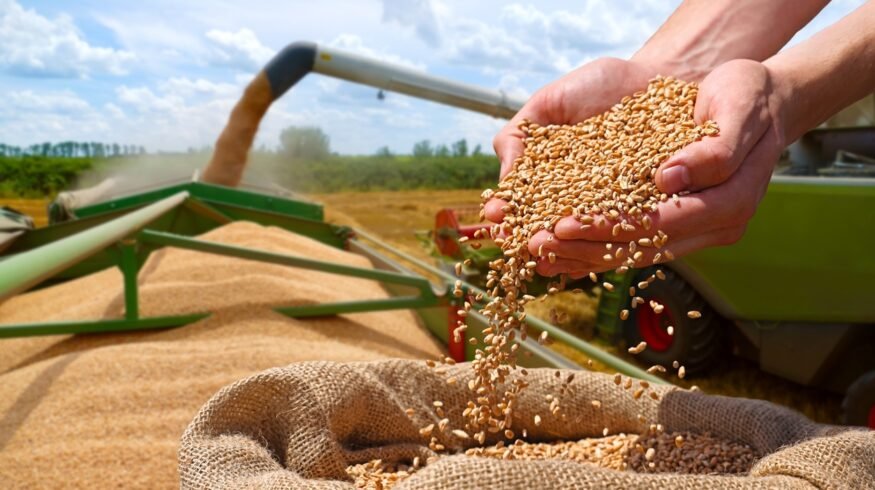

Global grain markets are heading into the 2026/27 year with tightening supplies as production declines across several major exporters while consumption continues to rise, according to the latest report from the United States Department of Agriculture Foreign Agricultural Service. The report forecasts lower global production for wheat, corn, and rice, driven by weather pressures, acreage shifts, and changing economics for growers.
The agency said global corn production is expected to decline from the previous year’s record, while wheat production is projected to fall sharply after reaching historic highs in 2025/26. Rice production is also forecast lower, although global consumption is still expected to reach a new record. Across all three major grains, inventories are forecast to contract as demand continues to outpace supply growth.
U.S. production declines amid higher fertilizer costs
The USDA said U.S. grain production is expected to fall in 2026/27 as farmers shift acreage toward soybeans because of stronger expected returns and rising fertilizer expenses. Corn output is forecast to decline by 26.1 million metric tons, wheat by 11.5 million tons, sorghum by 1.8 million tons, and rice by 1.0 million tons.
Despite the production decline, the USDA said domestic grain stocks would remain historically robust, though tighter than the prior year. U.S. grain exports are also expected to edge lower due to stronger competition from rival exporters and softer global import demand.
The report linked the acreage shift partly to higher fertilizer costs, underscoring continued pressure on grain growers after several years of elevated input prices.
Wheat market faces broad production cuts
Global wheat production for 2026/27 is forecast at 819.1 million metric tons, down 24.8 million tons from the prior season’s record harvest. The largest declines are expected among major exporters, including the United States, the European Union, Argentina, Australia, Canada, Kazakhstan, and Russia.
U.S. wheat production is projected to fall 21% year over year, while Argentina’s crop is forecast down 25% and Australia’s down 17%.
Even with lower production, Russia is expected to remain the world’s largest wheat exporter, with exports forecast at 47 million tons, supported by strong carry-in stocks.
Meanwhile, wheat imports are forecast to decline across North Africa and the Middle East as local harvests recover. Morocco’s imports are expected to fall by 3 million tons year over year due to improved domestic production, while Turkey and Uzbekistan are also forecast to sharply reduce imports.
Indonesia and Egypt are forecast to remain the world’s largest wheat importers at 12.5 million tons each.
Corn demand remains resilient
Global corn production is forecast at 1.295 billion metric tons, lower than the previous year’s record but still among the largest harvests ever recorded. Declines in the United States and Argentina are expected to be partially offset by larger crops in Brazil and China.
Brazil is forecast to harvest a record 139 million tons of corn in 2026/27, supported by expanding domestic ethanol production. The USDA said Brazilian corn food, seed, and industrial use has more than doubled over the past five years as ethanol capacity expanded.
China is projected to produce a record 307 million-ton corn crop, helping lift total grain production to an all-time high of 604 million tons. The USDA said strong poultry production and steady swine demand are supporting rising corn consumption in China.
Global corn consumption is expected to continue expanding, particularly in South America, South Asia, and Sub-Saharan Africa, where ethanol projects and population growth are increasing industrial and food demand.
The United States is forecast to remain the world’s largest corn exporter despite a projected reduction in exports to 80 million tons from 82 million tons the previous year.
India strengthens position in global rice trade
Global rice production is forecast to decline by 5 million tons to 537.8 million metric tons, mainly due to smaller crops in India, Burma, and the United States. At the same time, global rice consumption is forecast to rise to a record 541.4 million tons, driven by growing demand in India and Sub-Saharan Africa.
India is expected to further consolidate its dominance in the global rice market. Rice exports from the country are forecast to reach a record 25 million tons, accounting for nearly 40% of world trade.
The USDA said India’s large inventories and competitive pricing would allow it to maintain leadership across basmati, parboiled, and standard white rice exports despite lower production.
The report also highlighted growing rice import demand across Sub-Saharan Africa and Southeast Asia, while the Philippines is expected to remain the world’s largest rice importer because of population growth and sustained food demand.
Fertilizer costs remain a key market driver
The USDA report repeatedly linked planting decisions and global trade flows to rising agricultural input costs, particularly fertilizers. Higher fertilizer expenses are contributing to acreage shifts in the United States and continue to influence competitiveness among exporters.
At the same time, expanding biofuel programs are reshaping grain demand patterns in several countries. In Brazil and India, government support for ethanol production is increasing industrial corn use and influencing long-term production growth.
The USDA said that while global grain markets remain adequately supplied overall, the expected decline in inventories and lower production among major exporters could leave markets more vulnerable to weather disruptions and trade volatility in the coming year.

Enjoyed this story?
Every Monday, our subscribers get their hands on a digest of the most trending agriculture news. You can join them too!








Discussion0 comments