

Oishii closes $150M Series C to scale gene-edited strawberry vertical farming across North America

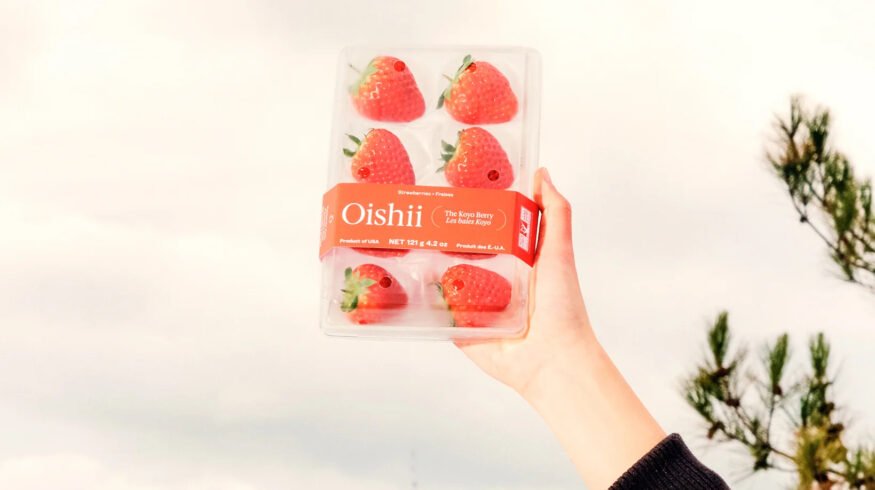

Oishii, operator of the world’s largest indoor vertical strawberry farm, announced May 13 the first closing of $150 million in Series C financing led by SPARX Asset Management, with participation from Nomura Real Estate Development, MISUMI Group, and Mizuho Bank — bringing the company’s total capital raised since its 2016 founding to approximately $370 million.
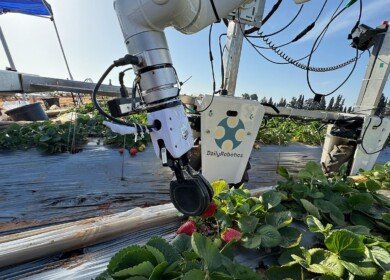
The raise comes as much of the vertical farming sector has been defined by bankruptcies and capacity shutdowns over the past three years. Oishii took a deliberately different path: rather than pursuing commodity crops at scale, the New Jersey-based company focused on technically demanding, high-value strawberries and built precision robotics around them. The acquisition of harvesting robotics company Tortuga AgTech in 2025 expanded those capabilities, and a subsequent partnership with automation supplier MISUMI Group supports production across both U.S. and Japanese operations.
Oishii’s Smart Farm model grows pesticide-free, non-GMO strawberries year-round in tightly controlled indoor environments, combining robotics, AI, and environmental control systems with traditional Japanese cultivation techniques. The company has expanded retail distribution to 18 U.S. states and entered Toronto as its first international market. Its product range spans $4.99 to $15 per pack, down from the $50-per-tray positioning of its original Omakase Berry in 2018.
“When we chose strawberries, we knew we were selecting one of the hardest paths in indoor farming,” said Hiroki Koga, co-founder and CEO. “This funding marks a new phase for Oishii as we scale what we’ve built, with deeper confidence in the decisions we’ve made.”
Proceeds will fund increased production capacity, further robotics integration, expansion of farm infrastructure, and the development of an Open Innovation Center in Tokyo advancing R&D across both U.S. and Japanese operations.
Oishii: five things to know
Oishii is a U.S.-Japanese vertical farming company founded in 2016 that operates the world’s largest indoor vertical strawberry farm in New Jersey. It grows three berry varieties — Omakase, Koyo, and Nikko — in pesticide-free, Non-GMO controlled environments year-round. Its Smart Farm model integrates AI, robotics, and Japanese cultivation techniques. Strawberries are among the most technically demanding crops for indoor growing, requiring precision pollination, harvesting, and post-harvest management.
The broader vertical farming sector has seen high-profile failures concentrated in companies growing commodity leafy greens with limited pricing power. Oishii differentiated itself by choosing a premium, technically complex crop with higher retail value, and has built a robotics and automation platform around it. Its ability to expand to 18 states and enter Canada while competitors closed is evidence that the model is working — and investors responded with an oversubscribed Series C.
Oishii acquired Tortuga AgTech in 2025, adding harvesting robotics and engineering expertise in automated berry picking. A partnership with MISUMI Group followed in 2026 to support scale-up across both U.S. and Japanese operations. Robotics now play a central role in pollination, harvesting, and quality control — the three most precision-sensitive steps in strawberry production.
Oishii’s primary operations are at its flagship vertical farm in New Jersey. The company is developing an Open Innovation Center in Tokyo for R&D. Key investors include SPARX Asset Management (lead investor since Series A in 2019), NTT, Yaskawa, Nomura Real Estate Development, MISUMI Group, and Mizuho Bank. Total capital raised since founding is approximately $370 million.
Strawberries grown in vertical farms use fertigation — delivering dissolved nutrients through irrigation water — rather than soil-applied fertilizers. This enables exact control of nitrogen, phosphorus, potassium, and micronutrient delivery, eliminating waste and runoff. Oishii’s approach is part of a broader shift in specialty crop nutrition toward closed-loop systems that use specialty liquid and water-soluble fertilizers at significantly lower volumes per unit of output than conventional field production. Companies including Haifa Group and Yara’s fertigation division serve this controlled-environment agriculture market.

Enjoyed this story?
Every Monday, our subscribers get their hands on a digest of the most trending agriculture news. You can join them too!




Discussion0 comments