

China turns coal plant emissions into fertilizer in bid to cut costs and carbon

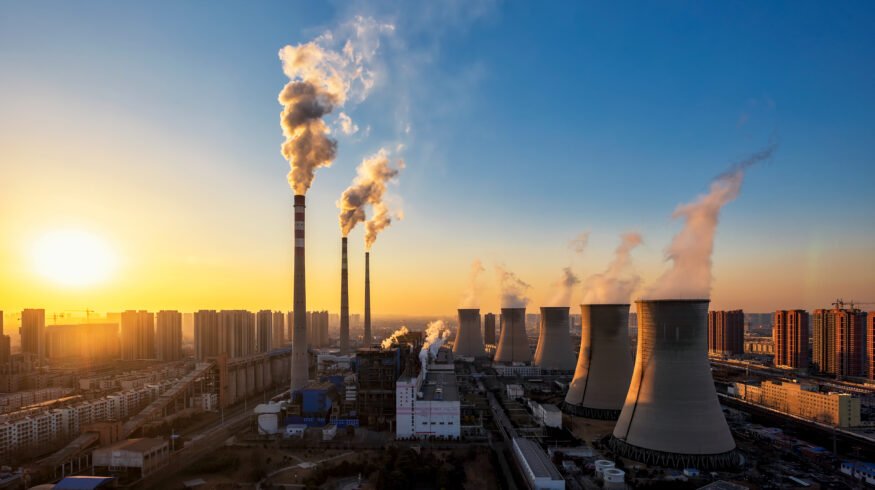

China is testing a new industrial process that converts emissions from coal-fired power plants into fertilizer, linking carbon capture efforts directly to agricultural production rather than underground storage.
The technology, developed by Jiangnan Environmental Technology (JNG), uses ammonia to absorb sulfur dioxide and carbon dioxide from coal combustion exhaust before converting the captured gases into ammonium sulfate and ammonium bicarbonate fertilizers. The company says the process creates a closed-loop system in which flue gas enters the facility and fertilizer emerges as the end product.
Unlike conventional carbon capture and storage projects, which typically require costly infrastructure and suitable geological formations for underground CO2 storage, the Chinese approach redirects captured emissions into commercial fertilizer manufacturing. The company positions the system as a lower-cost alternative that combines emissions reduction with the production of agricultural inputs.
A pilot installation began operating in August 2025 at a coal-fired power plant in Ningbo, Zhejiang province. The facility is designed to capture about 10,000 metric tons of CO2 annually while producing roughly 30,000 metric tons of fertilizer, according to project information.
Researchers involved in a 2025 study reported that fertilizer produced through the process increased rice yields by 6.2% compared with conventional fertilizers. The study also found lower runoff levels of nitrogen, phosphorus, and potassium, suggesting potential environmental benefits alongside higher crop productivity.
The technology builds on earlier ammonia-based desulfurization systems widely used in industrial emissions control, which convert sulfur dioxide into ammonium sulfate fertilizer. JNG expanded the method to capture both sulfur dioxide and carbon dioxide simultaneously from coal plant exhaust streams.
Field trials of the fertilizer have reportedly been conducted in several countries, including Germany, France, Spain, Italy, and Brazil, to evaluate performance across different climates and soil conditions. Project developers also claim the fertilizer could reduce farmers’ input costs by as much as 50%, though large-scale commercial validation is still underway.
Source: South China Morning Post

Enjoyed this story?
Every Monday, our subscribers get their hands on a digest of the most trending agriculture news. You can join them too!





Discussion0 comments