

Mexico’s Topolobampo Ammonia Plant Still Under Construction as Community Dispute Delays Startup

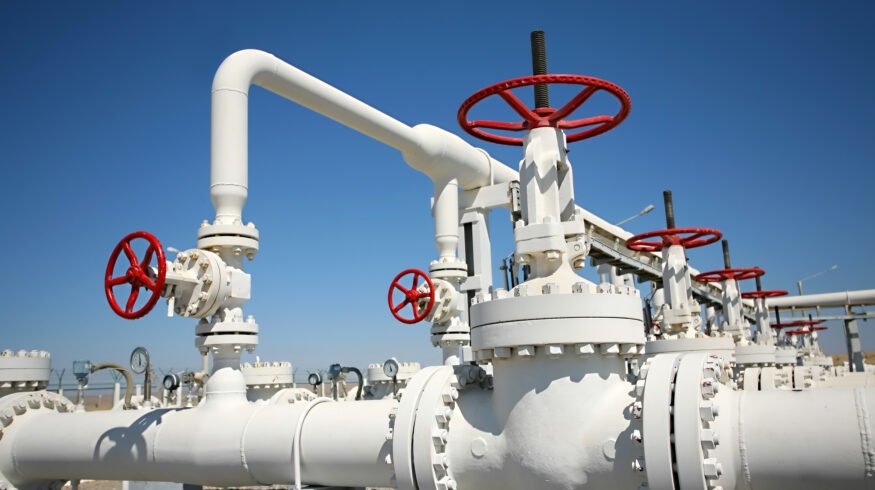

Proman GPO’s large ammonia project in Topolobampo, Sinaloa, remains under construction months after reaching the final stages of development, while federal authorities, local communities and environmental groups continue to debate the plant’s environmental, social and economic impact.
The facility is designed to produce approximately 2,200 metric tons of anhydrous ammonia per day, or around 800,000 tonnes annually. Proman GPO continues to describe the project as under construction and has not publicly confirmed that commercial ammonia production has begun.
The project has also become a national test case for Mexico’s effort to increase domestic fertilizer security while addressing environmental concerns around Ohuira Bay and opposition from some Mayo-Yoreme communities and local organizations.
Topolobampo ammonia plant has not yet entered confirmed commercial operation
When Fertilizer Daily reported on the project in May 2026, industry sources estimated construction progress at approximately 88%.
Since then, neither Proman nor Mexican authorities have publicly announced the start of commercial ammonia production.
Proman GPO’s current project information still describes the facility as being built, while company materials refer to its environmental and safety systems in terms of future operation.
This means the project should currently be described as under construction rather than completed or operational.
What is being built at Topolobampo?
Gas y Petroquímica de Occidente, or GPO, is developing a world-scale anhydrous ammonia facility near the port of Topolobampo on Mexico’s Pacific coast.
The project is backed by Proman and represents an investment of approximately $1.5–1.6 billion.
The core facility is designed for production of approximately 2,200 tonnes of ammonia per day.
Proman says the project includes production units, pipelines, water systems, natural-gas metering infrastructure, storage and dedicated loading facilities.
Third-party infrastructure includes a PEMEX-operated jetty and a Comisión Federal de Electricidad natural-gas pipeline.
Key project figures
- Location: Topolobampo, Sinaloa, Mexico
- Developer: Gas y Petroquímica de Occidente / Proman GPO
- Product: anhydrous ammonia
- Design capacity: approximately 2,200 tonnes per day
- Annual capacity: roughly 800,000 tonnes
- Investment: approximately $1.5–1.6 billion
- Technology provider: thyssenkrupp Uhde
- Status: under construction
- Confirmed commercial startup: not publicly announced
Why the plant matters to Mexico’s fertilizer supply
Mexico remains heavily dependent on imported ammonia and fertilizer raw materials.
The Mexican Ministry of Economy said in June that the country imports approximately 80% of the ammonia it consumes.
Domestic fertilizer demand is estimated at roughly 4.5–5 million tonnes per year.
Because ammonia is the fundamental feedstock for many nitrogen fertilizers, additional domestic ammonia production could reduce Mexico’s exposure to international supply disruptions, freight costs and volatile import prices.
The government says the project could sharply reduce import dependence
Mexico’s Ministry of Economy has presented the GPO plant as a strategic project under the government’s food-security and industrial-policy agenda.
In June and July, the ministry said the project could reduce fertilizer import dependence by more than 70% and retain roughly $500 million per year in economic value currently associated with imports.
These figures are government projections rather than measured outcomes because the plant has not yet entered confirmed commercial operation.
The project produces ammonia, not finished fertilizer
An important distinction is that the Topolobampo facility itself is primarily an ammonia plant.
Ammonia is a feedstock used to manufacture fertilizers including:
- urea;
- ammonium nitrate;
- UAN solutions;
- MAP;
- DAP;
- other nitrogen-containing fertilizers.
The plant therefore does not directly produce an equivalent volume of finished fertilizer.
Its impact on fertilizer self-sufficiency depends on how the ammonia is marketed and where downstream fertilizer conversion occurs.
Proman says the plant will serve regional and international markets
Proman GPO’s current technical description says the project is designed to supply ammonia to both regional and international markets through road and marine transport.
This wording is important because it indicates that the facility is not designed exclusively for Mexican domestic consumption.
Actual allocation between domestic customers and exports will depend on commercial agreements, market prices and logistics after startup.
Public claims about import substitution require caution
Government statements have emphasized the project’s potential to reduce Mexican fertilizer and ammonia imports.
Proman also describes the facility as a source of fertilizer feedstock for Mexican agriculture.
However, the company’s own project description also explicitly includes international markets.
It is therefore more accurate to say that the plant could increase Mexico’s domestic ammonia availability and import-substitution potential rather than assume all production will remain in Mexico.
Why Topolobampo is strategically located
The site is located on Mexico’s Pacific coast, close to major agricultural regions in northwestern Mexico.
The location gives the project access to:
- Pacific shipping routes;
- Mexican natural-gas infrastructure;
- PEMEX port facilities;
- major agricultural regions in Sinaloa and neighboring states;
- potential export markets along the Pacific basin.
This differs from many major ammonia export plants concentrated in the Persian Gulf, Black Sea and Caribbean regions.
The plant is connected to Mexico’s natural-gas infrastructure
Ammonia production requires large quantities of natural gas, which provides both hydrogen feedstock and process energy.
Proman GPO works with CFE, CFEnergía and PEMEX on gas and infrastructure arrangements supporting the project.
Access to competitive and reliable natural gas will be one of the main factors determining the plant’s operating economics once commissioned.
Community opposition intensified after the May update
The social conflict surrounding the project did not disappear as construction advanced.
In June, members of the Mayo-Yoreme community, environmental organizations and the Aquí No collective carried out demonstrations and blocked access to the project site.
Opponents demanded that construction be suspended while environmental, safety and consultation concerns were reviewed.
The dispute has therefore evolved from a long-running legal and consultation controversy into an active conflict over the final construction and startup phase.
Greenpeace joined the opposition in July
Greenpeace Mexico formally announced its opposition to the Topolobampo ammonia project on July 24.
The organization said it supported Mayo-Yoreme communities and other groups campaigning to protect Ohuira Bay.
Its objections focus on biodiversity, climate impacts, industrial risk and the ecological sensitivity of the lagoon system.
The involvement of a national environmental organization expanded the dispute beyond local community politics.
Why Ohuira Bay is central to the conflict
The plant is located near the Santa María–Topolobampo–Ohuira lagoon system.
The area is recognized under the Ramsar Convention as a wetland of international importance.
The lagoon supports fisheries, mangroves and a range of marine and coastal species.
Opponents argue that large-scale petrochemical development could create risks for aquatic ecosystems, fisheries and Indigenous communities that depend on the bay.
Proman disputes claims that the project will damage the bay
Proman GPO says the facility has been designed and permitted with extensive environmental safeguards.
The company states that its Environmental Management Plan includes monitoring of:
- water quality;
- air quality;
- mangroves;
- marine fauna;
- turtles;
- iguanas;
- aquatic ecosystems.
Proman also says cooling water will not come into contact with process chemicals and that wastewater will be treated and monitored before discharge.
These are company claims and should be distinguished from the concerns raised by environmental and community groups.
SEMARNAT has imposed environmental conditions
Mexico’s Ministry of Environment and Natural Resources has said the plant is subject to mandatory environmental conditions and permanent regulatory oversight.
The requirements cover areas including:
- water protection;
- air emissions;
- mangrove conservation;
- wildlife protection;
- ecological restoration;
- environmental monitoring;
- contingency response.
SEMARNAT said in June that it would maintain continuous oversight during construction and future operation.
The federal government launched a formal dialogue process
Following the escalation of protests in June, federal and state authorities began a series of meetings involving the company, communities, agricultural organizations, academics and environmental specialists.
The discussions covered:
- industrial safety;
- environmental protection;
- economic development;
- community benefits;
- ecological conditions in Ohuira Bay;
- social commitments;
- future monitoring.
By July, multiple dialogue sessions had taken place, but the process had not produced a public announcement that opposition had been resolved.
Agricultural organizations have also backed the project
The Topolobampo dispute is not a simple company-versus-community conflict.
Some agricultural organizations and producers in Sinaloa publicly supported the project during meetings with state authorities.
Supporters argue that additional domestic ammonia could improve fertilizer availability, reduce exposure to imports and strengthen Mexico’s agricultural supply chain.
This creates a genuine policy trade-off between industrial and food-security objectives on one side and environmental and community concerns on the other.
The Mayo-Yoreme consultation remains contested politically
Proman says an Indigenous consultation was completed in 2022 following requirements established by Mexican courts and that 80% of participating communities supported the project.
The company also points to a broader 2021 citizen-participation exercise in which approximately 75.6% of participants voted in favor.
Opponents argue that those processes do not resolve concerns from communities that continue to reject the project.
The existence of earlier consultation results therefore does not mean the current social dispute has ended.
Construction protests created new startup uncertainty
The original May article described local opposition as one of several possible risks to the commissioning schedule.
Events in June and July showed that the risk was more substantial than initially described.
Protesters physically blocked access to the facility, while federal authorities responded by organizing negotiations and additional environmental review discussions.
No new confirmed commercial startup date has subsequently been announced.
The 88% completion figure should no longer be treated as current
The approximately 88% construction figure reported in May came from industry sources at that time.
Several later reports have used estimates ranging from roughly 80% to almost 90%.
Because Proman has not published a newer verified completion percentage, it is safer to describe the project as being in an advanced construction phase without presenting the May estimate as the current status.
Startup is different from mechanical completion
Even when construction approaches 100%, a large ammonia plant does not immediately begin full commercial production.
The final sequence normally includes:
- mechanical completion;
- system testing;
- utilities commissioning;
- gas introduction;
- catalyst activation;
- initial ammonia production;
- performance testing;
- ramp-up to stable commercial rates.
The absence of a confirmed startup announcement therefore matters even if physical construction is close to completion.
Why an 800,000-tonne ammonia plant matters
At full design capacity, the Topolobampo plant would become a significant ammonia producer in the Americas.
Proman currently operates ammonia assets in Trinidad and Tobago and has approximately 1.9 million tonnes of annual ammonia capacity across its existing portfolio.
The Mexican project would add roughly 800,000 tonnes per year and lift the group’s potential ammonia capacity to approximately 2.7–2.8 million tonnes annually.
The project could change Pacific ammonia trade
A large merchant ammonia facility on Mexico’s Pacific coast could alter regional trade flows.
Potential destinations include Mexican fertilizer users as well as customers elsewhere in the Pacific basin.
The location provides comparatively direct access to:
- the western United States;
- Central America;
- western South America;
- Asian Pacific markets.
Actual export flows will depend on delivered economics relative to producers in the Middle East, Trinidad, North America and other regions.
Merchant ammonia is different from captive ammonia
Many ammonia plants are integrated directly with downstream urea, ammonium nitrate or phosphate fertilizer production.
A merchant ammonia plant produces ammonia for sale to external customers.
This gives the Topolobampo project greater flexibility in where its product can be sold but also exposes it more directly to international ammonia prices and freight economics.
The project could support downstream fertilizer production
If more locally produced ammonia becomes available to Mexican buyers, it could support domestic manufacture of nitrogen and phosphate fertilizers.
For example, ammonia can be combined with phosphoric acid to produce MAP and DAP or processed into urea and ammonium nitrate.
Whether this occurs at scale will depend on downstream capacity, commercial contracts and delivered cost.
Mexico’s ammonia dependence is the more direct metric
The strongest supply-security argument for Topolobampo is therefore not that an 800,000-tonne ammonia plant automatically replaces a fixed percentage of all Mexican fertilizer imports.
The more direct effect is that it adds a large domestic source of ammonia, a key fertilizer feedstock that Mexico currently imports heavily.
How much finished fertilizer import dependence subsequently falls will depend on downstream conversion and product allocation.
Environmental monitoring will remain important after startup
If commercial operations begin, environmental scrutiny will not end with construction.
SEMARNAT has stated that monitoring and mandatory mitigation measures will continue during operation.
Key issues are likely to include:
- water intake and discharge;
- air emissions;
- ammonia handling;
- marine biodiversity;
- mangrove condition;
- emergency preparedness;
- industrial safety.
Ammonia safety remains a central concern
Anhydrous ammonia is a toxic industrial chemical that requires strict containment and emergency-management systems.
Large ammonia plants therefore use multiple layers of process safety, detection, shutdown and containment systems.
Proman says the Topolobampo facility is being developed under international process-safety standards and has received authorization from relevant Mexican regulators.
Opponents continue to argue that the consequences of a serious accident should be considered in the context of nearby communities and the sensitive lagoon environment.
A June incident increased public attention to safety
In June, a minor fire occurred at the construction site after overheating in temporary equipment.
GPO said the incident was quickly controlled and caused no injuries or damage to permanent plant infrastructure.
The event did not represent an ammonia release or an operational plant accident because the facility had not yet begun commercial production.
Nevertheless, it intensified public discussion around industrial safety during an already contentious period.
The project now has explicit federal political support
The Mexican federal government has increasingly framed the plant as part of its industrial and food-security strategy.
The Ministry of Economy has described the project as strategically important for reducing reliance on imported agricultural inputs.
That government support makes outright cancellation less likely politically, although it does not eliminate environmental, legal or social risks.
What is still unresolved?
Several major questions remain open:
- when construction will be completed;
- when commissioning will begin;
- when the first commercial ammonia will be produced;
- how much production will remain in Mexico;
- how much will be exported;
- whether the current community dialogue produces a lasting agreement;
- whether additional legal or regulatory challenges emerge;
- how quickly the plant can ramp toward its 800,000-tonne annual design capacity.
What to watch next
The most important milestone is no longer another construction-percentage estimate.
The market should watch for a formal announcement of mechanical completion, commissioning or first ammonia production.
Other important developments include:
- new Proman GPO construction updates;
- SEMARNAT compliance decisions;
- results of community dialogue;
- new court proceedings or injunction requests;
- natural-gas supply arrangements;
- domestic ammonia sales agreements;
- export contracts;
- the plant’s initial operating rate.
Frequently asked questions
No commercial startup has been publicly confirmed. Proman GPO continues to describe the plant as under construction.
The design capacity is approximately 2,200 metric tons per day, equivalent to roughly 800,000 tonnes annually.
The project is being developed by Gas y Petroquímica de Occidente, or Proman GPO, part of the Proman group.
Some Mayo-Yoreme communities and environmental organizations oppose the project because of concerns involving Ohuira Bay, biodiversity, industrial safety, community rights and the project’s environmental footprint.
Yes. Mexican authorities have authorized the project subject to environmental conditions and ongoing monitoring. Opposition groups continue to challenge aspects of the project and its impacts.
The Mexican government has presented a reduction of more than 70% as a potential impact. However, the plant produces ammonia rather than all types of finished fertilizer, and Proman says production can serve both regional and international markets. The actual import-substitution effect will depend on product allocation and downstream fertilizer production.
No new confirmed commercial startup date has been publicly announced as of October 2026.
Sources: Proman GPO, Proman GPO, SEMARNAT, Secretaría de Economía, Secretaría de Economía, Greenpeace México

Enjoyed this story?
Every Monday, our subscribers get their hands on a digest of the most trending agriculture news. You can join them too!




Discussion0 comments