

McMaster researchers unveil cleaner ammonia process that turns nitrate pollution into fertilizer


Researchers at McMaster University have developed an electrochemical process that produces ammonia from nitrate-contaminated water using renewable electricity, offering a potential low-carbon alternative to the century-old Haber-Bosch method that underpins synthetic nitrogen fertilizer.
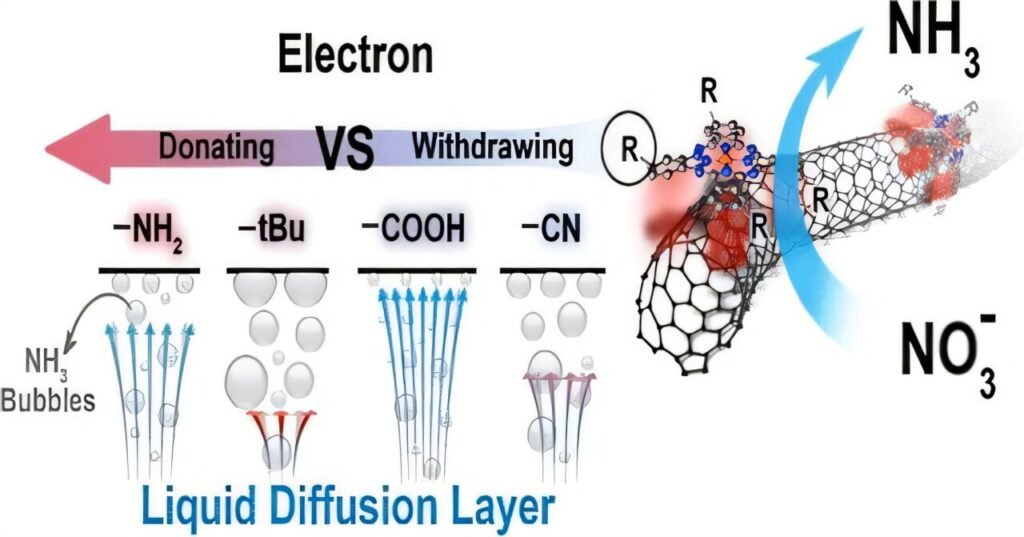
The work, published in the Journal of the American Chemical Society, was led by Navid Noor, who carried out the research for his doctorate under supervisor Drew Higgins. The team reported that the surface properties of the catalyst, not only its electronic behavior, governed performance, and identified a material that delivers more electrons and more water to the reaction site. The researchers used X-ray absorption spectroscopy at the Canadian Light Source to study how the catalysts behave.
The Haber-Bosch process combines hydrogen and nitrogen at 400-500 degrees Celsius and accounts for close to 2% of global carbon dioxide emissions and about 2% of fossil energy use. The International Renewable Energy Agency estimates that ammonia output must roughly quadruple by 2050 to meet demand from fertilizer and emerging clean-fuel markets.
Because the McMaster route draws its nitrogen from nitrate, a common waterway pollutant tied to fertilizer runoff, it could double as a water-cleanup step. The approach remains at laboratory scale, and the team has not yet demonstrated commercial throughput, catalyst durability, or unit economics. Scale-up and cost will determine whether the method can move beyond the bench.
Source: Phys.org

Enjoyed this story?
Every Monday, our subscribers get their hands on a digest of the most trending agriculture news. You can join them too!





Discussion0 comments