

Holganix bets on soil biology and carbon markets to reshape regenerative agriculture


For nearly two decades, Holganix has been working to convince American farmers that healthier soils can reduce dependence on synthetic inputs without sacrificing profitability. Now the company is extending that pitch beyond agronomy and into environmental markets through HGX, a platform designed to monetize soil health outcomes and carbon sequestration.
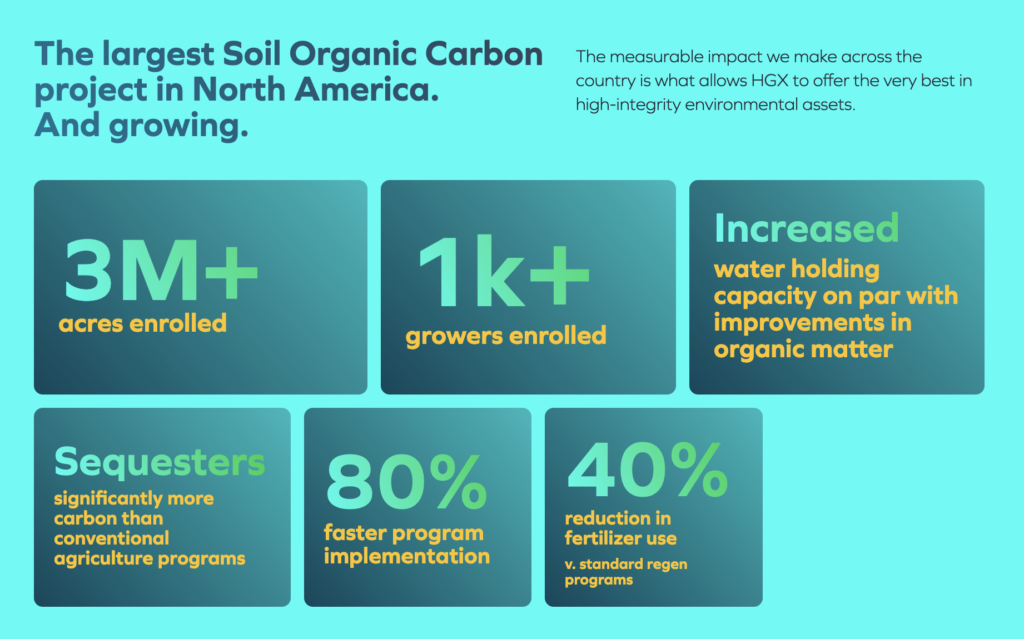
The Pennsylvania-founded company, which has expanded across row crops, turf, and specialty agriculture, positions itself at the intersection of biological crop inputs, digital soil analytics, and carbon finance. Holganix says more than 3 million acres and over 1,000 growers are already enrolled in its programs, making HGX one of the largest soil organic carbon initiatives in North America.
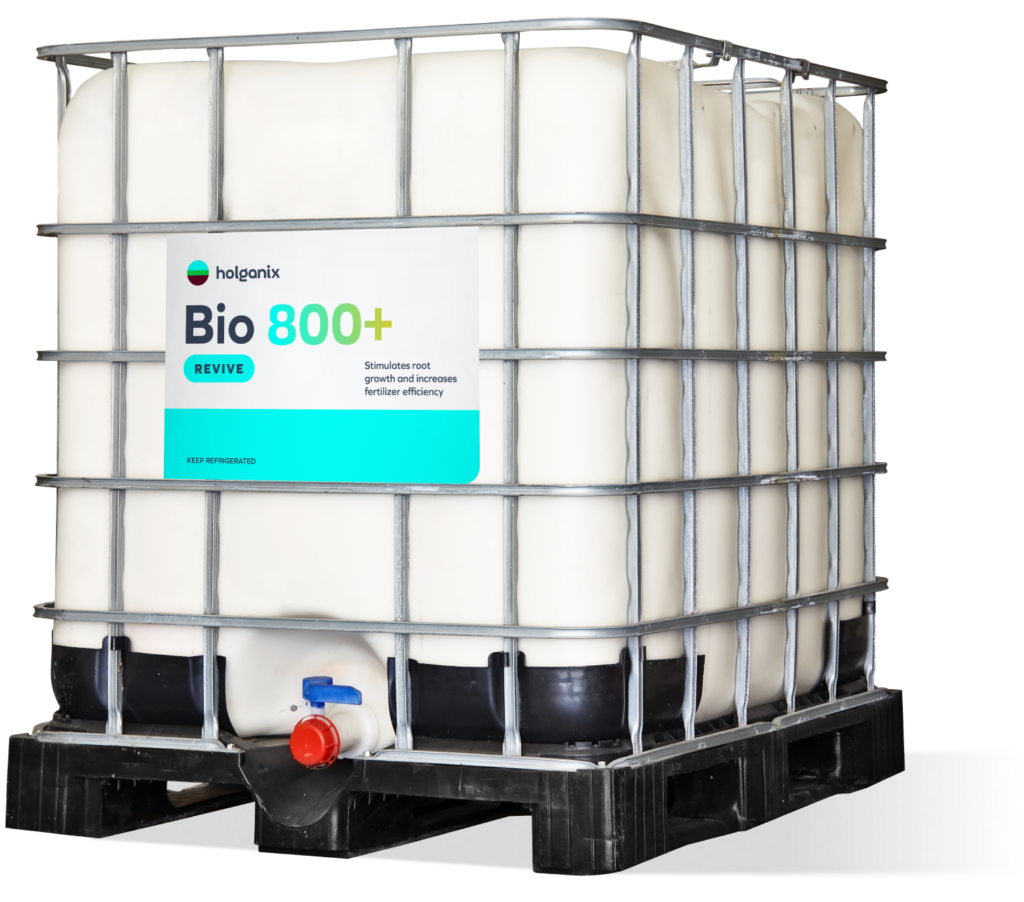
At the center of Holganix’s approach is Bio 800+, a microbial inoculant marketed as a “probiotic for soil.” The product contains more than 800 species of beneficial microorganisms — including bacteria, fungi, protozoa, and beneficial nematodes — intended to stimulate microbial activity, improve nutrient cycling, and strengthen root systems.
According to the company’s Chief Revenue Officer, Bryan Hansel, Holganix’s core proposition is to help farmers improve soil biology so crops can absorb nutrients and water more efficiently, reducing reliance on synthetic fertilizers and crop protection products.
“Holganix helps farmers improve soil biology by enabling the crops to absorb nutrients and water more efficiently, therefore reducing their dependence on synthetic inputs and bringing nature back into the growing process,” commented Hansel answering Fertilizer Daily questions. He added that stronger rooting systems, earlier crop emergence, and improved soil structure help create “a more resilient production system with lower input costs and stronger long-term soil performance.”
Building a data-driven regenerative system
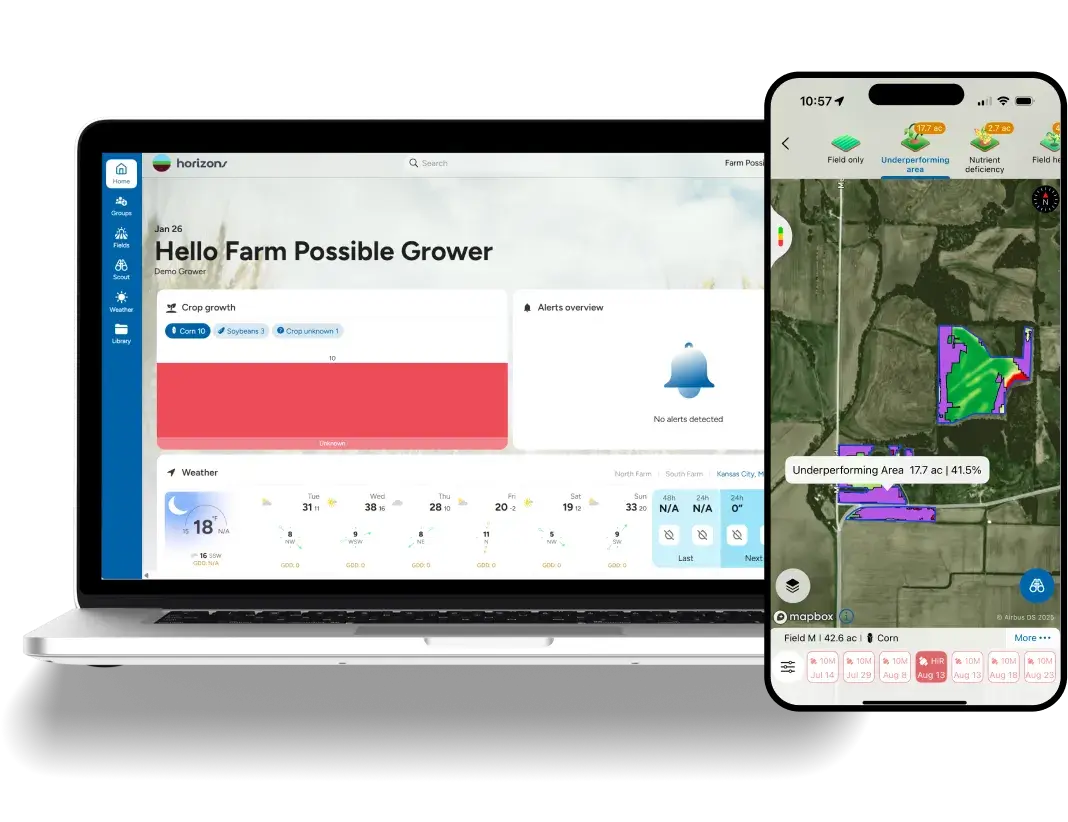
Unlike some biological input providers focused primarily on yield enhancement, Holganix has built a broader platform around soil measurement and verification. The company’s Horizons digital platform combines soil sampling, satellite imagery, farm equipment data, and modeling to monitor field-level soil performance throughout the growing season.
The system tracks metrics including soil organic matter, pH, nutrient levels, and bulk density. Hansel said the data allows farmers to identify nutrient deficiencies or imbalances earlier and make targeted interventions before yield losses emerge.
For growers, that translates into lower fertilizer expenses, stronger drought resilience, and more stable yields under weather stress, according to the company.
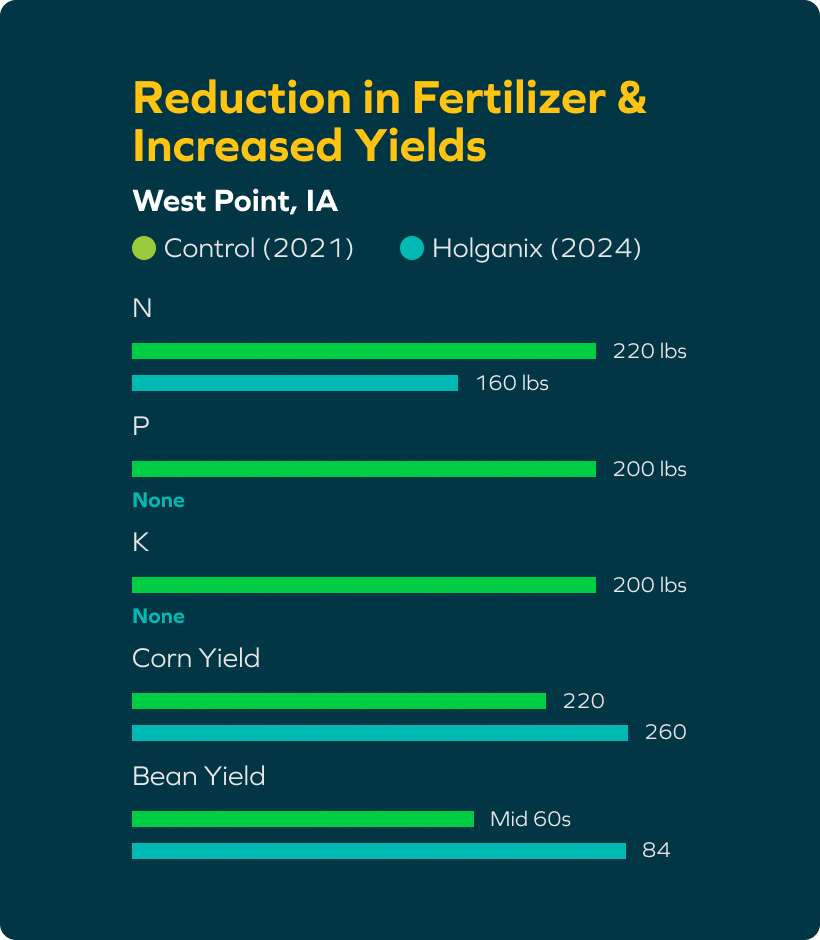
Holganix claims growers using its programs can reduce fertilizer use by up to 40% while maintaining or improving yields. The company also says some farms have increased water-holding capacity by roughly 25,000 gallons per acre as soil organic matter improves.
That focus on measurable outcomes has become increasingly important as regenerative agriculture moves from niche sustainability programs toward mainstream supply chain initiatives. Food companies, consumer brands, and investors are demanding quantifiable environmental data rather than broad claims tied solely to conservation practices.
Holganix argues that its measurement-heavy model differentiates it from many carbon programs that rely primarily on predictive modeling instead of direct soil sampling.
HGX and the push into environmental assets
In March, Holganix formally launched HGX, its environmental asset division aimed at converting regenerative agriculture outcomes into carbon credits, offsets, and other environmental assets that corporations can purchase to support sustainability targets.
The initiative reflects a broader shift across agriculture as companies seek new ways to monetize soil carbon sequestration and Scope 3 emissions reductions. Yet carbon markets have also faced criticism over inconsistent methodologies, weak verification standards, and uncertainty surrounding permanence.
Holganix says HGX was designed to address those concerns through what it calls an “annual measure-remeasure” methodology built around direct soil testing. The company uses 18-inch soil cores, deeper than the 6-to-12-inch standard common in many soil carbon programs, to capture longer-term carbon accumulation trends.
Hansel said HGX combines field soil sampling, satellite monitoring, and advanced modeling to validate environmental outcomes. Holganix also works with carbon ratings agency BeZero Carbon and validation firm Earthood to support third-party verification of its methodologies.
“What sets HGX apart is that it prioritizes agronomic value,” Hansel said. “We aren’t asking growers to fundamentally change their operation in service of a credit market.”
Instead, the company frames environmental assets as an additional revenue stream layered on top of operational improvements already achieved through soil health gains. Farmers can potentially benefit from lower input costs, improved yield resilience, and environmental payments simultaneously.
The strategy appears aimed at overcoming a key obstacle in carbon markets: farmer skepticism. Many growers remain wary of long-term contracts, complex reporting requirements, and uncertain financial returns associated with sustainability programs.
Holganix argues that tying environmental credits directly to agronomic performance lowers participation risk and accelerates adoption. Hansel said environmental incentives are helping growers scale regenerative practices more quickly because they now see a clearer economic case for improving soil health.
Regenerative agriculture moves into the mainstream
The company’s growth comes as regenerative agriculture gains broader institutional attention. Holganix was named the top agriculture company on Fast Company Most Innovative Companies 2026, recognition that the company says has increased visibility with food companies, sustainability-focused investors, and corporate buyers of environmental credits.
Holganix is also positioning itself as a domestic supply chain solution at a time when fertilizer costs, water constraints, and climate-related weather volatility continue pressuring U.S. farm profitability.
The company’s messaging increasingly centers on resilience rather than sustainability alone. Holganix frequently uses the term “thrivability” to describe an agricultural system that not only sustains production, but also restores soil function, reduces environmental stress, and improves long-term farm economics.
Hansel said the future of farming will increasingly reward growers capable of demonstrating both productivity and measurable soil performance.
“We believe the future of farming will increasingly center around soil health, with new revenue streams emerging for growers who can demonstrate both productivity and soil performance,” he said.
While questions remain about how quickly voluntary carbon markets will scale and whether environmental assets can become a stable source of farm income, Holganix is betting that soil biology, data verification, and environmental finance will become increasingly interconnected across U.S. agriculture.
For farmers facing volatile fertilizer prices, water stress, and mounting pressure to document sustainability practices, the company argues that rebuilding soil health may ultimately be both an agronomic and a financial strategy.

Enjoyed this story?
Every Monday, our subscribers get their hands on a digest of the most trending agriculture news. You can join them too!




Discussion0 comments