

Soil organic nitrogen identified as main source of dinitrogen loss in flooded rice

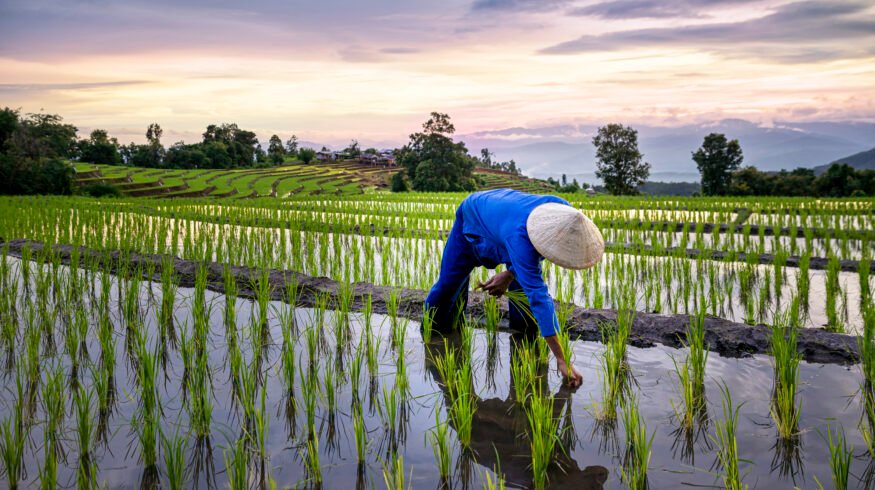

A new study by researchers at the Chinese Academy of Sciences challenges a long-standing assumption about nitrogen losses in rice cultivation, finding that most dinitrogen gas emitted from flooded rice paddies originates from soil organic nitrogen rather than applied fertilizer. The findings, published on April 22 as a cover article in the Proceedings of the National Academy of Sciences, could reshape scientific understanding of nitrogen cycling and improve strategies for sustainable rice production.
The research was led by Yan Xiaoyuan of the Institute of Soil Science at the Chinese Academy of Sciences. Scientists have traditionally considered fertilizer nitrogen to be the primary source of dinitrogen losses from rice fields. However, accurately measuring dinitrogen emissions has been difficult because the gas is abundant in the atmosphere, making it challenging to distinguish soil-derived emissions. The new study overcomes this limitation and identifies soil organic nitrogen as the dominant contributor to gaseous nitrogen losses in flooded rice systems.
The findings carry particular significance for China, where nitrogen fertilizer application rates in rice production are estimated to be two to three times higher than the global average. Excess nitrogen use contributes to environmental losses and reduced nutrient efficiency. Researchers found that hybrid rice varieties improved plant nitrogen uptake and microbial nitrogen use efficiency, reducing yield-scaled gaseous nitrogen losses by approximately 43% while maintaining crop productivity. The study suggests that combining crop breeding with soil and microbial management could help increase yields while lowering agriculture’s environmental footprint.
By revising the understanding of nitrogen sources in rice paddies, the study provides a new framework for refining global nitrogen budgets and developing more efficient nutrient management practices in agriculture.
Source: Phys.org

Enjoyed this story?
Every Monday, our subscribers get their hands on a digest of the most trending agriculture news. You can join them too!







Discussion0 comments