

Mosaic secures $1 billion credit facility to refinance debt amid rising input costs.


Mosaic has secured a $1 billion credit facility to refinance existing debt, reinforcing its balance sheet as the company prepares for higher raw material costs and a more challenging operating environment. The financing, disclosed in a June 10 filing with the U.S. Securities and Exchange Commission, follows a first quarter in which Mosaic exceeded revenue expectations but missed earnings-per-share estimates. CEO Bruce Bodine stated the company delivered “exemplary” operational performance in its phosphate business despite challenging market conditions.
The refinancing coincides with Mosaic’s expectation of significantly higher sulfur and ammonia costs in the second quarter, due to supply disruptions stemming from the Strait of Hormuz crisis affecting Gulf-region sulfur shipments. The company also anticipates lower phosphate sales volumes than in the first quarter due to temporary production curtailments. Mosaic projects second-quarter diammonium phosphate (DAP) prices between $760 and $780 per metric ton and aims to maintain realized stripping margins above $400 per metric ton. The company reaffirmed its full-year potash production guidance of 9 million metric tons, citing strong global demand despite weaker purchasing activity in North America.
Separately, shareholders reelected all 12 members of Mosaic’s board of directors, including Bodine, at the 2026 annual meeting and ratified KPMG as the independent auditor. The board maintained the quarterly dividend at $0.22 per share, with an ex-dividend date of May 21.
Source: GuruFocus / SEC
Key facts about Mosaic
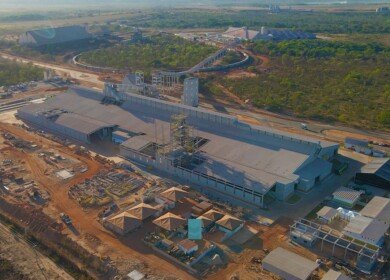
Mosaic is one of the world’s largest producers of concentrated phosphate and potash crop nutrients. Its Phosphate segment operates mines and processing plants in Florida and Louisiana, plus a 75% interest in the Miski Mayo phosphate mine in Peru. Its Potash segment runs mines and facilities in Canada and the U.S. A third segment, Mosaic Fertilizantes, covers five phosphate mines and four chemical plants in Brazil along with a broad distribution network across South America.
Both sulfur and ammonia are critical feedstocks for producing DAP and MAP. Sulfur, much of which is sourced as a byproduct of Middle Eastern oil refining, has seen supply severely disrupted by the effective closure of the Strait of Hormuz since late February 2026. The Persian Gulf accounts for roughly 50% of global seaborne sulfur liftings. Ammonia has been similarly affected, with Gulf producers unable to move product at normal volumes. Mosaic estimated these input cost pressures would worsen quarter-on-quarter.
Mosaic guided Q2 DAP realizations in the $760–$780 per tonne range, with stripping margins above $400 per tonne. That is well above the February 2026 pre-crisis benchmark of roughly $622 per tonne, and reflects the supply tightness caused by Gulf disruptions and China’s continued export restrictions. Potash markets have been more stable, with global demand described as resilient and Canpotex fully committed through June.
Mosaic missed Q1 EPS expectations but beat on revenue. The company posted operating earnings of $233 million for the quarter, with phosphate volumes at 1.696 million tonnes. CEO Bodine flagged “cautious purchasing in the Americas” being offset by stronger Asian demand, particularly from India, which the government signaled it would continue supporting with subsidies.
The company has not disclosed full terms, but refinancing existing debt in an elevated-rate environment typically signals a company is managing its maturity profile and liquidity runway proactively. Mosaic carries a market capitalization of approximately $6.99 billion and a P/E ratio of 12.79. Analysts maintain a range of price targets from $24 to $40, with average targets implying meaningful upside from recent trading levels.

Enjoyed this story?
Every Monday, our subscribers get their hands on a digest of the most trending agriculture news. You can join them too!




Discussion0 comments