

Tropical rain belt shift over 40 years puts India and West Africa crops at risk



A four-decade tropical rain belt shift is pulling equatorial rains northward in ways climate models failed to predict, with consequences for crop zones across India, West Africa, and Southeast Asia, according to a study published in Nature Communications.
Led by Ligin Joseph, a doctoral researcher at the University of Southampton, with colleagues in France and India, the team compared weather and satellite records from 1979 to 2024 against the models meant to reproduce them. The records showed rain regrouping north of the equator over the western Pacific, Southeast Asian islands, and India, while a band to the south and much of South America dried out.
The cause, the researchers argue, is warming land rather than warmer, wetter air. Moisture alone explained only about a tenth of the observed change. Continents heat faster than oceans, and the land-heavy Northern Hemisphere has warmed most, with the Arctic warming nearly four times faster than the globe since 1979.
In model tests, darkening the land or heating the deserts of North Africa and the Middle East pushed rain north and strengthened the West African and Indian monsoons, matching the satellite record.
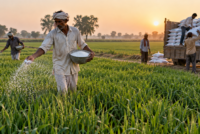
For fertilizer demand, the finding matters because shifting rainfall reshapes where and when crops are planted and nutrients are applied. Billions of farmers time their sowing to these rains, including across the Indian kharif season that drives much of global urea demand.
Source: Earth.com

Enjoyed this story?
Every Monday, our subscribers get their hands on a digest of the most trending agriculture news. You can join them too!







Discussion0 comments