

China’s Great Green Wall trees grow 66% faster than natural forests, study finds

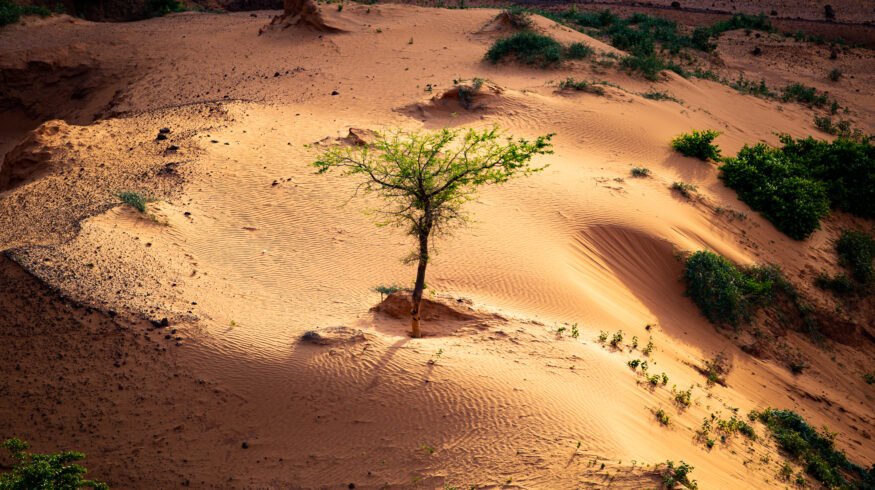

China’s Great Green Wall, one of the largest reforestation efforts on the planet, is growing markedly faster than natural forests, expanding its leaf area 66% more quickly, according to a study published in Geophysical Research Letters and led by landscape ecologist Yuhang Luo of Peking University.
China has planted 66 billion trees since 1978 and plans 34 billion more by the middle of the century to slow the spread of the Gobi and Taklamakan deserts. Using satellite measurements of leaf area index, a proxy for canopy density and carbon uptake, the researchers found planted forests greened far faster than wild ones.
Most of that gap reflects age, since planted forests are younger and young trees grow faster. Yet even at similar ages, planted stands grew 4.6% faster, with a wider margin in mixed and evergreen forests. The team attributed the edge to fast-growing species such as eucalyptus and poplar and to active management, including clearing competing vegetation and fertilizing, which amplifies the growth response to rising atmospheric carbon dioxide.
The advantage peaks when trees are 30 to 40 years old and fades after 40, while natural forests grow more slowly but steadily. Luo said planted forests are a powerful short-term tool for carbon uptake but that natural forests remain irreplaceable for long-term storage. The findings suggest global climate models should better distinguish forest types and age when accounting for carbon.
Source: Live Science

Enjoyed this story?
Every Monday, our subscribers get their hands on a digest of the most trending agriculture news. You can join them too!




Discussion0 comments