Skip to content
  • Professionals
  • Gardeners
 
Search
Log in
EN
RU
  • Trade & Policy
  • Markets
  • AgTech & Research
  • Corporate
  • Sustainability
  • Interviews
  • Rankings
  • Events
  • Stock Quotes
  • Business Directory
Trending topic:

El Niño

Featured company:
 
RU
  • Professionals
  • Gardeners
Sections
    Events
    Stock Quotes
    Business Directory
    Trending topic:

    El Niño

    Featured company:
    Follow us...
    Helpful information
    • About
    • Team
    • Advertise
    • Contacts
    • Submit a Tip
    • Privacy Policy
    • Terms of Service
    • Site Map
    Sections
      Seasonal tips
      • Spring
      • Summer
      • Autumn
      • Winter
      Trending topics
      • compost
        25
      • garlic
        2
      • lemon
        1
      • potato
        16
      Follow us...
      Helpful information
      • About
      • Team
      • Advertise
      • Contacts
      • Submit a Tip
      • Privacy Policy
      • Terms of Service
      • Site Map
      Copyright © 2014-2026 DigitalTree LLC. All rights reserved.
      We deliver content lightning-fast thanks to the managed cloud WordPress hosting with CDN.
      16+

      Home / AgTech & Research

      Stable soil carbon proves vulnerable in landmark 37-year warming trial

      Timothy Bueno avatar Timothy Bueno
      July 17, 2026, 9:00 am
      July 17, 2026, 9:00 am
      [esi post-views ttl=0]
      AgTech & Research
      Sustainability
      Stable soil carbon proves vulnerable in landmark 37-year warming trial
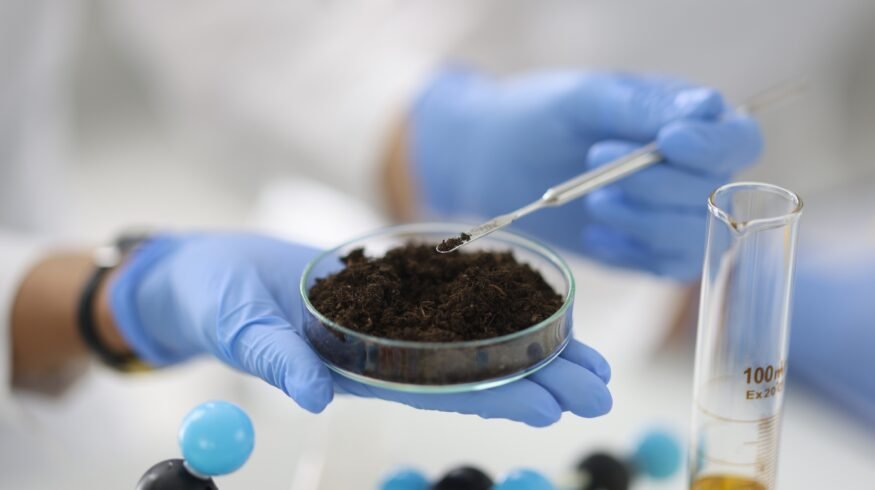
      Image Credits: iStock Photo
      Save for later
      Share
      Never miss important fertilizer news

      Stable soil carbon, the fraction of soil organic matter that scientists have long treated as effectively locked away, breaks down under sustained warming. That is the finding from the world’s longest-running soil warming experiment, which has now heated plots in the Harvard Forest in central Massachusetts for 37 years.

      The result, published in April in Science of The Total Environment by Atzin X. San Roman, Serita D. Frey, Melissa A. Knorr, Huan Tong, Jerry M. Melillo and Myrna J. Simpson, matters because the persistence of stable soil carbon is an assumption baked into climate models, soil carbon accounting and the crediting methodologies now being sold to agriculture.

      Inside the 37-year experiment

      Jerry Melillo, a Distinguished Scientist at the Marine Biological Laboratory, has run the Harvard Forest plots for 37 years, holding the soil at 5C above the surrounding ground year-round. Melillo has said the team chose five degrees because it represented the upper range of global warming projections at the time the experiment began. Global average temperatures have since risen by roughly 1.1C to 1.4C above pre-industrial levels, so the plots remain an accelerated case rather than a forecast of present conditions.

      The duration is the point. For the first three decades, the warmed plots behaved broadly as expected, with microbes consuming the easily accessible carbon. It was during the fourth decade that the persistent fractions of soil organic matter, the material presumed to resist warming-driven decomposition, also began to break down.

      ADVERTISEMENT

      “Microbes are critical components of soil ecosystems because they break down organic matter and recycle elements essential for plant growth,” Melillo said, adding that warming reshapes those microbial communities in ways that can speed carbon loss from soils.

      Why stable soil carbon matters beyond the forest

      A caveat belongs up front. This is a temperate forest soil, not a cultivated field. The plots are not tilled, not fertilized and not cropped, and the study makes no claim about farmland. Anyone extrapolating directly to a corn-soybean rotation is going beyond the evidence.

      The mechanism, though, is not forest-specific. It is microbial. Soil organic matter is the reservoir that mineralizes nitrogen, and the same warming that destabilizes persistent carbon also governs the rate at which organic nitrogen becomes plant-available. A soil that loses more of its long-term carbon under warming is a soil whose nutrient supply behaves differently over decades, which is precisely the horizon on which soil carbon credits are written.

      That last point carries commercial weight. Agricultural soil carbon markets rest on the premise that sequestered carbon stays sequestered long enough to count. The Harvard Forest result does not invalidate that premise for cropland, but it removes the comfort of assuming permanence is a property of the carbon itself rather than a function of temperature and time. Fertilizer Daily reported in June that Embrapa and Bayer had unveiled a simplified soil carbon model for tropical farms, one of several efforts to make such accounting workable at field scale.

      The feedback loop and the models

      The climate implication is a reinforcing loop. Warming destabilizes persistent soil organic matter, decomposition releases additional CO2, and that CO2 contributes to further warming. Most climate models do not currently represent this process, because the assumption they encode is the one the experiment has now undercut.

      The researchers argue that incorporating the newly identified process into models should improve projections and give a fuller account of how the carbon cycle responds to rising temperatures. Whether the effect is large enough to shift headline projections is not yet established.

      What to watch

      The obvious open question is whether the fourth-decade threshold is a property of temperate forest soils at 5C, or a general feature of warmed soils that simply takes 30 years to become visible. No other experiment has run long enough to answer that. For an industry increasingly asked to quantify soil carbon on 10- and 20-year contracts, the finding is a reminder that the measurement window and the mechanism operate on different clocks.

      Source: Science Daily


      Understanding stable soil carbon and the Harvard Forest result

      The persistent fraction of soil organic matter, chemically and physically resistant to rapid microbial breakdown, as distinct from the labile fraction microbes consume quickly. It has generally been modeled as resistant to warming-driven decomposition on decadal timescales. That assumption is what this experiment challenges.

      Plots in the Harvard Forest in central Massachusetts have been artificially heated to 5C above ambient temperature year-round for 37 years, led by Jerry Melillo of the Marine Biological Laboratory. Five degrees was selected because it matched the upper range of warming projections when the work began. It is the longest-running soil warming experiment in the world.

      Persistent forms of soil organic matter, previously assumed to resist warming-mediated decomposition, began breaking down and releasing additional CO2. The effect did not appear early. It emerged only after roughly 30 years of continuous warming, which is why shorter experiments would not have detected it.

      Not directly. The study covers unmanaged temperate forest soil, not tilled, fertilized or cropped land, and makes no claim about agricultural systems. The mechanism is microbial rather than forest-specific, which raises questions for permanence assumptions in soil carbon crediting, but the extrapolation has not been tested. No agricultural equivalent of a 37-year warming trial exists.

      Most models treat persistent soil carbon as resistant to warming, so they omit this pathway. The researchers say incorporating it should improve projections and give a more complete picture of the carbon cycle under rising temperatures. The size of the correction to headline warming projections has not been quantified.

      climate change
      research
      soil health
      soil-carbon
      United States

      Enjoyed this story?

      Every Monday, our subscribers get their hands on a digest of the most trending agriculture news. You can join them too!

      Sign me up
      Check the example

      Discussion0 comments

      Спасибо за комментарий, он будет опубликован на сайте после проверки модератором. Хотите, чтобы ваши комментарии появлялись на сайте мгновенно? Достаточно пройти регистрацию.
      Congratulations, you can be the first to start the conversation.
      Do you have a question or suggestion? Please leave your comment to ignite conversation.
      What’s on your mind?
      Cancel Log in and comment
      Or continue without registration
      Get notified about new comments by email.
      Advertisement
      In focus
      How to get here?
      Stock quotes
      Bayer
      13.6
      2.44
      Bayer Crop Science
      47.72
      0.02
      CF Industries
      118.66
      0.71
      Corteva Agriscience
      86.65
      2.61
      ICL Group
      5.04
      1.18
      Intrepid Potash
      34.21
      1.89
      Mosaic
      22.53
      2.21
      Nutrien
      67.1
      1.8
      Yara International
      23.43
      1.8
      See all
      Most read
      FTC confirms it is also investigating Syngenta and Corteva for anticompetitive pesticide distribution
      FTC confirms it is also investigating Syngenta and Corteva for anticompetitive pesticide distribution
      StoneX anticipates further declines in urea prices before fall demand drives a recovery
      StoneX anticipates further declines in urea prices before fall demand drives a recovery
      World Bank warns fertilizer prices could surge more than 30% in 2026 if Hormuz disruption persists
      World Bank warns fertilizer prices could surge more than 30% in 2026 if Hormuz disruption persists
      Mosaic cuts phosphate output at four U.S. plants as critical sulfur shortage bites
      Mosaic cuts phosphate output at four U.S. plants as critical sulfur shortage bites
      India locks in 670,000t of green ammonia annually for fertilizer plants at half the global benchmark price
      India locks in 670,000t of green ammonia annually for fertilizer plants at half the global benchmark price
      Events
      Southwestern Fertilizer Conference
      New Orleans (LA), USA
      Jul 12 — 16, 2026
      AgriBusiness Global Trade Summit
      Las Vegas (NV), USA
      Aug 5 — 6, 2026
      Agronomy Conference and Expo
      Indianapolis (IN), USA
      Aug 24 — 26, 2026
      Farm Progress Show
      Boone (IA), USA
      Sep 1 — 3, 2026
      Fertilizer Canada Annual Conference
      Charlottetown, Canada
      Sep 14 — 16, 2026
      See all
      Live
      Stefan Petko
      May 6, 06:48 pm
      It is alarming to see these developments in California. As a vineyard grower, I have faced significant challenges this year, with fertilizer costs rising sharply while market conditions have made it difficult to sell the harvest.
      California peach growers forced to remove 420,000 trees after bankruptcy of Del Monte Foods canneries
      Estebel
      April 23, 10:26 pm
      Sounds like magic ))
      MIT study: rice seeds germinate faster when exposed to rainfall sounds
      Isabelita Barreiro
      December 11, 2025, 01:54 am
      Excellent management of water resources and effective use of water-soluble fertilizers!
      Argentine nano-fertilizer firm AKO Agro expands to Brazil
      Meripa Corson
      August 4, 2025, 01:18 pm
      Where does the money actually go? As a timber land owner, how do I benefit from the legislation?
      USDA commits $80 million to expand timber markets and improve forest resilience
      Patonkas Luksompulus
      January 21, 2025, 12:36 pm
      Greece meeds biological fertilizers! Great news about De sangosse.
      DE SANGOSSE expands operations with Greek subsidiary
      About
      Sections
      Trade & Policy  ·  Markets  ·  AgTech & Research  ·  Corporate  ·  Sustainability  ·  Interviews  ·  Rankings
      Support
      About  ·  Team  ·  Advertise  ·  Contacts  ·  Submit a Tip  ·  Privacy Policy  ·  Terms of Service  ·  Site Map
      Copyright © 2014-2026 DigitalTree LLC. All rights reserved.
      We deliver content lightning-fast thanks to the managed cloud WordPress hosting with CDN.
      16+
      More to read
      Decades-long Harvard forest experiment finds warming soils may release “stable” carbon
      Decades-long Harvard forest experiment finds warming soils may release “stable” carbon
      Regenerative agriculture deserves system-wide deployment, scientists argue
      Regenerative agriculture deserves system-wide deployment, scientists argue
      USDA explores the role of climate-smart agriculture in addressing climate change
      USDA explores the role of climate-smart agriculture in addressing climate change
      Advertising that helps us do quality reporting