

Midwest farmers lock in 2027 fertilizer early as anhydrous prices hold above pre-crisis levels

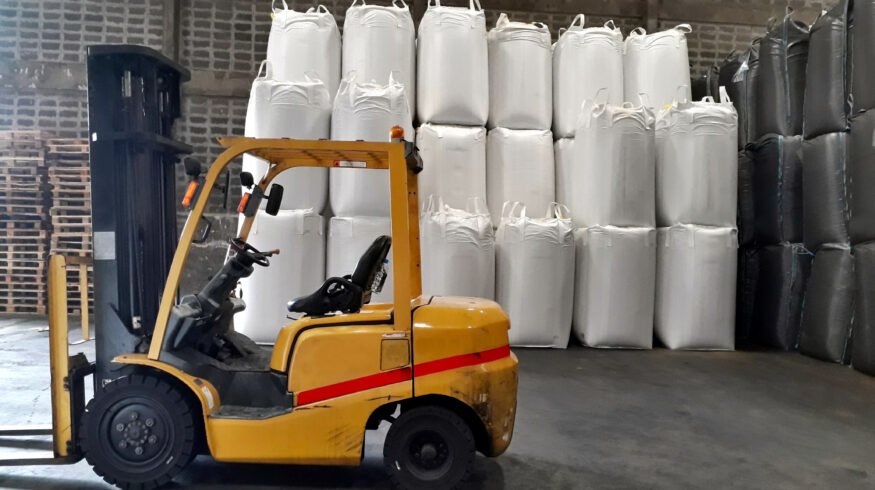

Midwest farmers are beginning to lock in fertilizer for the 2027 crop year, with early purchases confirming that 2027 fertilizer prices remain above pre-crisis benchmarks even as some products have stabilized. Two producers interviewed by Brownfield Ag News described a mixed picture heading into fall application.
Bob Metz, who farms with his sons in northeast South Dakota, said fertilizer costs were not dramatically higher than a year ago. “It’s a little bit higher for a couple of products, actually a couple dollars less on some others,” Metz told Brownfield. Robert Alpers in central Missouri reported a similar split: dry fertilizer was “not too bad, compared to last year,” while anhydrous ammonia was “quite a bit higher.” Both farmers cited global conflict as a concern for future pricing.
The accounts align with the latest USDA retail fertilizer price survey, which shows urea and UAN28 continuing to decline for a fifth straight week, while anhydrous ammonia has been slower to ease. Tampa ammonia settled at $555 per metric ton in September, down from an $825 peak earlier in the year. CoBank and North Dakota State University project that nitrogen fertilizer prices will remain above pre-Iran-war levels through at least 2028, driven by damaged Middle East production capacity that will take years to restart.
For farmers budgeting 2027, the timing of purchases is the central decision. Summer fill programs for UAN sold out faster than anticipated, according to CoBank, and whether fill pricing marks the marketing-year low remains an open question with corn futures trading near $4.80 per bushel.
Source: Brownfield Ag News
Key questions about 2027 fertilizer prices
Anhydrous ammonia production is directly linked to natural gas costs and the global ammonia supply chain, both of which remain disrupted by the Strait of Hormuz closure. An estimated 31 ammonia plants in the Middle East have been directly impacted by the conflict. Dry fertilizers such as DAP and potash draw on different supply chains and have seen more price stability in recent months.
Summer fill programs typically mark the seasonal low about 80% of the time, according to CoBank. UAN fill pricing in 2026 sold out faster than expected. The question for 2027 is whether the remaining 20% scenario plays out — where prices dip further into fall — especially with corn futures near $4.80 per bushel compressing margins.
North Dakota State University projects fertilizer prices will remain above pre-Iran-war levels until 2028, with 2027 averages forecast at $496 for urea, $666 for DAP, $619 for ammonia and $361 for UAN. CoBank describes the current price environment as structural rather than cyclical, driven by damaged production capacity that requires significant time and investment to restore.
An American Farm Bureau Federation survey found that about 48% of Midwest corn and soybean growers were unable to afford traditional fertilizer sources earlier in 2026. Some producers are shifting nitrogen-intensive corn acreage toward soybeans, which fix their own nitrogen. Others are evaluating variable-rate application to optimize per-acre returns rather than reducing total rates.
The Trump administration suspended countervailing duties on Moroccan phosphate in June and launched the $500 million FIELDS program to expand domestic fertilizer manufacturing. The pending Farm Bill includes provisions to promote precision agriculture technology adoption through EQIP and CSP. A DOJ antitrust investigation into major fertilizer producers is also nearing completion.

Enjoyed this story?
Every Monday, our subscribers get their hands on a digest of the most trending agriculture news. You can join them too!






Discussion0 comments