

Okra genetic diversity study maps 81 accessions, flags 5 key lines to boost breeding

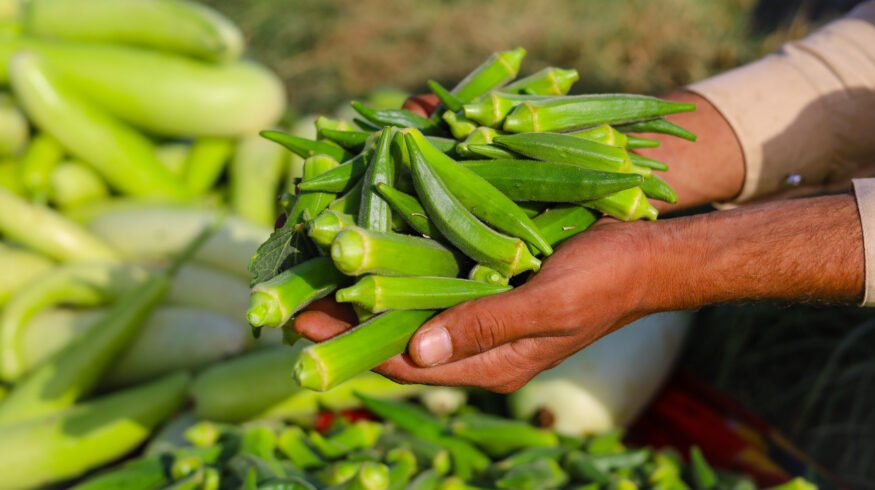

Researchers led by Jacinta Adoma Opoku of the West Africa Centre for Crop Improvement (WACCI) at the University of Ghana have mapped okra genetic diversity across 81 accessions from 10 countries and identified five lines as promising parents for breeding programs. The study was published on June 16, 2026, in the journal Discover Agriculture and was reported by Global Agriculture on Oct. 3.
The team scored the accessions for 16 quantitative and 10 qualitative traits in field evaluation and genotyped them with 19,951 DArTseq single nucleotide polymorphism (SNP) markers. Ghana supplied 65 of the accessions. The rest came from Nigeria, Senegal, India, Bangladesh, the Philippines, Thailand, Uganda, the United States and Vietnam. Molecular diversity was moderate, with mean gene diversity of 0.17 and polymorphic information content of 0.15.
Five accessions, JKOH540, Asontem 2, Asontem 4, JA2133 and CRI-OFK, performed consistently across key yield-related traits. JKOH540 fruited 35 days after planting, which the authors said indicates strong potential for early production. Scientists from Ghana’s CSIR-Crops Research Institute, the Cocoa Research Institute of Ghana and Uganda’s National Crops Resources Research Institute took part, according to Global Agriculture.
The okra genetic diversity data give breeders a basis for choosing genetically distinct parents instead of relying on appearance alone, the same aim behind a USDA effort to turn germplasm data into breeding tools. The study characterizes existing material. It does not release a new variety, and the selected lines still need wider testing before they reach seed systems.
Sources: Discover Agriculture, Global Agriculture
Okra genetic diversity study: key questions answered
Okra is an important vegetable crop in sub-Saharan Africa, but its genetic improvement has been limited by inadequate knowledge of the extent and structure of diversity in available germplasm collections, according to the paper. Breeders cannot combine useful traits efficiently without knowing how closely related their candidate parents are.
DArTseq is a sequencing-based genotyping method that detects thousands of DNA markers across a plant’s genome in a single run. The authors said its high marker density and broad genomic coverage make it well suited to resolving diversity and genetic relationships in okra.
Of the 65 accessions from Ghana, 53 came from the CSIR-Crops Research Institute at Kwadaso in the Ashanti region and six from the CSIR-Plant Genetic Resources Research Institute at Bunso in the Eastern region. Three came from Greater Accra, two from the Savanna region and one from the Volta region, according to the paper.
Only partly. Nigerian accessions were spread across all of the molecular clusters except one, and that cluster contained only Ghanaian accessions, the authors reported. The pattern suggests origin alone is a weak guide to how genetically distinct two okra lines are.
Earlier Ghanaian studies were smaller and relied on fewer markers. One published study evaluated 40 accessions collected across the country’s agro-ecological zones using morphological traits and simple sequence repeat (SSR) markers, and older work characterized 25 to 30 accessions on morphological traits alone. The new study uses a larger panel and a far denser marker set.

Enjoyed this story?
Every Monday, our subscribers get their hands on a digest of the most trending agriculture news. You can join them too!








Discussion0 comments