Skip to content
  • Professionals
  • Gardeners
 
Search
Log in
EN
RU
  • Trade & Policy
  • Markets
  • AgTech & Research
  • Corporate
  • Sustainability
  • Interviews
  • Rankings
  • Events
  • Stock Quotes
  • Business Directory
Trending topic:

sulfur

Featured company:
 
RU
  • Professionals
  • Gardeners
Sections
    Events
    Stock Quotes
    Business Directory
    Trending topic:

    sulfur

    Featured company:
    Follow us...
    Helpful information
    • About
    • Team
    • Advertise
    • Contacts
    • Submit a Tip
    • Privacy Policy
    • Terms of Service
    • Site Map
    Sections
      Seasonal tips
      • Spring
      • Summer
      • Autumn
      • Winter
      Trending topics
      • compost
        26
      • garlic
        2
      • lemon
        1
      • potato
        16
      Follow us...
      Helpful information
      • About
      • Team
      • Advertise
      • Contacts
      • Submit a Tip
      • Privacy Policy
      • Terms of Service
      • Site Map
      Copyright © 2014-2026 DigitalTree LLC. All rights reserved.
      We deliver content lightning-fast thanks to the managed cloud WordPress hosting with CDN.
      16+

      Home / AgTech & Research

      New framework links plant microbe breeding to lower fertilizer dependence across major crops

      Timothy Bueno avatar Timothy Bueno
      August 24, 2026, 1:00 pm
      August 24, 2026, 1:00 pm
      [esi post-views ttl=0]
      AgTech & Research
      Regenerative Agriculture
      Sustainability
      New framework links plant microbe breeding to lower fertilizer dependence across major crops
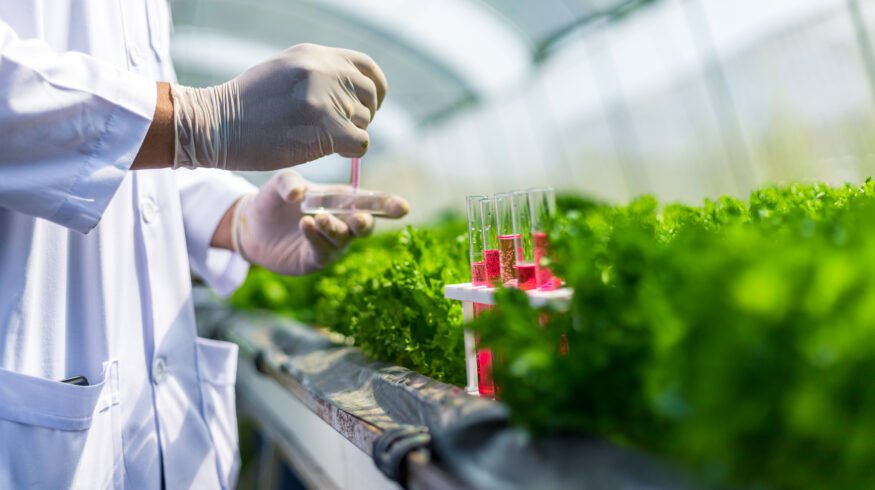
      Image Credits: iStock Photo
      Save for later
      Share
      Never miss important fertilizer news

      A review published in Nature Communications on August 3 proposes a framework that combines crop breeding for traits that enhance beneficial plant-microbe associations (BMAs) with soil management practices that enrich microbial communities — an approach the authors argue could meaningfully reduce synthetic fertilizer use in major cereal and legume crops.

      Why plant microbe breeding matters now

      Traditional crop breeding has focused overwhelmingly on above-ground traits — yield, disease resistance, grain quality — while largely ignoring the underground relationships between roots and the billions of soil microorganisms that help plants acquire nutrients. The review, authored by an international team including researchers from Rothamsted Research and multiple European institutions, argues that this blind spot has inadvertently weakened crops’ ability to partner with beneficial soil microbes, making modern varieties more dependent on synthetic fertilizer inputs.

      The timing is significant. Global fertilizer prices remain elevated following the Strait of Hormuz disruption, and CoBank warned on August 13 that costs are unlikely to return to pre-war levels before 2028. For farmers already cutting phosphate and potassium applications by 10–15% to manage budgets, a biological pathway that recovers some of the lost nutrient uptake could have immediate practical value.

      How the proposed framework works

      The plant microbe breeding framework operates on two parallel tracks. On the plant genetics side, the authors propose selecting crop varieties for root traits that facilitate beneficial microbial colonization — including root exudate profiles that attract nitrogen-fixing bacteria, phosphate-solubilizing fungi, and other growth-promoting microorganisms. On the soil management side, practices such as reduced tillage, cover cropping, and targeted organic amendments would maintain and enrich the pool of beneficial microbes that bred crops can recruit.

      ADVERTISEMENT

      The key insight is that neither approach works well in isolation. Inoculating soil with beneficial microbes often fails because the introduced strains cannot compete with established native communities. Breeding crops with microbe-friendly root traits delivers limited benefit if intensive farming practices have already depleted the soil microbial pool. The framework argues for a coordinated approach that builds both the demand side (crop genetics) and the supply side (soil biology) simultaneously.

      Evidence from the field

      The review draws on several recent studies to support its case. Research from Rothamsted Research published in May using the UK Crop Microbiome Cryobank showed that crop species predictably select beneficial root microbes based on functional traits — regardless of soil type. A separate study from Washington State University, published in Current Biology in May, demonstrated that nitrogen-fixing genes can be successfully transferred between bacterial strains, opening a path toward engineering microbes that fix nitrogen for cereal crops in fertilized fields.

      Commercial efforts are already underway. Pivot Bio, which has raised $618 million to develop nitrogen-fixing microbes for corn, represents the most advanced commercial application of this approach. Brazilian agriculture has also demonstrated the concept at scale: the country’s soybean industry relies almost entirely on biological nitrogen fixation through rhizobia bacteria rather than synthetic nitrogen, saving an estimated $15 billion annually in fertilizer costs.

      Challenges and limitations

      The authors acknowledge that translating plant microbe breeding concepts from laboratory to field remains difficult. Soil microbiomes are extraordinarily complex — a single gram of agricultural soil can contain more than 10,000 bacterial species — and the interactions between crop genetics, soil chemistry, climate, and microbial communities are not yet fully understood. Meta-analyses of commercial microbial inoculants show highly variable results across different soil types, climates, and cropping systems.

      Regulatory pathways for genetically modified microbial products also remain uneven. In the United States, the USDA’s SECURE Rule has streamlined review for some engineered microbes, while the EU’s precautionary framework moves more slowly. The commercial viability of microbiome-assisted breeding depends not only on the science working at scale, but also on farmers being willing to adopt practices — such as reduced tillage — that may require years to rebuild soil microbial communities.

      What it means for the industry

      For the fertilizer industry, the review represents the latest evidence that biological alternatives to synthetic nutrients are moving from speculative to practical. The approach would not eliminate demand for manufactured fertilizers — the authors emphasize that biological nitrogen fixation and microbial phosphate mobilization can supplement, not replace, synthetic inputs in high-yield cropping systems. The more immediate impact would be at the margins: reducing the 10–15% of fertilizer applications that farmers are already cutting due to cost pressure, while maintaining or improving yields.

      The convergence of high fertilizer prices, advancing microbiome science, and growing commercial investment suggests that plant microbe breeding may move from academic review to agronomic practice faster than previous biological-fertilizer concepts. Whether it does will depend on breeding programs prioritizing below-ground traits alongside above-ground productivity — a shift that the review’s authors argue is overdue by decades.

      Source: Nature Communications

      0
      agriscience
      biofertilizer
      crop nutrition
      microbiome
      nitrogen fixation
      plant breeding
      research
      soil health

      Enjoyed this story?

      Every Monday, our subscribers get their hands on a digest of the most trending agriculture news. You can join them too!


      Sign me up
      Check the example

      Discussion0 comments

      Спасибо за комментарий, он будет опубликован на сайте после проверки модератором. Хотите, чтобы ваши комментарии появлялись на сайте мгновенно? Достаточно пройти регистрацию.
      Congratulations, you can be the first to start the conversation.
      Do you have a question or suggestion? Please leave your comment to ignite conversation.
      What’s on your mind?
      Cancel Log in and comment
      Or continue without registration
      Get notified about new comments by email.
      Advertisement
      In focus
      How to get here?
      Stock quotes
      Bayer
      14.06
      0.42
      Bayer Crop Science
      48.04
      1.17
      CF Industries
      129.6
      3.1
      Corteva Agriscience
      81.79
      2.93
      ICL Group
      5.8
      5.07
      Intrepid Potash
      38.98
      1.83
      Mosaic
      24.41
      4.54
      Nutrien
      75.27
      2.94
      Yara International
      24.3
      4.43
      See all
      Most read
      China extends phosphate export curbs through August 2026 as Russia holds fertilizer quotas
      China extends phosphate export curbs through August 2026 as Russia holds fertilizer quotas
      India issues 1.7 million tonne urea tender through RCF with bids opening on August 11
      India issues 1.7 million tonne urea tender through RCF with bids opening on August 11
      Sulfur shortage threatens global phosphate supply as Hormuz blockade and Russia ban cut 2 of 3 top sources
      Sulfur shortage threatens global phosphate supply as Hormuz blockade and Russia ban cut 2 of 3 top sources
      Nutrien weighs phosphate future as sulfur costs push Q2 margins negative
      Nutrien weighs phosphate future as sulfur costs push Q2 margins negative
      UN data reveals Hormuz disruption slashed urea exports 83% and total trade volumes 54%
      UN data reveals Hormuz disruption slashed urea exports 83% and total trade volumes 54%
      Events
      Agronomy Conference and Expo
      Indianapolis (IN), USA
      Aug 24 — 26, 2026
      Farm Progress Show
      Boone (IA), USA
      Sep 1 — 3, 2026
      Fertilizer Canada Annual Conference
      Charlottetown, Canada
      Sep 14 — 16, 2026
      Argus Methanol & Ammonia Conference
      Houston (TX), USA
      Sep 21 — 23, 2026
      Argus Fertilizer Europe
      Prague, Czechia
      Oct 20 — 22, 2026
      See all
      Live
      Trader
      July 29, 06:28 pm
      100 percent AI generated, from a company with a 100 percent AI generated website. I’m sure they have good data, but it’s hard to take it seriously wen it’s just AI church
      Green ammonia is easier to make than to sell
      Stefan Petko
      May 6, 06:48 pm
      It is alarming to see these developments in California. As a vineyard grower, I have faced significant challenges this year, with fertilizer costs rising sharply while market conditions have made it difficult to sell the harvest.
      California peach growers forced to remove 420,000 trees after bankruptcy of Del Monte Foods canneries
      Estebel
      April 23, 10:26 pm
      Sounds like magic ))
      MIT study: rice seeds germinate faster when exposed to rainfall sounds
      Isabelita Barreiro
      December 11, 2025, 01:54 am
      Excellent management of water resources and effective use of water-soluble fertilizers!
      Argentine nano-fertilizer firm AKO Agro expands to Brazil
      Meripa Corson
      August 4, 2025, 01:18 pm
      Where does the money actually go? As a timber land owner, how do I benefit from the legislation?
      USDA commits $80 million to expand timber markets and improve forest resilience
      About
      Sections
      Trade & Policy  ·  Markets  ·  AgTech & Research  ·  Corporate  ·  Sustainability  ·  Interviews  ·  Rankings
      Support
      About  ·  Team  ·  Advertise  ·  Contacts  ·  Submit a Tip  ·  Privacy Policy  ·  Terms of Service  ·  Site Map
      Copyright © 2014-2026 DigitalTree LLC. All rights reserved.
      We deliver content lightning-fast thanks to the managed cloud WordPress hosting with CDN.
      16+
      More to read
      Regenerative agriculture deserves system-wide deployment, scientists argue
      Regenerative agriculture deserves system-wide deployment, scientists argue
      Nitrogen-fixing genes transferred into new bacterial strains, advancing quest to reduce fertilizer dependence
      Nitrogen-fixing genes transferred into new bacterial strains, advancing quest to reduce fertilizer dependence
      Researchers chart a roadmap to a bio-solar nitrogen economy that could cut synthetic fertilizer demand
      Researchers chart a roadmap to a bio-solar nitrogen economy that could cut synthetic fertilizer demand
      Advertising that helps us do quality reporting