

India starts green ammonia wheat trial on 110 acres in Bathinda as urea alternative

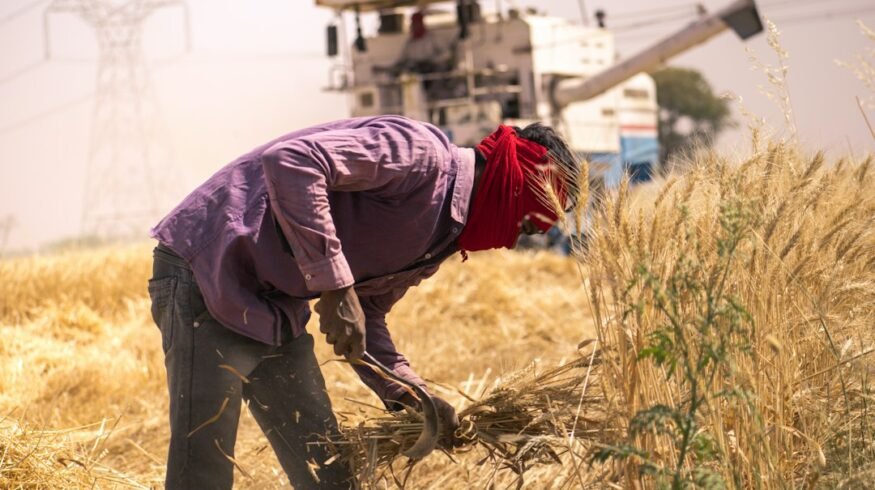

Scientists in Bathinda, Punjab, have started testing green ammonia as a nitrogen source for wheat, a possible alternative to urea. The trial began on November 2 at a village in the district and has so far covered about 110 acres of farmland, according to The Tribune.
The project is run jointly by the Krishi Vigyan Kendra (KVK) in Bathinda, part of Punjab Agricultural University, and the Agricultural Technology Application Research Institute (ATARI) Zone-I in Ludhiana, under the Indian Council of Agricultural Research (ICAR). Urea is the fertilizer farmers commonly use to promote crop growth, and the trial is designed to test whether green ammonia can supply that nitrogen with less waste.
How the application works
Special machines inject green ammonia about 15 centimeters below the soil surface. The Tribune reported that this is expected to help crops absorb nitrogen more efficiently and reduce fertilizer wastage.
Scientists are studying how effectively the technology supplies nitrogen to wheat, whether it improves growth and yield, and how it affects soil health. The report does not give plot sizes, a control design, yield results or the cost of green ammonia.
What officials say about urea use
Gurdeep Singh, deputy director (training) at the KVK, said growing nitrogen demand made it important to explore new ways of supplying nutrients to crops. The KVK is conducting research and field demonstrations to assess how well green ammonia can meet crop nitrogen requirements. If the results are encouraging, he said, the technology could help farmers reduce their dependence on urea.
Tejbir Singh Buttar, assistant professor of soil science at the KVK, said good farming means protecting soil fertility and natural resources, not only increasing output. He tied that message to the Khet Bachao Campaign and urged farmers to apply fertilizers at recommended rates.
What the trial does not yet show
At 110 acres, the trial is a demonstration rather than a test of regional supply. A fair assessment would need yield data across seasons, measurements of how much nitrogen wheat takes up, and a cost comparison with urea. None of those figures has been reported yet.
Sources: The Tribune

Enjoyed this story?
Every Monday, our subscribers get their hands on a digest of the most trending agriculture news. You can join them too!





Discussion0 comments