Skip to content
  • Professionals
  • Gardeners
 
Search
Log in
EN
RU
  • Markets
  • Business
  • Politics
  • Technologies
  • Interviews
  • Rankings
  • Environment
  • Events
  • Stock Quotes
  • Business Directory
Trending topic:
Featured company:
 
RU
  • Professionals
  • Gardeners
Sections
    Events
    Stock Quotes
    Business Directory
    Trending topic:
    Featured company:
    Follow us...
    Helpful information
    • About
    • Team
    • Advertise
    • Contacts
    • Submit a Tip
    • Privacy Policy
    • Terms of Service
    • Site Map
    Sections
      Seasonal tips
      • Spring
      • Summer
      • Autumn
      • Winter
      Trending topics
      • compost
        24
      • garlic
        2
      • lemon
        1
      • potato
        14
      Follow us...
      Helpful information
      • About
      • Team
      • Advertise
      • Contacts
      • Submit a Tip
      • Privacy Policy
      • Terms of Service
      • Site Map
      Copyright © 2014-2026 DigitalTree LLC. All rights reserved.
      We deliver content lightning-fast thanks to the managed cloud WordPress hosting with CDN.
      16+

      Home / Environment

      New research suggests agricultural liming is a significant carbon sink rather than a CO₂ source

      Timothy Bueno avatar Timothy Bueno
      July 16, 2025, 12:00 pm
      July 16, 2025, 12:00 pm
      [esi post-views ttl=0]
      Environment
      New research suggests agricultural liming is a significant carbon sink rather than a CO₂ source
      Save for later
      Share

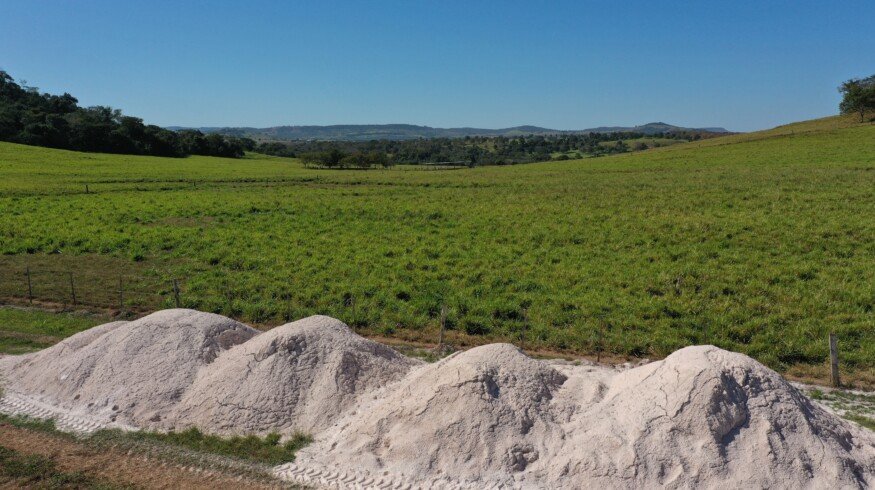
      Applying lime to farmland soils in the United States could serve as a significant carbon dioxide (CO₂) sink rather than a source of emissions, according to new research presented at the Goldschmidt Conference in Prague. The findings, based on over a century of data from the Mississippi River basin and advanced modeling, suggest that international climate guidelines may be overlooking the climate mitigation potential of liming practices.

      Researchers from the Yale Center for Natural Carbon Capture argue that CO₂ emissions from soils are primarily driven by acid additions—resulting from atmospheric pollution and nitrogen fertilizer use—rather than the application of lime itself. The study challenges the Intergovernmental Panel on Climate Change (IPCC) approach, which assumes that all carbon in agricultural lime is released as CO₂ upon application.

      “It is the reaction of acidity with carbonate that creates CO₂ emissions, not the addition of the lime itself,” said lead author Dr. Tim Jesper Suhrhoff. “In the absence of strong acids, liming actually removes CO₂ from the atmosphere through the formation of bicarbonate.”

      The researchers contend that current greenhouse gas inventories penalize liming while ignoring acid inputs, such as from industrial pollution or fertilizer. Their analysis indicates that this misattribution could underestimate the climate benefit of liming, particularly in acidified soils.

      ADVERTISEMENT

      Data from the Mississippi River, collected since 1900, reveals a long-term trend of increasing soil acidity due to fossil fuel emissions and fertilizer use, which has not been fully offset by lime application. However, since the 1930s, expanded use of lime has improved the rate and efficiency of CO₂ removal. According to the study, current removal is estimated at 75% of the theoretical maximum rate.

      The researchers call for a reassessment of international and national emissions accounting, with a shift in focus from liming to acid inputs. They also suggest that combining silicate rock application to neutralize acidity before liming may enhance carbon removal while maintaining agronomic benefits such as improved yields and reduced nitrous oxide emissions.

      Dr. Suhrhoff concluded, “Liming has long been essential for crop productivity and food security. We now show it also has climate benefits over decadal timescales. Policy frameworks should reflect this dual role.”

      agricultural research
      carbon emissions
      CO2 emission
      Environmental damage
      lime
      liming
      U.S.

      Enjoyed this story?

      Every Monday, our subscribers get their hands on a digest of the most trending agriculture news. You can join them too!

      Sign me up
      Check the example

      Discussion0 comments

      Спасибо за комментарий, он будет опубликован на сайте после проверки модератором. Хотите, чтобы ваши комментарии появлялись на сайте мгновенно? Достаточно пройти регистрацию.
      Congratulations, you can be the first to start the conversation.
      Do you have a question or suggestion? Please leave your comment to ignite conversation.
      What’s on your mind?
      Cancel Log in and comment
      Or continue without registration
      Get notified about new comments by email.
      Advertisement
      In focus
      How to get here?
      Stock quotes
      Bayer
      11.09
      0.63
      Bayer Crop Science
      38.05
      4.39
      CF Industries
      122.69
      1.22
      Corteva Agriscience
      80.85
      0.2
      ICL Group
      5.44
      0.91
      Intrepid Potash
      39.72
      0.38
      Mosaic
      23.15
      0.52
      Nutrien
      75.22
      1.03
      Yara International
      29.18
      0.41
      See all
      Most read
      BASF acquires AgBiTech to expand biological insect control portfolio
      BASF acquires AgBiTech to expand biological insect control portfolio
      China limits fertilizer exports as the country prioritizes domestic market
      China limits fertilizer exports as the country prioritizes domestic market
      Mosaic suspends two phosphate facilities in Brazil considering their potential sale
      Mosaic suspends two phosphate facilities in Brazil considering their potential sale
      Russia limits fertilizer exports to 20 million tons through November 2026
      Russia limits fertilizer exports to 20 million tons through November 2026
      EU approves French funding for LAT Nitrogen’s Ottmarsheim hydrogen project
      EU approves French funding for LAT Nitrogen’s Ottmarsheim hydrogen project
      Events
      Argus Clean Ammonia North America
      Houston (TX), USA
      Apr 27 — 29, 2026
      CaspianAgro
      Baku, Azerbaijan
      May 5 — 8, 2026
      Fertilizer Summit
      Chicago (IL), USA
      Jun 1 — 2, 2026
      Argus Clean Ammonia Asia
      Tokyo, Japan
      Jun 2 — 4, 2026
      Wood Mackenzie Hydrogen Hydrogen Conference
      London, UK
      Jun 4, 2026
      See all
      Live
      Estebel
      April 23, 10:26 pm
      Sounds like magic ))
      MIT study: rice seeds germinate faster when exposed to rainfall sounds
      Isabelita Barreiro
      December 11, 2025, 01:54 am
      Excellent management of water resources and effective use of water-soluble fertilizers!
      Argentine nano-fertilizer firm AKO Agro expands to Brazil
      Meripa Corson
      August 4, 2025, 01:18 pm
      Where does the money actually go? As a timber land owner, how do I benefit from the legislation?
      USDA commits $80 million to expand timber markets and improve forest resilience
      Patonkas Luksompulus
      January 21, 2025, 12:36 pm
      Greece meeds biological fertilizers! Great news about De sangosse.
      DE SANGOSSE expands operations with Greek subsidiary
      Pedro Diaz
      November 20, 2024, 08:42 pm
      Is it a Roundup lawsuit or more about bad financials? I think the market reacted only to announced financial results.
      Bayer’s shares are pressed down by ongoing Roundup cancer lawsuit
      About
      Sections
      Markets  ·  Business  ·  Politics  ·  Technologies  ·  Interviews  ·  Rankings  ·  Environment
      Support
      About  ·  Team  ·  Advertise  ·  Contacts  ·  Submit a Tip  ·  Privacy Policy  ·  Terms of Service  ·  Site Map
      Copyright © 2014-2026 DigitalTree LLC. All rights reserved.
      We deliver content lightning-fast thanks to the managed cloud WordPress hosting with CDN.
      16+
      More to read
      Higher water levels could turn cultivated Arctic peatlands into a carbon sink
      Higher water levels could turn cultivated Arctic peatlands into a carbon sink
      USDA explores the role of climate-smart agriculture in addressing climate change
      USDA explores the role of climate-smart agriculture in addressing climate change
      EuroChem study says Russian soils lose too much calcium and magnesium
      EuroChem study says Russian soils lose too much calcium and magnesium
      Advertising that helps us do quality reporting