Skip to content
  • Professionals
  • Gardeners
 
Search
Log in
EN
RU
  • Markets
  • Business
  • Politics
  • Technologies
  • Interviews
  • Rankings
  • Environment
  • Events
  • Stock Quotes
  • Business Directory
Trending topic:
Featured company:
 
RU
  • Professionals
  • Gardeners
Sections
    Events
    Stock Quotes
    Business Directory
    Trending topic:
    Featured company:
    Follow us...
    Helpful information
    • About
    • Team
    • Advertise
    • Contacts
    • Submit a Tip
    • Privacy Policy
    • Terms of Service
    Sections
      Seasonal tips
      • Spring
      • Summer
      • Autumn
      • Winter
      Trending topics
      • compost
        23
      • garlic
        2
      • lemon
        1
      • potato
        12
      Follow us...
      Helpful information
      • About
      • Team
      • Advertise
      • Contacts
      • Submit a Tip
      • Privacy Policy
      • Terms of Service
      Copyright © 2014-2026 DigitalTree LLC. All rights reserved.
      We deliver content lightning-fast thanks to the managed cloud WordPress hosting with CDN.
      16+

      Home / Environment

      Incurable crop diseases threaten Missouri’s $5 billion corn and soybean industry

      Kim Clarksen avatar Kim Clarksen
      July 25, 2025, 10:00 am
      July 25, 2025, 10:00 am
      [esi post-views ttl=0]
      Environment
      Markets
      Incurable crop diseases threaten Missouri’s $5 billion corn and soybean industry

      Save for later
      Share

      Two recently confirmed, untreatable plant diseases are threatening Missouri’s two most valuable crops—corn and soybeans—raising concerns over potentially severe agricultural and economic losses in the state.

      Corn and soybeans generate more than $5 billion annually in Missouri, according to the U.S. Department of Agriculture. Both crops are now facing newly identified pathogens: red crown rot in soybeans and corn stunt disease in corn. State agriculture officials confirmed the presence of both diseases during the 2024 growing season.

      Excessive rainfall earlier in the year delayed planting across much of Missouri, which researchers say may delay visible symptoms of the diseases until late summer or early fall. Plant pathologist Mandy Bish of the University of Missouri, who specializes in crop disease identification and management, is leading efforts to monitor the outbreaks.

      Red crown rot: a soil-borne risk to soybeans
      ADVERTISEMENT

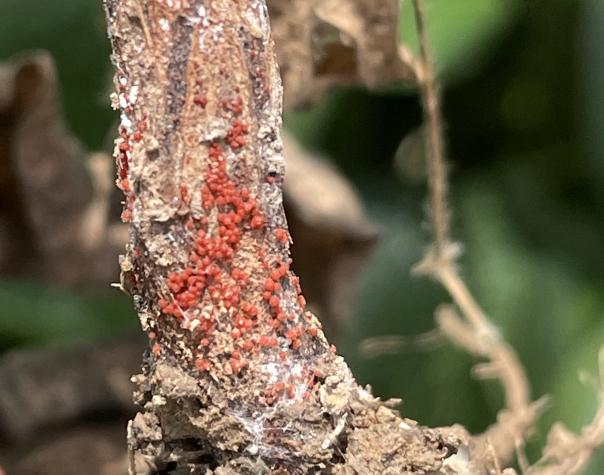
      Red crown rot is a fungal disease that spreads through soil and currently has no effective treatment or containment method once established. According to Bish, infected soybean fields can suffer yield losses of up to 70–80% in severe cases.

      The disease was first identified in U.S. peanut crops in Georgia in the 1960s and later in Illinois soybean fields in 2018. It has now been confirmed in Missouri’s Marion and Audrain counties, though Bish suspects wider distribution.

      “The soybeans that are infected with red crown rot look a lot like other things that we already know of that can cause sickness,” Bish said. “By the time we start to see symptoms in a field, there’s not much we can do at that point.”

      Containing the disease would require sanitizing farm equipment between fields, a measure Bish described as currently impractical. She emphasized the need for longer-term research and development to identify viable countermeasures.

      Terry Schwoeppe, a member of the Missouri Soybean Commission, said he was unaware the disease had been detected in the state, indicating limited awareness among producers.

      Corn stunt: an airborne bacterial threat
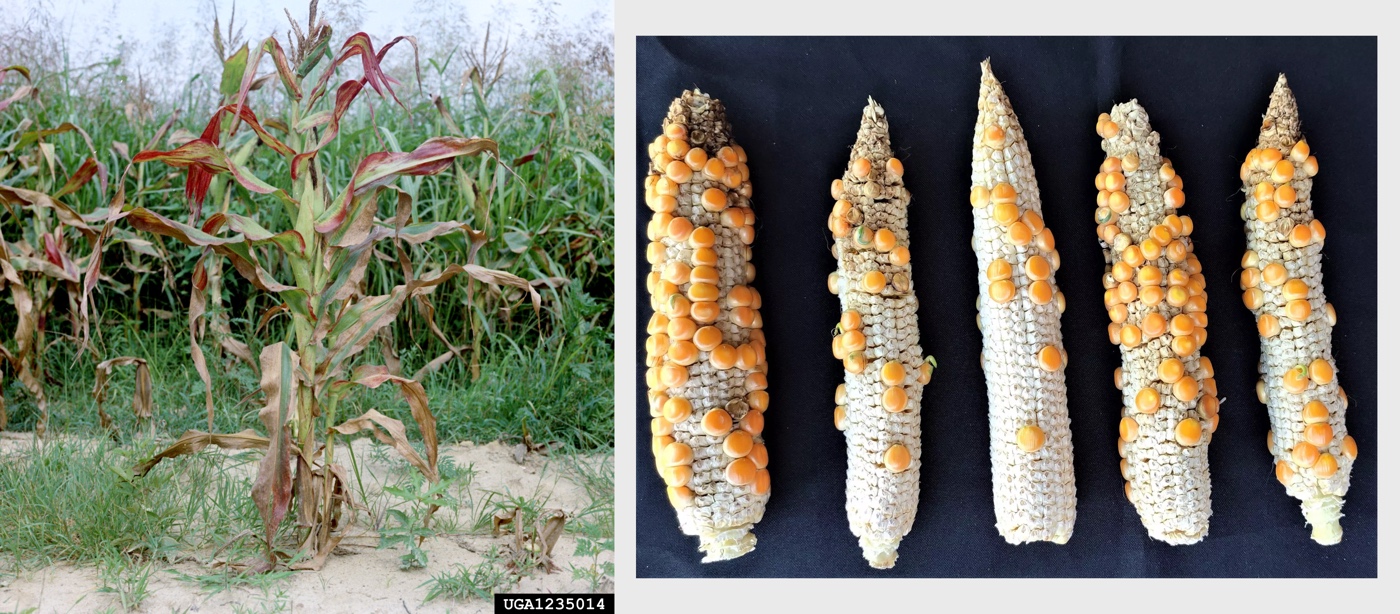
      Corn stunt disease is caused by a bacterium transmitted by corn leafhoppers, a recently observed insect in Missouri. According to the Crop Protection Network, the insects have been detected in at least three counties: Lawrence, Vernon, and Boone.

      Bish warned that the disease can lead to complete yield loss under certain conditions. “Some of our corn that already has ears on it and is tasseling and is happy will be OK,” she said. “But some of our corn that was planted later in the year due to all the rain— it could have an effect on them.”

      The University of Missouri has advised farmers to begin scouting for corn stunt symptoms, which include leaf chlorosis, reddening of leaf tips, stunted growth, and malformed ears with missing kernels. As with red crown rot, there is no known treatment once symptoms develop.

      Agricultural authorities are continuing to monitor the spread of both diseases and are encouraging producers to report suspected cases to local extension offices.

      corn
      crop disease
      Missouri
      soybean

      Enjoyed this story?

      Every Monday, our subscribers get their hands on a digest of the most trending agriculture news. You can join them too!


      Sign me up
      Check the example

      Discussion0 comments

      Спасибо за комментарий, он будет опубликован на сайте после проверки модератором. Хотите, чтобы ваши комментарии появлялись на сайте мгновенно? Достаточно пройти регистрацию.
      Congratulations, you can be the first to start the conversation.
      Do you have a question or suggestion? Please leave your comment to ignite conversation.
      What’s on your mind?
      Cancel Log in and comment
      Or continue without registration
      Get notified about new comments by email.
      Advertisement
      In focus
      How to get here?
      Stock quotes
      Bayer
      13.12
      1.63
      Bayer Crop Science
      44.56
      0.88
      CF Industries
      92.38
      3.53
      Corteva Agriscience
      71.7
      0.2
      ICL Group
      5.4
      0.37
      Intrepid Potash
      35
      3.31
      Mosaic
      28.79
      2.24
      Nutrien
      70.88
      4.08
      Yara International
      22.49
      4.75
      See all
      Most read
      China cancels export tax rebates for pesticides including glufosinate
      China cancels export tax rebates for pesticides including glufosinate
      ADAMA and BASF agree to develop new fungicide for European crops
      ADAMA and BASF agree to develop new fungicide for European crops
      China’s ECEC to build $2 billion phosphate fertilizer complex in Iraq
      China’s ECEC to build $2 billion phosphate fertilizer complex in Iraq
      Woodside’s Beaumont ammonia plant starts up, poised to reshape U.S. fertilizer supply
      Woodside’s Beaumont ammonia plant starts up, poised to reshape U.S. fertilizer supply
      Phospholutions advances RhizoSorb approvals and expands leadership team
      Phospholutions advances RhizoSorb approvals and expands leadership team
      Events
      International Crop-Science Conference & Expo
      Dubai, UAE
      Jan 19 — 20, 2026
      Fertilizer Latino Americano
      Miami (FL), USA
      Jan 26 — 28, 2026
      Argus Fertilizer Africa
      Dar es Salaam, Tanzania
      Feb 10 — 11, 2026
      CRU Nitrogen + Syngas
      Barcelona, Spain
      Feb 10 — 12, 2026
      TFI Annual Business Conference
      Orlando (FL), USA
      Feb 16 — 18, 2026
      See all
      Live
      Isabelita Barreiro
      December 11, 2025, 01:54 am
      Excellent management of water resources and effective use of water-soluble fertilizers!
      Argentine nano-fertilizer firm AKO Agro expands to Brazil
      Meripa Corson
      August 4, 2025, 01:18 pm
      Where does the money actually go? As a timber land owner, how do I benefit from the legislation?
      USDA commits $80 million to expand timber markets and improve forest resilience
      Patonkas Luksompulus
      January 21, 2025, 12:36 pm
      Greece meeds biological fertilizers! Great news about De sangosse.
      DE SANGOSSE expands operations with Greek subsidiary
      Pedro Diaz
      November 20, 2024, 08:42 pm
      Is it a Roundup lawsuit or more about bad financials? I think the market reacted only to announced financial results.
      Bayer’s shares are pressed down by ongoing Roundup cancer lawsuit
      Johan Fredin
      August 22, 2024, 07:57 pm
      Europe is falling behind in this field. The concerns 30 years ago was reasonable. Now not so much. We need crops that can survive in a more extreme future climate. Handle droughts and hot weather better. Crops that are less tasty to pests like hogs and deere.
      Gene-edited crops set for groundbreaking European trials
      About
      Sections
      Markets  ·  Business  ·  Politics  ·  Technologies  ·  Interviews  ·  Rankings  ·  Environment
      Support
      About  ·  Team  ·  Advertise  ·  Contacts  ·  Submit a Tip  ·  Privacy Policy  ·  Terms of Service
      Copyright © 2014-2026 DigitalTree LLC. All rights reserved.
      We deliver content lightning-fast thanks to the managed cloud WordPress hosting with CDN.
      16+
      More to read
      Schlumbergera: How to grow and care for this Christmas cactus at home?
      Schlumbergera: How to grow and care for this Christmas cactus at home?
      2Blades and Bayer extend partnership to strengthen Soybean Rust resistance
      2Blades and Bayer extend partnership to strengthen Soybean Rust resistance
      Ilagan Corn Complex Will Stimualte Corn Indutry Growth on Philippines
      Ilagan Corn Complex Will Stimualte Corn Indutry Growth on Philippines
      Advertising that helps us do quality reporting