

CF Industries reports $698 million in 1H2025 earnings, begins carbon credit generation from CCS project

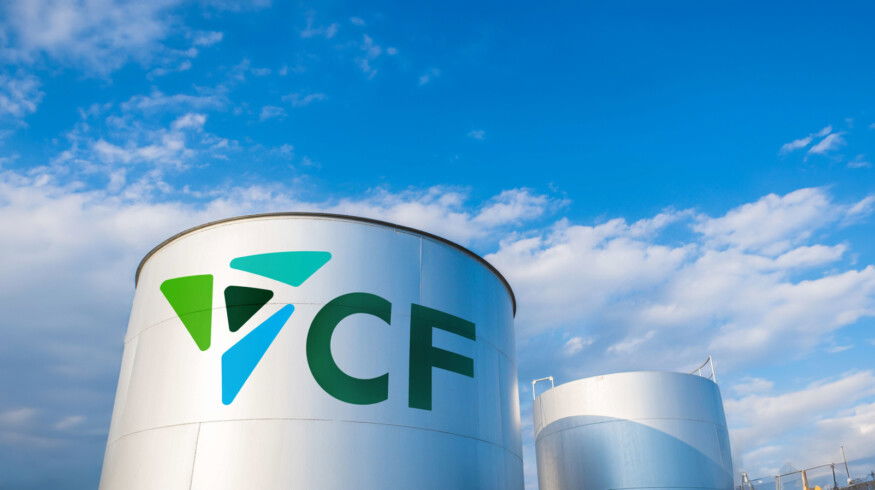

For the first half of 2025, CF Industries delivered solid earnings amid supportive market fundamentals and operational execution. Strategic investments in low-carbon ammonia and capacity partnerships position the company for long-term growth under tightening global nitrogen supply dynamics.
CF Industries Holdings (NYSE: CF) reported net earnings of $698 million for the first half of 2025, up from $614 million in the prior-year period, supported by increased nitrogen prices and production volumes. Adjusted EBITDA for the period reached $1.41 billion, compared to $1.21 billion a year earlier.
Second-quarter net earnings totaled $386 million, down slightly from $420 million in Q2 2024. Adjusted EBITDA for the quarter was $761 million, nearly flat year-over-year. The company attributed the results to elevated global nitrogen pricing and continued production recovery following weather-related disruptions in early 2024.
Revenue for the first half rose to $3.55 billion, compared to $3.04 billion a year ago. Second-quarter revenue reached $1.89 billion, up from $1.57 billion in Q2 2024. CF cited higher selling prices due to global energy cost increases and tighter supply conditions, along with stronger sales volumes, especially in ammonia and UAN.
Production and operational highlights
Ammonia production for the first half of 2025 reached 5.2 million tons, up from 4.8 million tons in the prior-year period. Second-quarter production remained flat year-over-year at 2.6 million tons. The company expects full-year ammonia output to reach approximately 10 million tons.
Safety performance remained strong, with a 12-month rolling average recordable incident rate of 0.30 per 200,000 work hours as of June 30, 2025.
Input costs: gas prices remain a pressure point
The average natural gas cost, including derivatives, was $3.52 per MMBtu in the first half, compared to $2.53 in the first half of 2024. In Q2, the average cost rose to $3.36 per MMBtu, up from $1.90 a year earlier. Higher gas prices contributed to an increase in cost of sales, though maintenance expenses were lower due to fewer unplanned outages.
Capital allocation: share repurchases and joint venture consolidation
The company repurchased 8.2 million shares for $636 million in the first half of 2025, including 2.8 million shares for $202 million in the second quarter. Since launching its $3 billion buyback program in 2023, CF has repurchased $2.6 billion in shares. A new $2 billion repurchase authorization, effective through 2029, will take effect once the current program concludes.
On the joint venture side, CF began consolidating the Blue Point JV with JERA Co., Inc. and Mitsui & Co., Ltd. into its financials. Capital expenditures in H1 2025 totaled $377 million, including $90 million related to the JV. Full-year 2025 capex is projected at $800–900 million, with $650 million attributable to CF after adjusting for partner contributions.
As of June 30, 2025, CF Industries held $1.69 billion in cash and equivalents, including $264 million from the Blue Point JV.
Low-carbon initiatives: CCS tax credits and clean ammonia investments
In July, CF Industries initiated carbon dioxide capture at its Donaldsonville Complex in Louisiana. The project is expected to sequester up to 2 million metric tons of CO₂ annually and qualifies for Section 45Q tax credits. ExxonMobil is handling the transport and storage of the captured CO₂. Interim sequestration is via enhanced oil recovery until dedicated geological storage sites, such as ExxonMobil’s Rose CCS project, receive final permits.
The company expects to produce 1.9 million tons of low-carbon ammonia annually from Donaldsonville. This production is expected to benefit from both tax credits and growing demand for lower-emission fertilizers.
At the Blue Point Complex, CF and its JV partners are developing a $3.7 billion autothermal reforming (ATR) ammonia facility with integrated carbon capture. In June, the JV finalized agreements with Linde to build and operate an air separation unit that will support the plant’s operations.
Market outlook: constrained supply, strong demand support prices
Global nitrogen pricing remained elevated through Q2 and into Q3 2025, driven by strong demand in North America and tight supply due to gas shortages and geopolitical disruptions in Egypt, Iran, and Trinidad. Management expects this dynamic to persist in the near term, with Brazil and India continuing to drive global import demand.
Global inventories remain below average, and urea exports from China are expected to end in Q3 due to domestic restocking needs. The Chinese government has capped 2025 urea exports at 3 million metric tons.
Over the medium term, CF expects favorable margins for North American producers, citing sustained energy cost differentials versus higher-cost regions. Longer term, supply constraints and new demand for clean ammonia are expected to tighten the global nitrogen balance further. Management projects 1.5% annual demand growth over the next four years, outpacing planned capacity additions.

Enjoyed this story?
Every Monday, our subscribers get their hands on a digest of the most trending agriculture news. You can join them too!


Discussion0 comments