

Researchers found that plant cells continuously adjust their structure to manage sunlight

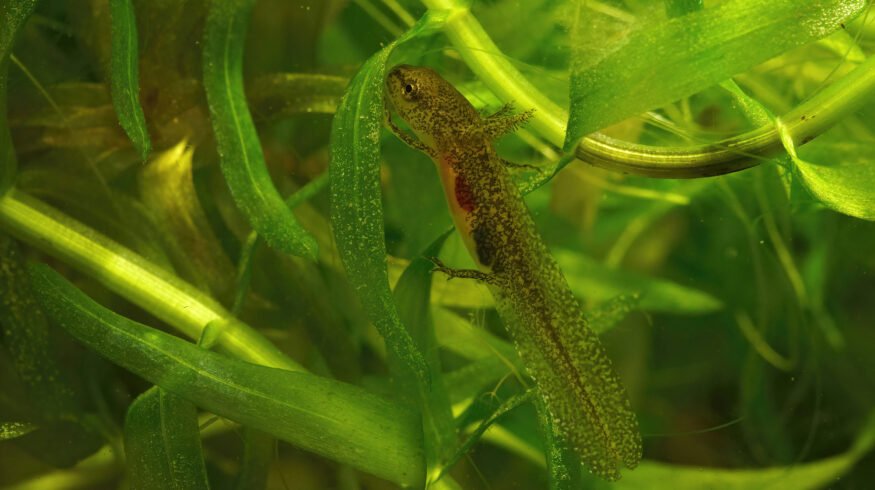

Plant cells deal with changing, sometimes harmful, light, so they must balance capturing energy with protecting themselves from excessive radiation. While leaves can turn over minutes or hours, chloroplasts inside each cell move much faster to adjust to changes in light.
Scientists studying Elodea densa found that chloroplasts do not move randomly. Instead, they follow certain physical rules, much as objects fit together in math problems. In low light, chloroplasts spread out to absorb more light. As the light gets stronger, they gather in shaded areas to avoid excessive exposure while still working. This shows that the system is set up to both capture and avoid light.
A 2025 study in the Proceedings of the National Academy of Sciences by biophysicists Mazi Jalaal and Nico Schramma showed that chloroplasts appear to arrange themselves in the most efficient way. They pack closely enough to gather light well but can still move quickly if needed. The researchers compared this to systems in physics where simple actions lead to complex patterns.
These results support the idea that plant cells act more like changing physical systems than fixed structures. Earlier work by the same team suggested that chloroplast movement depends on a ‘glass-like’ change. When light is bright, the cell’s interior becomes more fluid, allowing chloroplasts to move. In steady conditions, it becomes more solid, keeping them in place.
This research links plant biology to broader questions in physics, such as how things organize themselves and fit together efficiently. The same math explains how spheres fit in space or how animals move in groups. Here, evolution seems to have created a cellular system that continually adjusts its layout as the environment changes.
Researchers point out that even though these patterns look like they are carefully planned, they actually come from natural biological processes, not design. Still, seeing the same results in Elodea densa suggests that basic physical limits are important in how plant cells handle light on a tiny scale.
Source: Quanta Magazine

Enjoyed this story?
Every Monday, our subscribers get their hands on a digest of the most trending agriculture news. You can join them too!







Discussion0 comments