Skip to content
  • Professionals
  • Gardeners
 
Search
Log in
EN
RU
  • Markets
  • Business
  • Politics
  • Technologies
  • Interviews
  • Rankings
  • Environment
  • Events
  • Stock Quotes
  • Business Directory
Trending topic:
Featured company:
 
RU
  • Professionals
  • Gardeners
Sections
    Events
    Stock Quotes
    Business Directory
    Trending topic:
    Featured company:
    Follow us...
    Helpful information
    • About
    • Team
    • Advertise
    • Contacts
    • Submit a Tip
    • Privacy Policy
    • Terms of Service
    • Site Map
    Sections
      Seasonal tips
      • Spring
      • Summer
      • Autumn
      • Winter
      Trending topics
      • compost
        24
      • garlic
        2
      • lemon
        1
      • potato
        14
      Follow us...
      Helpful information
      • About
      • Team
      • Advertise
      • Contacts
      • Submit a Tip
      • Privacy Policy
      • Terms of Service
      • Site Map
      Copyright © 2014-2026 DigitalTree LLC. All rights reserved.
      We deliver content lightning-fast thanks to the managed cloud WordPress hosting with CDN.
      16+

      Home / Environment

      Ancient Amazonian soil boosted tropical tree growth by 88% on degraded land, study finds

      FD Editors avatar FD Editors
      May 8, 2026, 12:00 pm
      May 8, 2026, 12:00 pm
      [esi post-views ttl=0]
      Environment
      Technologies
      Ancient Amazonian soil boosted tropical tree growth by 88% on degraded land, study finds
      Save for later
      Share

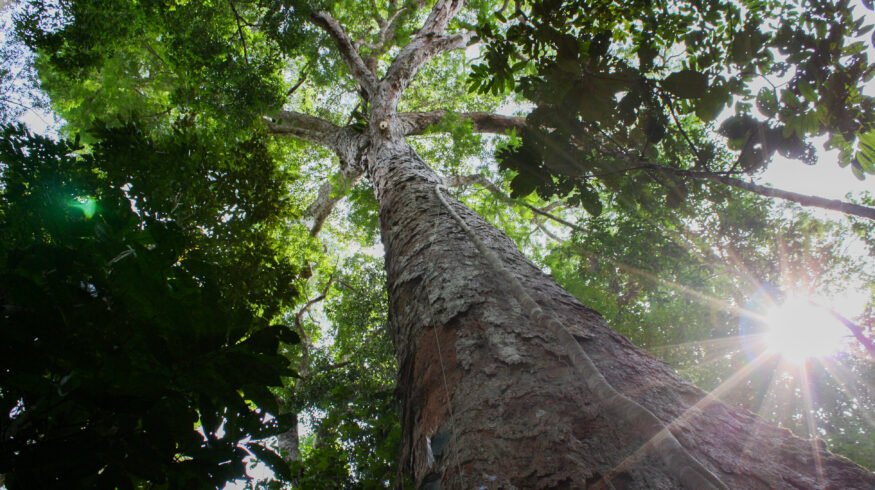
      A field study conducted in Brazil’s Amazonas state demonstrated that small amounts of Amazonian dark earth, or terra preta, significantly accelerated early growth of native tree species on degraded land. These findings underscore the importance of soil microorganisms in tropical forest restoration.

      Researchers observed that pink trumpet tree seedlings treated with Amazonian dark earth grew up to 55% taller and developed stems up to 88% thicker within 180 days compared to untreated controls. Brazilian firetree seedlings also exhibited increases, growing approximately 20% taller and 15% thicker. The study was conducted on a former cassava field in Itacoatiara, Amazonas, by scientists from the University of São Paulo’s Center for Nuclear Energy in Agriculture, Embrapa Eastern Amazon, and the National Institute for Amazonian Research.

      The research, published in BMC Ecology and Evolution, examined the influence of Amazonian dark earth on microbial communities surrounding plant roots, rather than focusing solely on nutrient content. According to lead author Anderson Santos de Freitas, treated plants exhibited substantial shifts in fungal populations, with increases in beneficial microorganisms and declines in potential pathogens. These microbial changes may account for the enhanced growth response, particularly in the pink trumpet tree, which is generally more challenging to establish on degraded land.

      Amazonian dark earth is a fertile, anthropogenic soil developed over centuries by pre-Columbian communities through the accumulation of organic matter and controlled burning. As these soils are legally protected, researchers emphasized that the objective is not to extract terra preta for direct application, but to investigate the biological and ecological mechanisms underlying its effectiveness. Tsai Siu Mui, coordinator of the broader project, stated that the long-term goal is to identify microbes and soil processes that could facilitate scalable restoration strategies without dependence on fertilizers or herbicides.

      ADVERTISEMENT

      The field trial included two native species with distinct ecological roles: the fast-growing Brazilian firetree and the pink trumpet tree, valued for both timber production and ecological restoration. Seedlings were established without the use of fertilizers, herbicides, or supplemental irrigation beyond natural rainfall. After six months, all plants survived.

      Researchers cautioned that these findings represent preliminary results from a single experimental site involving 72 plants and two species. The complete three-year dataset remains under analysis. Nevertheless, the study indicates that restoring microbial relationships in degraded soils may serve as a valuable approach for tropical forest restoration and ecosystem recovery.

      Sources: BMC Ecology and Evolution, The Brighter Side of News

      Amazon rainforest
      Amazonia
      Brazil
      fertilizer research
      forest
      microbes
      research
      soil fertility
      soil health
      soil microbiome
      study

      Enjoyed this story?

      Every Monday, our subscribers get their hands on a digest of the most trending agriculture news. You can join them too!

      Sign me up
      Check the example

      Discussion0 comments

      Спасибо за комментарий, он будет опубликован на сайте после проверки модератором. Хотите, чтобы ваши комментарии появлялись на сайте мгновенно? Достаточно пройти регистрацию.
      Congratulations, you can be the first to start the conversation.
      Do you have a question or suggestion? Please leave your comment to ignite conversation.
      What’s on your mind?
      Cancel Log in and comment
      Or continue without registration
      Get notified about new comments by email.
      Advertisement
      In focus
      How to get here?
      Stock quotes
      Bayer
      10.85
      3.47
      Bayer Crop Science
      37.43
      2.8
      CF Industries
      118.68
      0.9
      Corteva Agriscience
      79.07
      3.3
      ICL Group
      6
      6.76
      Intrepid Potash
      38.61
      2.5
      Mosaic
      22.91
      2.76
      Nutrien
      68.38
      7.36
      Yara International
      29.09
      2.25
      See all
      Most read
      California peach growers forced to remove 420,000 trees after bankruptcy of Del Monte Foods canneries
      California peach growers forced to remove 420,000 trees after bankruptcy of Del Monte Foods canneries
      Mosaic suspends two phosphate facilities in Brazil considering their potential sale
      Mosaic suspends two phosphate facilities in Brazil considering their potential sale
      China limits fertilizer exports as the country prioritizes domestic market
      China limits fertilizer exports as the country prioritizes domestic market
      Russia limits fertilizer exports to 20 million tons through November 2026
      Russia limits fertilizer exports to 20 million tons through November 2026
      Strait of Hormuz blockade disrupts global fertilizer trade, raising food supply concerns
      Strait of Hormuz blockade disrupts global fertilizer trade, raising food supply concerns
      Events
      CaspianAgro
      Baku, Azerbaijan
      May 5 — 8, 2026
      Fertilizer Summit
      Chicago (IL), USA
      Jun 1 — 2, 2026
      Argus Clean Ammonia Asia
      Tokyo, Japan
      Jun 2 — 4, 2026
      Wood Mackenzie Hydrogen Hydrogen Conference
      London, UK
      Jun 4, 2026
      Agriculture & Organic Farming Summit
      Paris, France
      Jun 17 — 18, 2026
      See all
      Live
      Stefan Petko
      May 6, 06:48 pm
      It is alarming to see these developments in California. As a vineyard grower, I have faced significant challenges this year, with fertilizer costs rising sharply while market conditions have made it difficult to sell the harvest.
      California peach growers forced to remove 420,000 trees after bankruptcy of Del Monte Foods canneries
      Estebel
      April 23, 10:26 pm
      Sounds like magic ))
      MIT study: rice seeds germinate faster when exposed to rainfall sounds
      Isabelita Barreiro
      December 11, 2025, 01:54 am
      Excellent management of water resources and effective use of water-soluble fertilizers!
      Argentine nano-fertilizer firm AKO Agro expands to Brazil
      Meripa Corson
      August 4, 2025, 01:18 pm
      Where does the money actually go? As a timber land owner, how do I benefit from the legislation?
      USDA commits $80 million to expand timber markets and improve forest resilience
      Patonkas Luksompulus
      January 21, 2025, 12:36 pm
      Greece meeds biological fertilizers! Great news about De sangosse.
      DE SANGOSSE expands operations with Greek subsidiary
      About
      Sections
      Markets  ·  Business  ·  Politics  ·  Technologies  ·  Interviews  ·  Rankings  ·  Environment
      Support
      About  ·  Team  ·  Advertise  ·  Contacts  ·  Submit a Tip  ·  Privacy Policy  ·  Terms of Service  ·  Site Map
      Copyright © 2014-2026 DigitalTree LLC. All rights reserved.
      We deliver content lightning-fast thanks to the managed cloud WordPress hosting with CDN.
      16+
      More to read
      New study evaluates invasive plants as food and economic resources
      New study evaluates invasive plants as food and economic resources
      Researchers urge management of pawpaw tree growth to balance biodiversity in North America
      Researchers urge management of pawpaw tree growth to balance biodiversity in North America
      FAO warns of worsening land degradation in the Arab region
      FAO warns of worsening land degradation in the Arab region
      Advertising that helps us do quality reporting