

On-farm green ammonia gains traction in Canada as fertilizer market turmoil revives interest in local nitrogen production


Fertilizer prices are rising due to the Middle East conflict and trade disruptions through the Strait of Hormuz, renewing interest in on-farm green ammonia production in Canada and parts of the U.S. Producers are seeking to reduce exposure to volatile global nitrogen markets.
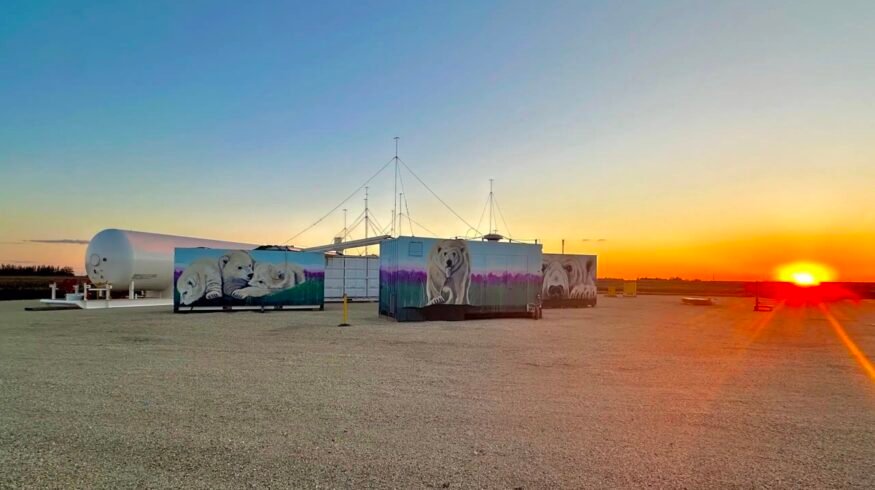
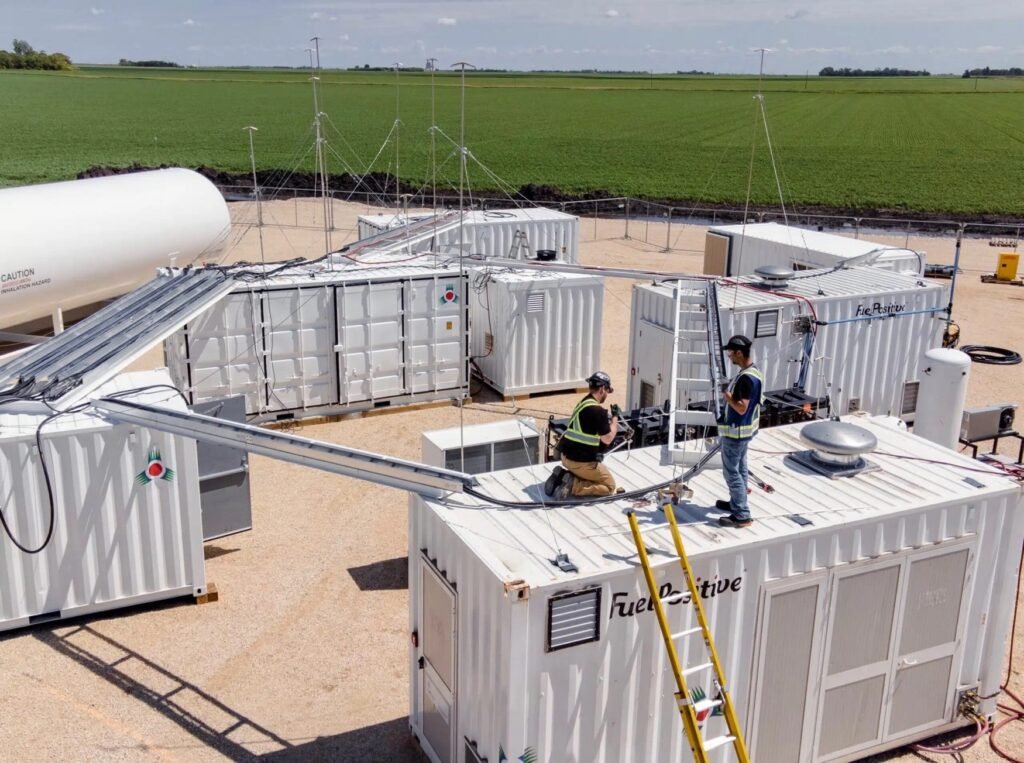
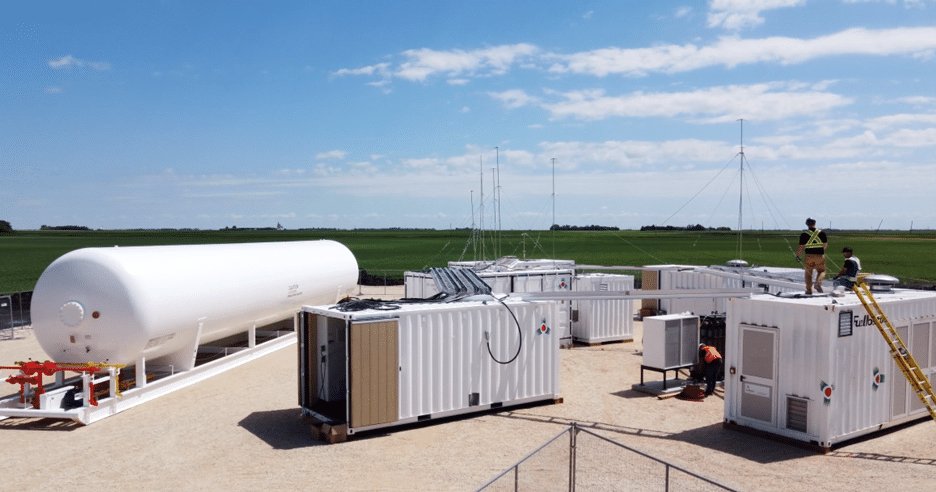
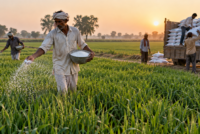
Canadian cleantech company FuelPositive is piloting a containerized green ammonia production system at R&L Acres near Sperling, Manitoba. The modular unit uses renewable electricity to electrolyze hydrogen from water and combines it with atmospheric nitrogen using a small-scale Haber-Bosch process, producing anhydrous ammonia on-site without natural gas.
This renewed attention follows a roughly 30% increase in conventional ammonia prices since the start of the Iran-related regional conflict, according to company-cited market estimates. Farmers and rural cooperatives are increasingly considering localized fertilizer production to hedge against supply disruptions affecting the approximately 16 million tonnes of fertilizer products that transit the Strait of Hormuz each year.
“I am constantly watching fertilizer prices, deciding when to lock in our largest expense, hoping not to get it wrong,” said Curtis Hiebert, co-owner of R&L Acres. FuelPositive’s 2024 analysis estimated that ammonia from its system would cost about USD 948 per tonne for farmers, compared to roughly USD 1,100 per tonne for conventional ammonia at that time. The rise in global ammonia prices since the conflict began has improved the economics of on-farm production.
The current pilot installation costs about USD 4.5 million, limiting near-term adoption mainly to larger farming operations. Similar projects are emerging in the U.S. startup sector. Talusag is developing modular green ammonia projects in Iowa that the company says will qualify for the federal 45V hydrogen production tax credit before the 2025 construction deadline.
However, proposed U.S. legislation could shorten the timeline for new projects. The reconciliation bill passed by House Republicans would remove eligibility for new 45V tax credits for hydrogen projects that do not begin construction before the end of 2025, potentially limiting further expansion of distributed green ammonia production beyond current projects.
Industry analysts note that on-farm green ammonia is still in the early pilot stage and is unlikely to significantly offset global nitrogen supply disruptions in the near term. Current projects meet only a small portion of global nitrogen demand, and large-scale deployment would require major investment in rural electricity infrastructure and widespread installation of modular units over many years.
Interest is increasing among farm cooperatives, rural utilities, and commodity producers who view localized ammonia production as price-risk insurance during ongoing supply-chain volatility. Manitoba Hydro has raised concerns about the electricity capacity needed for new energy-intensive agricultural projects, highlighting a key infrastructure constraint for broader commercialization.
Source: The Energy Mix
Key facts about on-farm green ammonia from FuelPositive
On-farm systems use renewable electricity — from wind, solar, or the grid — to power electrolysis, splitting water into hydrogen and oxygen. The hydrogen is then combined with nitrogen separated from air via a modified Haber-Bosch process at a small, modular scale, producing anhydrous ammonia identical to conventionally produced nitrogen fertilizer but without any natural gas feedstock. FuelPositive’s current pilot unit fits inside a standard shipping container.
FuelPositive’s current pilot unit costs approximately $4.5 million for a single farm installation. A 2024 company analysis estimated the resulting green ammonia at roughly $948 per tonne — compared to approximately $1,100 per tonne to purchase conventional ammonia at that time. With conventional ammonia prices rising roughly 30% since the Middle East conflict began, the economics of on-farm production have become more competitive, though the capital outlay remains significant for smaller operations.
On-farm green ammonia is at the pilot stage. FuelPositive is testing one unit in Manitoba; Talusag has two commercial projects planned in Iowa. The University of Minnesota has run a wind-powered green ammonia system since 2013. High upfront capital costs, electricity grid capacity, and the scale limitations of modular systems mean this is not yet a mainstream alternative. Accelerating interest from farm cooperatives and rural electric utilities may change that calculus if conventional nitrogen prices remain elevated.
The 45V hydrogen production tax credit, created under the Inflation Reduction Act, provides a financial incentive for producing hydrogen from low-carbon sources including electrolysis — a key input for green ammonia economics in the United States. The House Republican reconciliation bill would effectively end new 45V eligibility for projects unable to begin construction before the end of 2025. If the final legislation retains this provision, it would limit U.S. green ammonia development to projects already underway, including Talusag’s two Iowa sites.
Not at the current scale. Distributed on-farm production represents a fraction of a percent of global nitrogen demand. Even all current pilot projects combined represent a negligible volume compared to the roughly 16 million tonnes of fertilizer that passes through the Strait of Hormuz annually. The realistic near-term value is price-risk insurance for individual farms, not a systemic alternative to imported nitrogen. A commercially significant scale would require hundreds of thousands of installations globally over many years.

Enjoyed this story?
Every Monday, our subscribers get their hands on a digest of the most trending agriculture news. You can join them too!


Discussion0 comments