

BASF commissions BioHub biological fermentation plant at Ludwigshafen to scale in-house crop protection biologicals

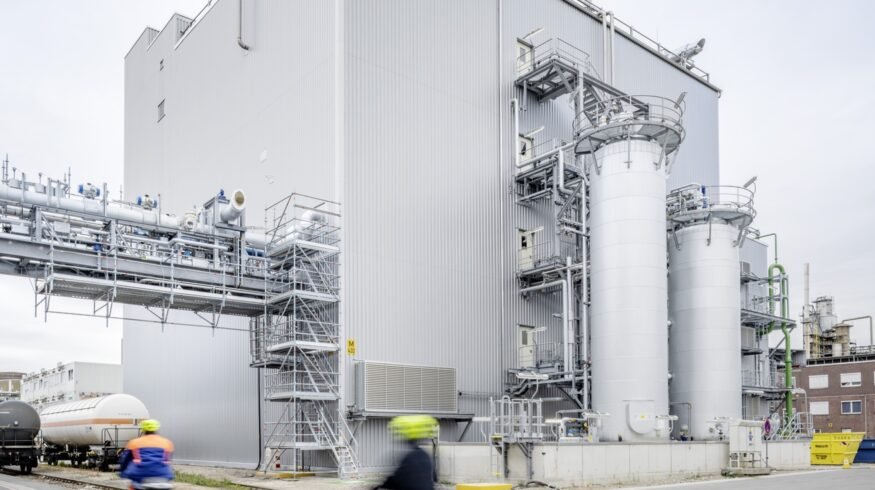

BASF Agricultural Solutions has commissioned its BioHub, a new fermentation plant for biological and biotechnology-based crop protection products at its Ludwigshafen site in Germany — marking the first time the company has produced key biological active ingredients in-house at industrial scale.
The investment, described by BASF as “in the high double-digit million-euro range,” strengthens the company’s BioSolutions portfolio and positions it to compete more aggressively in a segment growing at roughly double the rate of conventional crop chemistry.
What the BioHub produces
The plant uses microbial fermentation — converting renewable raw materials such as glucose through microorganisms — to produce two priority biological active ingredients. The first is Bacillus amyloliquefaciens, the bacterium that forms the basis of Serifel, BASF’s biological fungicide registered for use in fruits, vegetables, and ornamentals. The second is the main building block of Inscalis, a novel insecticide based on the fungal strain Penicillium coprobium — one of the first commercially available products in a new class of biologically derived insecticides designed to tackle resistance issues in conventional chemistries.
“By bringing fermentation production in-house, we directly link our expertise in research with industrial-scale manufacturing, allowing us to accelerate and adapt biotechnological innovations,” said Dr. Melanie Bausen-Wiens, member of the management board of BASF Agricultural Solutions.
Why in-house fermentation changes the competitive equation
Until now, BASF sourced fermentation production through external contract manufacturers — a common industry practice that creates lead times and supply chain vulnerability, particularly for live microbial cultures whose potency degrades during extended transit. Bringing the process in-house at Ludwigshafen gives BASF three structural advantages: faster response to demand fluctuations, tighter quality control over active culture stability, and the ability to adapt production parameters rapidly as formulations evolve. The site also provides infrastructure synergies in logistics and process engineering that an independent biological supplier cannot easily replicate.
A structural bet on the fastest-growing segment in crop inputs
Biologicals — encompassing biofungicides, bioinsecticides, biostimulants, and microbial inoculants — are the fastest-growing segment of the global crop protection market, projected to reach $43 billion by 2035 from roughly $17 billion today. BASF generated €9.6 billion in agricultural solutions sales in 2025, with its BioSolutions range growing at above-group-average rates.
The EU is progressively restricting synthetic active ingredients — BASF’s competitor Syngenta lost its key fungicide chlorothalonil to a Swiss court ban in 2026 — creating demand for biological alternatives at the precise moment BASF is scaling its in-house supply. “With this new fermentation plant, we have established a scalable and flexible platform that enables us to strengthen our BioSolutions portfolio while ensuring a consistent and dependable supply for our customers,” said Maximilian Becker, member of the management board of Agricultural Solutions.
Competitive context: the biologicals race intensifies
The BioHub commissioning comes as competitors make parallel moves. Syngenta acquired Intrinsyx Bio in May 2026 to strengthen its nutrient efficiency biologicals portfolio. Corteva consolidated Stoller and Symborg under the Corteva Biologicals brand and is scaling distribution across North America and Europe. Bayer Crop Science has maintained biologicals investment as part of its Five-Year Framework.
Companies that can reliably produce, formulate, and deliver live microbial actives in-house will hold a structural cost and quality advantage over those relying on third-party fermentation — a dynamic BASF is now positioned to exploit.
BASF said commercial production of the key active ingredients began in 2026, with the first commercial batches available to customers this year. The BioHub platform is designed for future scale-up as additional R&D pipelines mature.
Key Facts About BASF’s BioHub
Fermentation is the process of using microorganisms — bacteria or fungi — to convert renewable raw materials such as glucose into biological active ingredients. It is the same foundational technology used in antibiotic production and food fermentation, applied here to produce live microbial agents that protect crops from diseases and pests. In biological crop protection, the quality and viability of the fermented product depends critically on production conditions and handling: live cultures can lose potency during extended transit from external contract manufacturers, which is why in-house production adjacent to formulation and packaging facilities is considered a key competitive advantage.
The BioHub produces Bacillus amyloliquefaciens — a naturally occurring soil bacterium forming the basis of BASF’s Serifel biological fungicide, registered for fruits, vegetables, and ornamentals — and the main building block of Inscalis, a novel insecticide derived from the fungal strain Penicillium coprobium. Inscalis represents a new class of biologically derived insecticide specifically designed to address insect resistance to conventional chemistries. Both products are part of BASF’s BioSolutions portfolio of integrated crop protection programs.
BASF described the investment as “in the high double-digit million-euro range” — implying approximately €60 million to €99 million — but has not disclosed a precise figure. The company did not publish a separate capital expenditure line for the BioHub. For reference, BASF’s agricultural solutions segment invested €990 million in total R&D in 2025. The company said the BioHub platform is designed to be scalable as future biological pipelines mature.
BASF brands its biological portfolio as “BioSolutions,” encompassing biofungicides, bioinsecticides, biostimulants, and bioherbicides marketed alongside conventional chemistries for integrated pest management programs. Until now, BASF has relied on contract fermentation for its BioSolutions actives. The BioHub marks a strategic shift to in-house production at the Ludwigshafen site, where process synergies with BASF’s existing chemical infrastructure reduce costs and improve quality control. The company said the commissioning “marks an important step forward in Industrial Biotechnology for BASF Agricultural Solutions.”
BASF’s primary competitors in biologicals are Syngenta (which acquired Intrinsyx Bio in May 2026 and owns Valagro biostimulants), Corteva (which consolidated Stoller and Symborg under the Corteva Biologicals brand), Bayer Crop Science, and FMC. Specialist companies including Koppert, Certis Biologicals, and Bioceres also compete in specific niches. The market is consolidating rapidly as large-cap agrochemical companies move to acquire or build scale in biologicals to offset declining revenues from conventionally registered chemistries facing regulatory withdrawal.

Enjoyed this story?
Every Monday, our subscribers get their hands on a digest of the most trending agriculture news. You can join them too!



Discussion0 comments