

Machine learning study identifies timing and temperature as key drivers of nitrogen release in cover-cropped systems

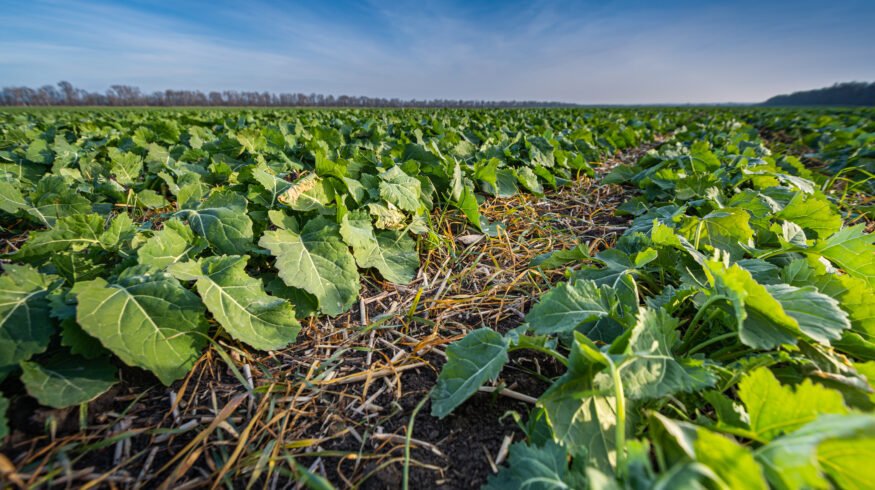

Researchers analyzing a 30-year corn-soybean-wheat rotation experiment in Michigan found that the timing of cover crop termination and air temperature were the strongest predictors of soil nitrogen availability in cover-cropped agroecosystems, offering growers new insights into managing nitrogen release for corn production.
The study, conducted at the Kellogg Biological Station Long-Term Ecological Research site, used random forest machine learning models to examine nitrogen mineralization dynamics in reduced-input and organic cropping systems between 1990 and 2020. Researchers found that soil inorganic nitrogen, particularly nitrate (NO3−-N), increased rapidly after legume cover crop termination and typically peaked around 50 days later, especially when average daily temperatures exceeded 12°C.
The research focused on red clover cover crops used in corn production systems and examined how weather conditions, cover crop biomass, soil moisture, and management practices influenced nitrogen release. According to the findings, days after cover crop termination was consistently the most important factor affecting both nitrate and ammonium availability, while temperature ranked second in importance across most models. The study showed that nitrogen release was driven by the interaction of these factors rather than by any single variable alone.
Researchers said the findings could help farmers better synchronize nitrogen release from cover crops with crop demand, potentially reducing reliance on synthetic fertilizers and lowering environmental impacts such as nitrate leaching and nitrous oxide emissions. The study also found that soil nitrate concentrations generally peaked during the corn crop’s rapid growth stage before declining as plants absorbed nitrogen.
The machine learning models explained about 35% of the variation in soil nitrate levels across independent growing seasons, while prediction accuracy for ammonium levels was lower. Despite differences in productivity between the reduced-input and organic systems, both systems showed similar seasonal nitrogen dynamics, suggesting that temperature and timing play dominant roles in nitrogen mineralization regardless of management approach.
Researchers noted that cover crop biomass itself had a weaker influence on nitrogen availability than expected, likely because biomass levels varied relatively little between years compared with weather conditions. They added that future work integrating empirical data with process-based models could improve predictions across different soils and climates.
The study was led by Rabin KC with co-authors G. Philip Robertson and Sieglinde Snapp. Funding was provided by the National Science Foundation Long-Term Ecological Research Program, the USDA Long-Term Agroecosystem Research program, and Michigan State University AgBioResearch.

Enjoyed this story?
Every Monday, our subscribers get their hands on a digest of the most trending agriculture news. You can join them too!






Discussion0 comments