

Akorn launches natural post-harvest treatment that controls mango anthracnose and doubles shelf life

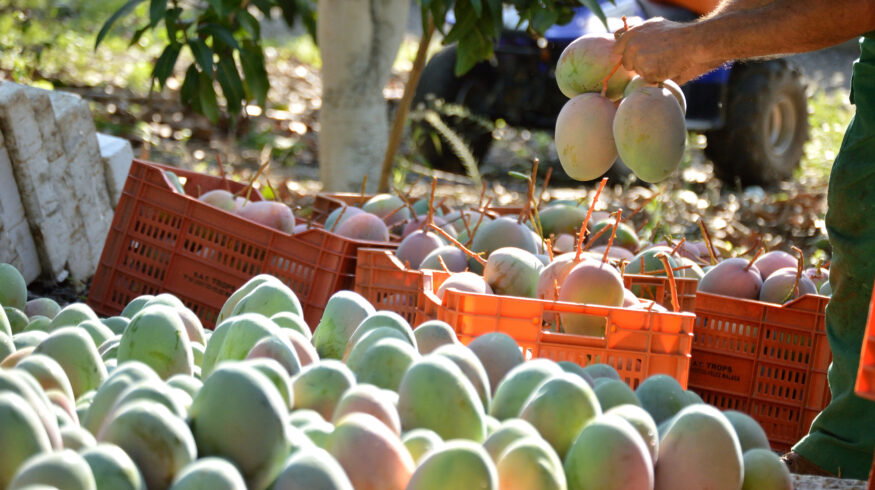

Akorn Technology has commercially launched Akorn Natural Guard, a plant-derived post-harvest treatment that delivered full control of anthracnose in mango trials run with Brazil’s Federal University of the São Francisco Valley (UNIVASF), while extending shelf life by up to 10 days.
The product targets the most damaging post-harvest disease in mango, which the company said affects 30% to 60% of production in many growing regions and can reach 100% under severe conditions. For a 22-tonne export container valued above $40,000, losses on that scale equate to $12,000 to $24,000 of fruit written off per shipment.
Anthracnose is conventionally managed with synthetic fungicides such as azoxystrobin, difenoconazole and prochloraz, a reliance that has raised concerns over residues, worker exposure and resistance. Akorn said its formulations are fully natural and built for export-market compatibility, and that improved transit performance could lift grower profitability by as much as 50%.
“We view Akorn Natural Guard as the beginning of a broader platform capable of delivering multiple layers of functionality simultaneously,” said Anthony Zografos, founder and chief executive of Akorn Technology.
Commercial trials with growers and exporters are under way. Mangoes are the initial focus, with the company saying the underlying platform is designed for other crops and post-harvest disease systems.
Source: FreshPlaza
Akorn Natural Guard: Five Things to Know
It is a multifunctional post-harvest treatment from Akorn Technology, described as 100% natural and plant-derived. Rather than acting as a simple coating, it is designed to combine disease control with shelf-life extension in a single application, with mangoes as the first commercial target.
The mango formulation was validated in trials with the Federal University of the São Francisco Valley (UNIVASF) in Brazil’s São Francisco Valley, a major mango-growing region. Akorn said the product showed full control of anthracnose and extended shelf life by as much as 10 days.
Conventional anthracnose control relies on synthetic fungicides including azoxystrobin, difenoconazole, prochloraz and thiabendazole. The company said repeated use raises concerns over chemical residues, worker exposure, environmental impact and the development of fungicide-resistant pathogens that can erode long-term efficacy.
Anthracnose can destroy 30% to 60% of a mango crop. On a 22-tonne export container valued above $40,000, that equates to $12,000 to $24,000 of avoidable losses per shipment. Akorn said reduced shrink and better transit performance could improve grower profitability by up to 50%.
Mangoes are the initial commercial focus, but Akorn said the platform was designed for broader application across multiple crops and post-harvest disease systems, with early commercial engagement already under way. The company has not disclosed funding raised or financial terms.

Enjoyed this story?
Every Monday, our subscribers get their hands on a digest of the most trending agriculture news. You can join them too!




Discussion0 comments