Skip to content
  • Professionals
  • Gardeners
 
Search
Log in
EN
RU
  • Trade & Policy
  • Markets
  • AgTech & Research
  • Corporate
  • Sustainability
  • Interviews
  • Rankings
  • Events
  • Stock Quotes
  • Business Directory
Trending topic:

Strait of Hormuz

Featured company:
 
RU
  • Professionals
  • Gardeners
Sections
    Events
    Stock Quotes
    Business Directory
    Trending topic:

    Strait of Hormuz

    Featured company:
    Follow us...
    Helpful information
    • About
    • Team
    • Advertise
    • Contacts
    • Submit a Tip
    • Privacy Policy
    • Terms of Service
    • Site Map
    Sections
      Seasonal tips
      • Spring
      • Summer
      • Autumn
      • Winter
      Trending topics
      • compost
        25
      • garlic
        2
      • lemon
        1
      • potato
        15
      Follow us...
      Helpful information
      • About
      • Team
      • Advertise
      • Contacts
      • Submit a Tip
      • Privacy Policy
      • Terms of Service
      • Site Map
      Copyright © 2014-2026 DigitalTree LLC. All rights reserved.
      We deliver content lightning-fast thanks to the managed cloud WordPress hosting with CDN.
      16+

      Home / AgTech & Research

      Cropler bets on ground-truth infrastructure as the missing layer for agricultural AI

      Editors avatar Editors
      June 15, 2026, 12:00 pm
      June 15, 2026, 12:00 pm
      [esi post-views ttl=0]
      AgTech & Research
      Digital Farming
      Precision Agriculture
      Startups
      Cropler bets on ground-truth infrastructure as the missing layer for agricultural AI
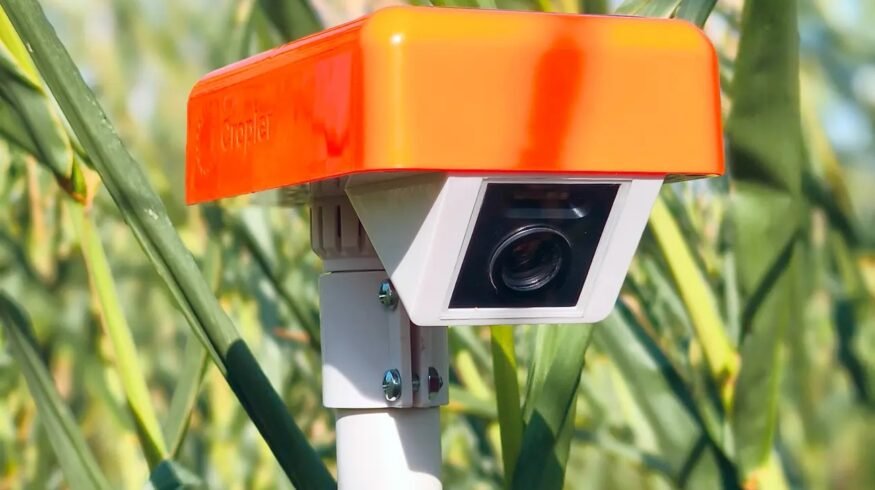
      Image Credits: Cropler
      Save for later
      Share
      Never miss important fertilizer news

      Artificial intelligence has rapidly entered agriculture, but many developers face a fundamental challenge: AI systems require large volumes of real-world field data that are expensive and time-consuming to collect. Warsaw-based Cropler is seeking to address that gap by building what it describes as “ground-truth infrastructure” for agricultural AI — an integrated ecosystem of sensors, cameras, datasets, and machine-learning models designed to support software developers, researchers, and input companies.

      The company argues that agriculture is undergoing the same infrastructure split seen in cloud computing, where software developers increasingly rely on specialized providers rather than building their own physical systems. In agriculture, however, gathering synchronized field data remains difficult. Deploying sensor networks, collecting multi-season datasets, and maintaining hardware can take years before AI applications become commercially viable.

      Building the physical layer for agricultural AI
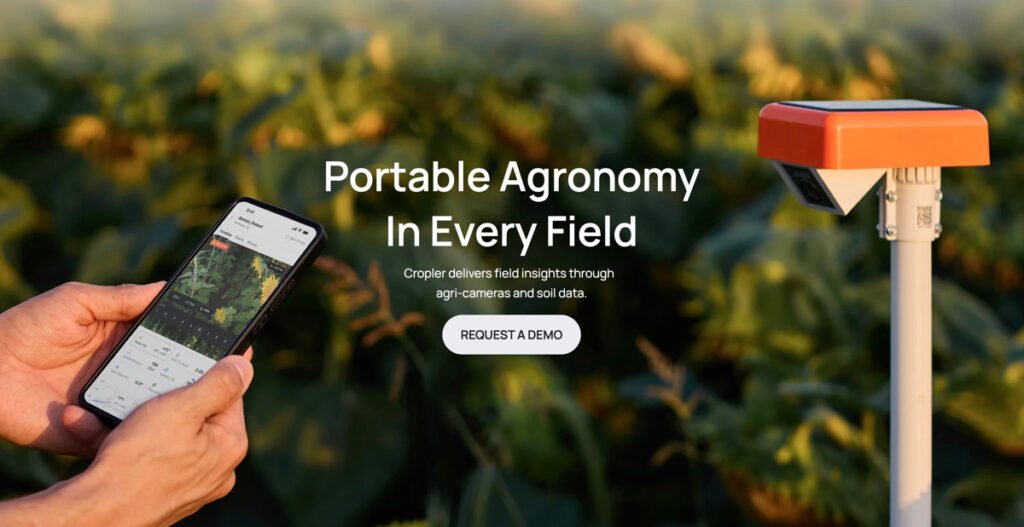
      Image Credits: Cropler

      Cropler’s approach centers on creating a standardized data pipeline that connects physical fields directly to AI systems. Its infrastructure combines multispectral imagery, soil telemetry, and hyperlocal weather observations into datasets that are already structured for machine-learning workflows.

      The company’s hardware ecosystem currently includes three devices. Its commercial Agri Camera captures RGB and NDVI imagery three times daily and records local weather conditions. A soil moisture sensor measures water content and temperature at depths of up to 60 centimeters. Meanwhile, a research-grade camera under development incorporates 3D biomass measurement, edge AI capabilities, and advanced imaging systems.

      ADVERTISEMENT

      By synchronizing above-ground imagery with root-zone conditions and environmental data, Cropler aims to provide what it calls a “top-to-bottom snapshot” of crop performance. Such integrated datasets are increasingly valuable as agronomic AI models move beyond image recognition toward predictive analytics and decision support.

      Moving beyond snapshots to continuous field intelligence

      Most agricultural datasets remain fragmented, relying on occasional drone flights, satellite imagery, or weather stations located many kilometers from farms. Cropler argues that these approaches often fail to capture the dynamics of crop development.

      Its system records NDVI measurements multiple times per day throughout an entire growing season, enabling AI models to learn not only crop conditions but also rates of change. This temporal dimension may allow systems to detect drought stress, disease pressure, or nutrient deficiencies earlier than traditional monitoring methods.

      The inclusion of hyperlocal weather and soil moisture data could also improve predictive capabilities. Soil measurements taken every 10 centimeters down to 60 centimeters allow researchers and agronomists to monitor root-zone conditions, potentially helping estimate yields earlier or assess fertilizer and irrigation efficiency in real time.

      For fertilizer producers and seed companies, continuous monitoring may offer a new way to validate product performance under real-world conditions rather than relying solely on periodic field trials.

      A global dataset designed for AI training
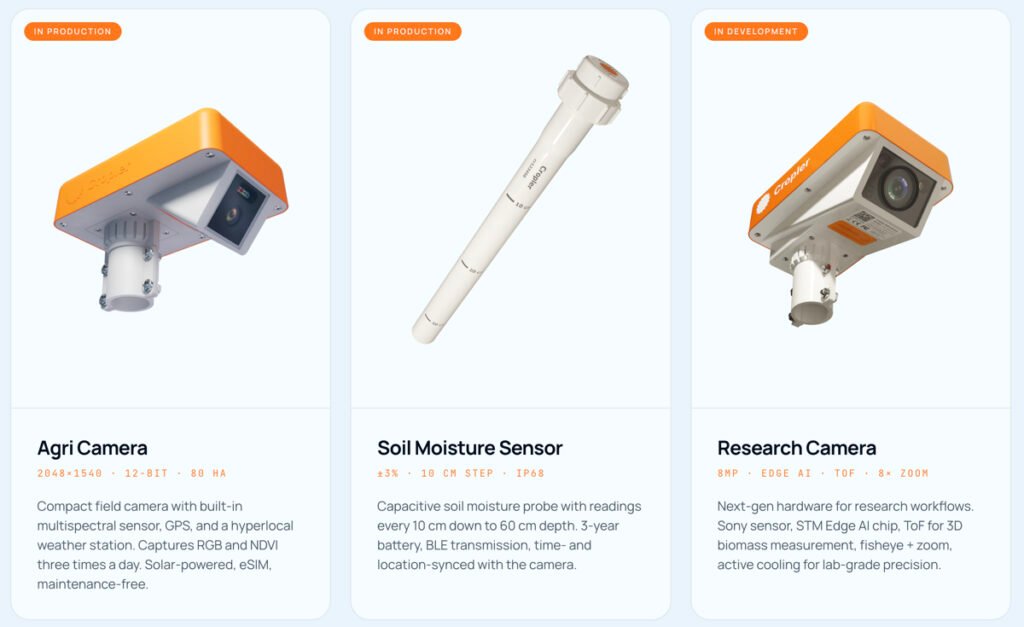
      Image Credits: Cropler

      Cropler says its machine-learning backbone has been developed using field data collected across 28 countries spanning multiple climate zones and cropping systems. The company contends that agricultural AI remains constrained less by model architecture than by the availability of high-quality, representative data.

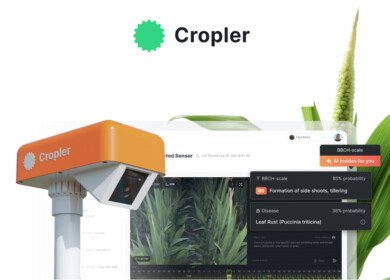
      The platform offers pre-trained models for crop segmentation, stress detection, and multimodal feature extraction combining RGB imagery with NDVI information. An application programming interface (API) further converts imagery, weather, and soil measurements into structured inputs that can be consumed by large language models and autonomous agronomic agents.

      This reflects a broader industry trend toward AI systems capable of generating agronomic recommendations based on multiple streams of field information rather than single-source datasets.

      Infrastructure as a service for agriculture

      Cropler targets four primary customer groups: research institutions, agricultural input manufacturers, AI developers, and agronomy professionals. Instead of requiring each organization to deploy its own sensor networks, the company offers infrastructure as a service, ranging from dataset licensing to custom field deployments.

      The strategy mirrors developments in other technology sectors where infrastructure providers have enabled rapid software innovation. In agriculture, however, the physical environment introduces unique challenges, including weather variability, biological complexity, and long seasonal cycles.

      As investment in agricultural AI accelerates globally, companies that can generate reliable ground-truth datasets may become increasingly important to the sector’s digital transformation. For developers seeking to build agronomic agents or predictive models, the value may lie less in collecting data and more in accessing standardized, validated field intelligence at scale.

      AI
      AI-based camera
      computer vision
      Cropler
      digital agriculture
      digital platform
      Europe
      Poland
      precision agriculture
      startup

      Enjoyed this story?

      Every Monday, our subscribers get their hands on a digest of the most trending agriculture news. You can join them too!

      Sign me up
      Check the example

      Discussion0 comments

      Спасибо за комментарий, он будет опубликован на сайте после проверки модератором. Хотите, чтобы ваши комментарии появлялись на сайте мгновенно? Достаточно пройти регистрацию.
      Congratulations, you can be the first to start the conversation.
      Do you have a question or suggestion? Please leave your comment to ignite conversation.
      What’s on your mind?
      Cancel Log in and comment
      Or continue without registration
      Get notified about new comments by email.
      Advertisement
      In focus
      How to get here?
      Stock quotes
      Bayer
      10.44
      0.38
      Bayer Crop Science
      36.19
      1.12
      CF Industries
      109.48
      2.74
      Corteva Agriscience
      76.14
      1.71
      ICL Group
      5.73
      1.06
      Intrepid Potash
      36.15
      5.21
      Mosaic
      22.69
      7.59
      Nutrien
      67.62
      3.14
      Yara International
      24.71
      2.79
      See all
      Most read
      IPL finalizes 1.346mt DAP purchase from 14 global suppliers at $930–935/t CFR
      IPL finalizes 1.346mt DAP purchase from 14 global suppliers at $930–935/t CFR
      Holganix bets on soil biology and carbon markets to reshape regenerative agriculture
      Holganix bets on soil biology and carbon markets to reshape regenerative agriculture
      China reopens urea exports with $660/t price floor
      China reopens urea exports with $660/t price floor
      OCP warns Hormuz disruption has evolved into global fertilizer supply shock
      OCP warns Hormuz disruption has evolved into global fertilizer supply shock
      Sulphuric acid tops $500 per tonne as Hormuz closure tightens phosphate fertilizer production inputs globally
      Sulphuric acid tops $500 per tonne as Hormuz closure tightens phosphate fertilizer production inputs globally
      Events
      Agriculture & Organic Farming Summit
      Paris, France
      Jun 17 — 18, 2026
      International Crop-Science Conference & Expo
      New Delhi, India
      Jun 25 — 26, 2026
      IFA Annual Conference
      Monaco
      Jun 29 — Jul 1, 2026
      Agrovolga
      Kazan, Russia
      Jul 8 — 10, 2026
      Southwestern Fertilizer Conference
      New Orleans (LA), USA
      Jul 12 — 16, 2026
      See all
      Live
      Stefan Petko
      May 6, 06:48 pm
      It is alarming to see these developments in California. As a vineyard grower, I have faced significant challenges this year, with fertilizer costs rising sharply while market conditions have made it difficult to sell the harvest.
      California peach growers forced to remove 420,000 trees after bankruptcy of Del Monte Foods canneries
      Estebel
      April 23, 10:26 pm
      Sounds like magic ))
      MIT study: rice seeds germinate faster when exposed to rainfall sounds
      Isabelita Barreiro
      December 11, 2025, 01:54 am
      Excellent management of water resources and effective use of water-soluble fertilizers!
      Argentine nano-fertilizer firm AKO Agro expands to Brazil
      Meripa Corson
      August 4, 2025, 01:18 pm
      Where does the money actually go? As a timber land owner, how do I benefit from the legislation?
      USDA commits $80 million to expand timber markets and improve forest resilience
      Patonkas Luksompulus
      January 21, 2025, 12:36 pm
      Greece meeds biological fertilizers! Great news about De sangosse.
      DE SANGOSSE expands operations with Greek subsidiary
      About
      Sections
      Trade & Policy  ·  Markets  ·  AgTech & Research  ·  Corporate  ·  Sustainability  ·  Interviews  ·  Rankings
      Support
      About  ·  Team  ·  Advertise  ·  Contacts  ·  Submit a Tip  ·  Privacy Policy  ·  Terms of Service  ·  Site Map
      Copyright © 2014-2026 DigitalTree LLC. All rights reserved.
      We deliver content lightning-fast thanks to the managed cloud WordPress hosting with CDN.
      16+
      More to read
      Cropler provides farmers with a 24/7 AI-powered digital agronomist
      Cropler provides farmers with a 24/7 AI-powered digital agronomist
      Cropler launched AI-based PlantPilot that provides hyperlocal field-specific crop recommendations
      Cropler launched AI-based PlantPilot that provides hyperlocal field-specific crop recommendations
      Is large-scale crop harvesting ready for robots?
      Is large-scale crop harvesting ready for robots?
      Advertising that helps us do quality reporting