

Philippines’ purple yam exports poised for growth as USDA identifies untapped value chain potential



According to a new report by the USDA Foreign Agricultural Service, the Philippines could substantially increase ube exports with investment throughout the value chain. Ube is described as a high-value specialty crop driven by rising global demand for natural ingredients, ethnic flavors, and plant-based products. However, domestic production is limited by a shortage of planting material, fragmented smallholder farming, and inadequate processing capacity.
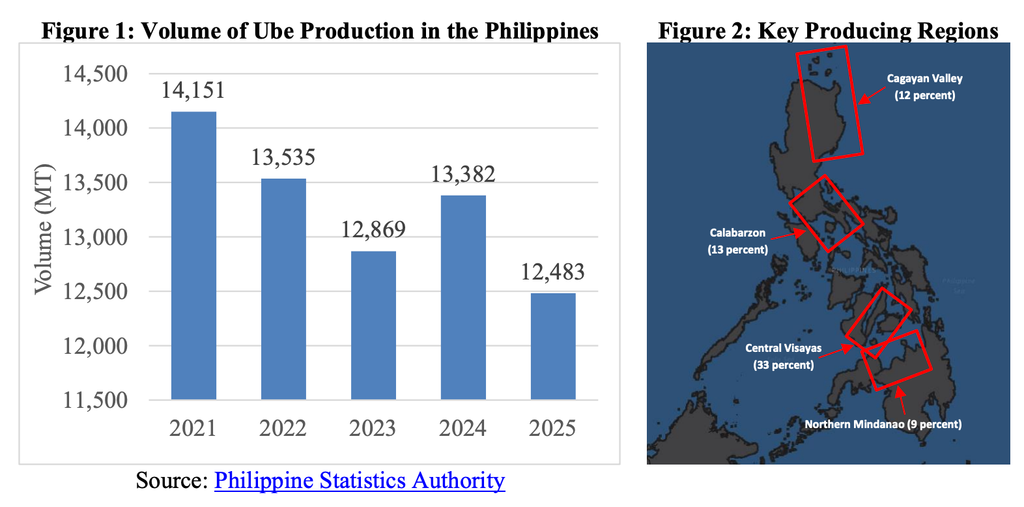
The report estimates annual Philippine ube production at less than 12,500 metric tons, despite rising international demand beyond Filipino communities. In 2025, ube-based product exports totaled USD 3.06 million, with the United States receiving 45% of shipments of fresh, chilled, frozen, and dried ube. Other major markets include the United Kingdom, Italy, and Middle Eastern countries. The USDA also sees strong growth potential for higher-value products such as ube purée, powder, natural food colorants, and specialty starches for food manufacturers.
The USDA FAS states that sector growth will require coordinated investment in certified planting materials, research and development, postharvest infrastructure, food safety standards, financing, and stronger links between growers and processors. The report notes that the lack of standardized definitions and traceability for genuine ube products limits the ability to position Philippine-grown purple yams as a premium export. Targeted investments could raise farmer incomes, create rural jobs, and strengthen the country’s agricultural export sector.

Enjoyed this story?
Every Monday, our subscribers get their hands on a digest of the most trending agriculture news. You can join them too!






Discussion0 comments