

5 anhydrous ammonia safety practices that protect farm handlers

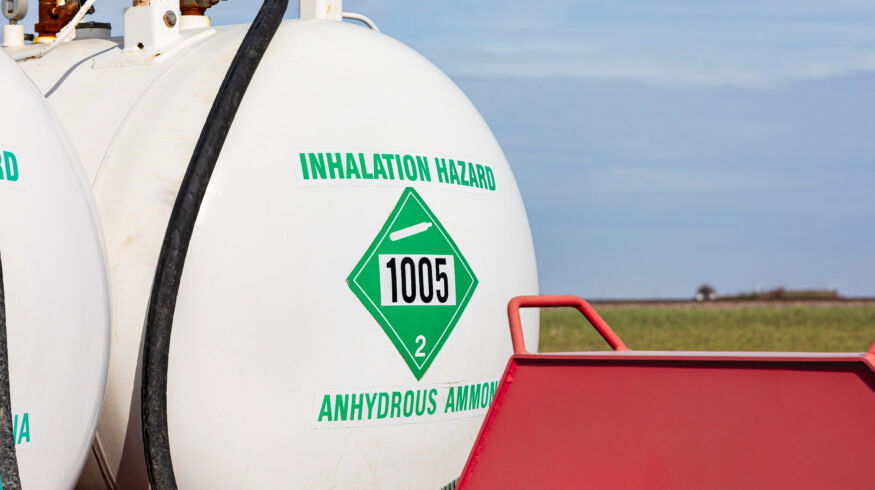

Anhydrous ammonia safety remains a critical concern for U.S. ag retailers and applicators, where equipment failures during handling and application can cause severe injuries and toxic releases.
Field incidents underline the stakes. In one case a hose burst during set-up, blowing off a Kansas grower’s goggles and causing chemical burns that left him legally blind. In another, a failed O-ring on a metering system released ammonia and burned a worker. A weld failure on an Iowa nurse tank caused a release during filling that killed a worker days later.
Five fundamentals reduce that risk. First, wear proper personal protective equipment for the task, at minimum unvented chemical splash goggles, long sleeves and pants, and chemical-resistant gloves with the cuffs rolled down. Second, keep clean water within reach, with nurse tanks carrying at least five gallons of emergency water. Third, stay upwind and reassess as the wind shifts. Fourth, inspect hoses, valves and fittings before each use and follow the “when in doubt, change it out” rule. Fifth, ensure every handler is trained on hazards, protective equipment and emergency response.
Operators should treat every piece of ammonia equipment as pressurized, since a purged system can repressurize if closed and left unattended. States that strengthened handler-training requirements have reported fewer serious incidents, according to CropLife.
Source: CropLife

Enjoyed this story?
Every Monday, our subscribers get their hands on a digest of the most trending agriculture news. You can join them too!







Discussion0 comments