Skip to content
  • Professionals
  • Gardeners
 
Search
Log in
EN
RU
  • Trade & Policy
  • Markets
  • AgTech & Research
  • Corporate
  • Sustainability
  • Interviews
  • Rankings
  • Events
  • Stock Quotes
  • Business Directory
Trending topic:

El Niño

Featured company:
 
RU
  • Professionals
  • Gardeners
Sections
    Events
    Stock Quotes
    Business Directory
    Trending topic:

    El Niño

    Featured company:
    Follow us...
    Helpful information
    • About
    • Team
    • Advertise
    • Contacts
    • Submit a Tip
    • Privacy Policy
    • Terms of Service
    • Site Map
    Sections
      Seasonal tips
      • Spring
      • Summer
      • Autumn
      • Winter
      Trending topics
      • compost
        25
      • garlic
        2
      • lemon
        1
      • potato
        16
      Follow us...
      Helpful information
      • About
      • Team
      • Advertise
      • Contacts
      • Submit a Tip
      • Privacy Policy
      • Terms of Service
      • Site Map
      Copyright © 2014-2026 DigitalTree LLC. All rights reserved.
      We deliver content lightning-fast thanks to the managed cloud WordPress hosting with CDN.
      16+

      Home / AgTech & Research

      Soybean nitrogen fixation switch could cut fertilizer needs, Purdue study finds

      Timothy Bueno avatar Timothy Bueno
      July 15, 2026, 2:00 pm
      July 15, 2026, 2:00 pm
      [esi post-views ttl=0]
      AgTech & Research
      Sustainability
      Soybean nitrogen fixation switch could cut fertilizer needs, Purdue study finds
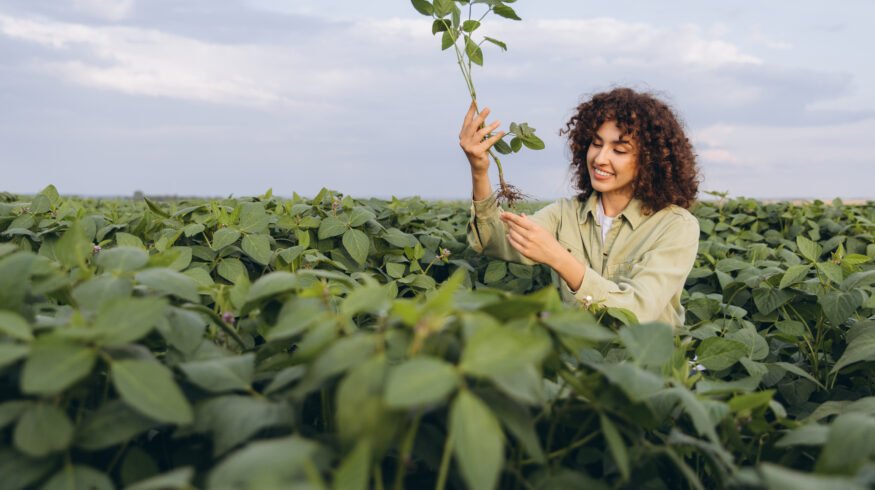
      Image Credits: iStock Photo
      Save for later
      Share
      Never miss important fertilizer news

      Researchers have identified a genetic mechanism that regulates soybean nitrogen fixation, acting as an internal accelerator for nodulation when soil nitrogen runs low, according to a study published in the Proceedings of the National Academy of Sciences. Gene-edited plants carrying an enhanced version of the pathway showed higher yields, improved seed quality and increased protein content under low-nitrogen conditions.

      The work was led by Jianxin Ma, professor of agronomy at Purdue University and the Indiana Soybean Alliance Chair in Soybean Improvement, with plant scientist Blake Meyers of the University of California, Davis.

      How the soybean nitrogen fixation mechanism works

      Soybeans and other legumes meet much of their nitrogen demand through biological nitrogen fixation. The plant forms a relationship with soil bacteria called rhizobia, which colonize specialized root structures known as nodules and convert atmospheric nitrogen into a form the plant can use. Nodulation is tightly regulated because the balance runs both ways. Excess nodulation drains plant energy, while too little leaves plants nutrient-deficient in low-nitrogen soils.

      The newly described mechanism controls that trade-off. The researchers characterized it as an internal accelerator that increases nitrogen fixation when nutrient availability is limited, and described the trait as an evolutionary innovation in soybean rather than a feature shared across all legumes.

      ADVERTISEMENT

      What the field and lab work showed

      Ma’s team used gene-editing technology to modify the pathway in the soybean variety Williams 82, a widely used reference line. The modified plants produced higher yields, better seed quality and greater protein content under low-nitrogen conditions than unmodified controls. The team has not published a figure for the reduction in applied nitrogen that the trait could support, and the study reports trial results rather than a commercial performance claim.

      The researchers also identified similar pathways in other major legume crops, including common beans, suggesting the finding may extend across pulse and oilseed production. The study’s authors emphasized the value of drawing on both model legumes and crop species to understand how nodulation and nitrogen fixation evolved.

      Why it matters to the fertilizer market

      Soybeans already draw a large share of their nitrogen from fixation, so the commercial question is not whether the crop can displace urea. It is whether a fixation trait can hold yield and protein steady when growers cut applied nitrogen for cost reasons, or when soils are marginal.

      That question has gained weight in 2026. Nitrogen affordability has driven acreage and rate decisions across the U.S. Midwest, and traits that preserve output at lower input rates carry more value in a high-price environment than they did two years ago. Any effect on the nitrogen rotation credit that follows soybeans would also matter to the corn nitrogen budget, though the study does not address that.

      Outlook

      The path from a gene-edited reference variety to a commercial soybean is long. Williams 82 is a research line, not a line farmers plant at scale, so the trait would need to move into elite germplasm and through breeding programs before any yield claim reaches a field. Regulatory treatment of gene-edited crops varies by market, which shapes where such a variety could be sold. Neither Purdue nor the research team has announced a commercial partner or a development timeline.

      The finding joins a widening body of work aimed at reducing synthetic nitrogen demand through plant biology rather than chemistry, including research on wheat roots that release natural nitrification inhibitors.

      Source: Purdue University


      Key facts about the soybean nitrogen fixation discovery

      A genetic mechanism regulating soybean nodulation that acts as an internal accelerator, raising nitrogen fixation when soil nitrogen is limited. The team described it as an evolutionary innovation in soybean and found similar pathways in other legumes, including common beans.

      The researchers have not disclosed a figure. The published result is that gene-edited plants showed higher yield, better seed quality and increased protein under low-nitrogen conditions relative to controls. No applied-nitrogen reduction rate has been quantified.

      The study was led by Jianxin Ma, professor of agronomy at Purdue University and Indiana Soybean Alliance Chair in Soybean Improvement, with Blake Meyers of the University of California, Davis. It appeared in the Proceedings of the National Academy of Sciences.

      Williams 82, a reference line widely used in soybean genomics rather than a commercial variety. Moving the trait into elite germplasm through conventional breeding would be a prerequisite for any field-scale deployment.

      No timeline has been announced and no commercial partner has been named. Gene-edited crops face differing regulatory treatment across export markets, which affects where such a variety could be planted and sold.

      gene editing
      nitrogen fertilizers
      nitrogen fixation
      Purdue University
      research
      soybean
      soybean breeding
      soybean yield

      Enjoyed this story?

      Every Monday, our subscribers get their hands on a digest of the most trending agriculture news. You can join them too!

      Sign me up
      Check the example

      Discussion0 comments

      Спасибо за комментарий, он будет опубликован на сайте после проверки модератором. Хотите, чтобы ваши комментарии появлялись на сайте мгновенно? Достаточно пройти регистрацию.
      Congratulations, you can be the first to start the conversation.
      Do you have a question or suggestion? Please leave your comment to ignite conversation.
      What’s on your mind?
      Cancel Log in and comment
      Or continue without registration
      Get notified about new comments by email.
      Advertisement
      In focus
      How to get here?
      Stock quotes
      Bayer
      13.94
      1.41
      Bayer Crop Science
      49.12
      1.6
      CF Industries
      119.19
      1.43
      Corteva Agriscience
      84.91
      1.35
      ICL Group
      5.01
      1.62
      Intrepid Potash
      35.71
      0.22
      Mosaic
      22.94
      2.82
      Nutrien
      68.64
      1.54
      Yara International
      24.15
      3.12
      See all
      Most read
      FTC confirms it is also investigating Syngenta and Corteva for anticompetitive pesticide distribution
      FTC confirms it is also investigating Syngenta and Corteva for anticompetitive pesticide distribution
      StoneX anticipates further declines in urea prices before fall demand drives a recovery
      StoneX anticipates further declines in urea prices before fall demand drives a recovery
      Mosaic cuts phosphate output at four U.S. plants as critical sulfur shortage bites
      Mosaic cuts phosphate output at four U.S. plants as critical sulfur shortage bites
      World Bank warns fertilizer prices could surge more than 30% in 2026 if Hormuz disruption persists
      World Bank warns fertilizer prices could surge more than 30% in 2026 if Hormuz disruption persists
      India locks in 670,000t of green ammonia annually for fertilizer plants at half the global benchmark price
      India locks in 670,000t of green ammonia annually for fertilizer plants at half the global benchmark price
      Events
      Southwestern Fertilizer Conference
      New Orleans (LA), USA
      Jul 12 — 16, 2026
      AgriBusiness Global Trade Summit
      Las Vegas (NV), USA
      Aug 5 — 6, 2026
      Agronomy Conference and Expo
      Indianapolis (IN), USA
      Aug 24 — 26, 2026
      Farm Progress Show
      Boone (IA), USA
      Sep 1 — 3, 2026
      Fertilizer Canada Annual Conference
      Charlottetown, Canada
      Sep 14 — 16, 2026
      See all
      Live
      Stefan Petko
      May 6, 06:48 pm
      It is alarming to see these developments in California. As a vineyard grower, I have faced significant challenges this year, with fertilizer costs rising sharply while market conditions have made it difficult to sell the harvest.
      California peach growers forced to remove 420,000 trees after bankruptcy of Del Monte Foods canneries
      Estebel
      April 23, 10:26 pm
      Sounds like magic ))
      MIT study: rice seeds germinate faster when exposed to rainfall sounds
      Isabelita Barreiro
      December 11, 2025, 01:54 am
      Excellent management of water resources and effective use of water-soluble fertilizers!
      Argentine nano-fertilizer firm AKO Agro expands to Brazil
      Meripa Corson
      August 4, 2025, 01:18 pm
      Where does the money actually go? As a timber land owner, how do I benefit from the legislation?
      USDA commits $80 million to expand timber markets and improve forest resilience
      Patonkas Luksompulus
      January 21, 2025, 12:36 pm
      Greece meeds biological fertilizers! Great news about De sangosse.
      DE SANGOSSE expands operations with Greek subsidiary
      About
      Sections
      Trade & Policy  ·  Markets  ·  AgTech & Research  ·  Corporate  ·  Sustainability  ·  Interviews  ·  Rankings
      Support
      About  ·  Team  ·  Advertise  ·  Contacts  ·  Submit a Tip  ·  Privacy Policy  ·  Terms of Service  ·  Site Map
      Copyright © 2014-2026 DigitalTree LLC. All rights reserved.
      We deliver content lightning-fast thanks to the managed cloud WordPress hosting with CDN.
      16+
      More to read
      Gene controlling potato’s daylight response also suppresses nitrogen uptake, study finds
      Gene controlling potato’s daylight response also suppresses nitrogen uptake, study finds
      Nitrogen-fixing genes transferred into new bacterial strains, advancing quest to reduce fertilizer dependence
      Nitrogen-fixing genes transferred into new bacterial strains, advancing quest to reduce fertilizer dependence
      Breakthrough research on gene-edited microbes offers new nitrogen source for farmers
      Breakthrough research on gene-edited microbes offers new nitrogen source for farmers
      Advertising that helps us do quality reporting