

China targets 725 million tons of grain capacity under new agriculture plan

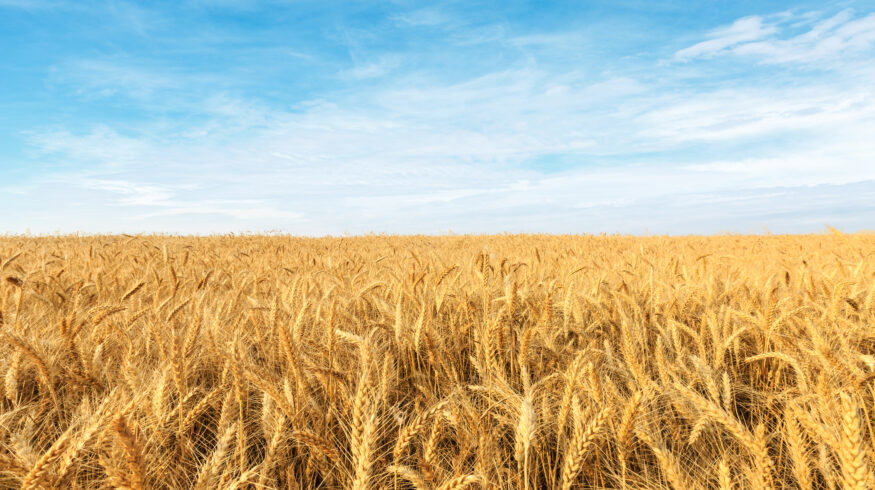

China has set a target to raise its annual grain production capacity to about 725 million metric tons by 2030 as part of a new five-year plan that places technology and agricultural self-reliance at the center of rural development.
The State Council published the 15th Five-Year Plan for Accelerating the Modernization of Agriculture and Rural Areas on June 2. The strategy covers 2026 through 2030 and is intended to establish the foundation for China to achieve broad agricultural and rural modernization by 2035, according to a report from the U.S. Department of Agriculture’s Foreign Agricultural Service in Beijing.
China’s grain production reached 715 million metric tons in 2025. The new target refers to sustainable production capacity rather than a fixed output requirement, with Beijing seeking to increase yields through upgraded farmland, improved seeds, modern machinery and more precise crop management.
A related grain expansion program is intended to add 50 million metric tons of production capacity across 720 designated counties. Measures will include higher-density planting, precision seeding and integrated water and fertilizer management.
China also plans to upgrade permanent basic farmland in major grain-producing regions by improving irrigation and drainage, expanding soil fertility monitoring and applying other agronomic improvements.
Technology becomes a central growth engine
The plan elevates technological development from a supporting role to what the government describes as a core engine of agricultural growth.
China intends to raise the contribution of scientific and technological progress to agricultural growth to 67% by 2030, from 64% currently. It also wants the mechanization rate for crop plowing, planting and harvesting to exceed 80%, compared with 76.7% at present.
The strategy calls for expanded use of artificial intelligence in biological breeding, pest and disease monitoring, animal disease prevention and farm management. It also supports the development of smart farms, ranches and fisheries, agricultural drones, intelligent machinery and data infrastructure for rural areas.
Seed development is another priority. The government aims to increase the self-sufficiency rate for core agricultural germplasm resources to 85% by 2030, from 81% in 2025. The plan calls for commercial breeding systems and stronger intellectual property protections.
Biofertilizers and alternative inputs gain policy support
The plan includes an agricultural biomanufacturing initiative covering new feed ingredients and crop inputs.
Priority products include microbial protein, insect protein, amino acids, compound microbial fertilizers, bio-organic fertilizers, soil amendments and RNA- or peptide-based pesticides.
At the same time, China plans to reduce conventional fertilizer and pesticide use as part of a broader low-carbon agricultural transition. The strategy promotes nutrient efficiency, agricultural waste recycling, remediation of contaminated land and water-saving production systems.
The shift expands on earlier policies that focused mainly on pollution control. The new plan also seeks to create economic value from environmental improvements through agricultural carbon sequestration, carbon markets and low-carbon supply chains.
Import diversification remains part of food security policy
Despite its emphasis on domestic production, the plan recognizes continued supply gaps in commodities such as oilseeds.
China intends to diversify agricultural import sources and support large domestic companies capable of competing internationally and stabilizing supply chains. Soybeans are among the commodities likely to remain central to the diversification strategy.
The plan also adopts a broader definition of food security that extends beyond traditional grain production. Beijing wants to expand supplies from forests, fisheries, protected agriculture and other sources while improving the quality and market alignment of agricultural products.
This marks a change from the previous five-year plan, which focused primarily on maintaining minimum grain volumes and protecting arable land. The new strategy places greater weight on production capacity, resilience, product quality and diversified food sources.
Rural processing and logistics to expand
China plans to build 500 cold-chain collection and distribution centers in agricultural production areas and 50 wholesale markets jointly supported by national and provincial authorities.
The broader rural industrial strategy includes upgraded food processing, logistics, e-commerce, tourism and vocational training. The government expects the added value of agriculture and related industries to reach 25.8 trillion yuan by 2030, up from 20.6 trillion yuan in 2024.
Agricultural labor productivity is targeted to rise to 80,000 yuan per worker from 60,000 yuan, while the ratio of agricultural processing output to total agricultural output is expected to increase to 3 from 2.65.
The plan also covers rural infrastructure, wastewater treatment, healthcare, elder care and poverty prevention. China aims to raise the rural sewage treatment rate to 70%, from 55%, and expand elder-care service coverage to 80%, compared with 60% in 2024.

Enjoyed this story?
Every Monday, our subscribers get their hands on a digest of the most trending agriculture news. You can join them too!



Discussion0 comments